
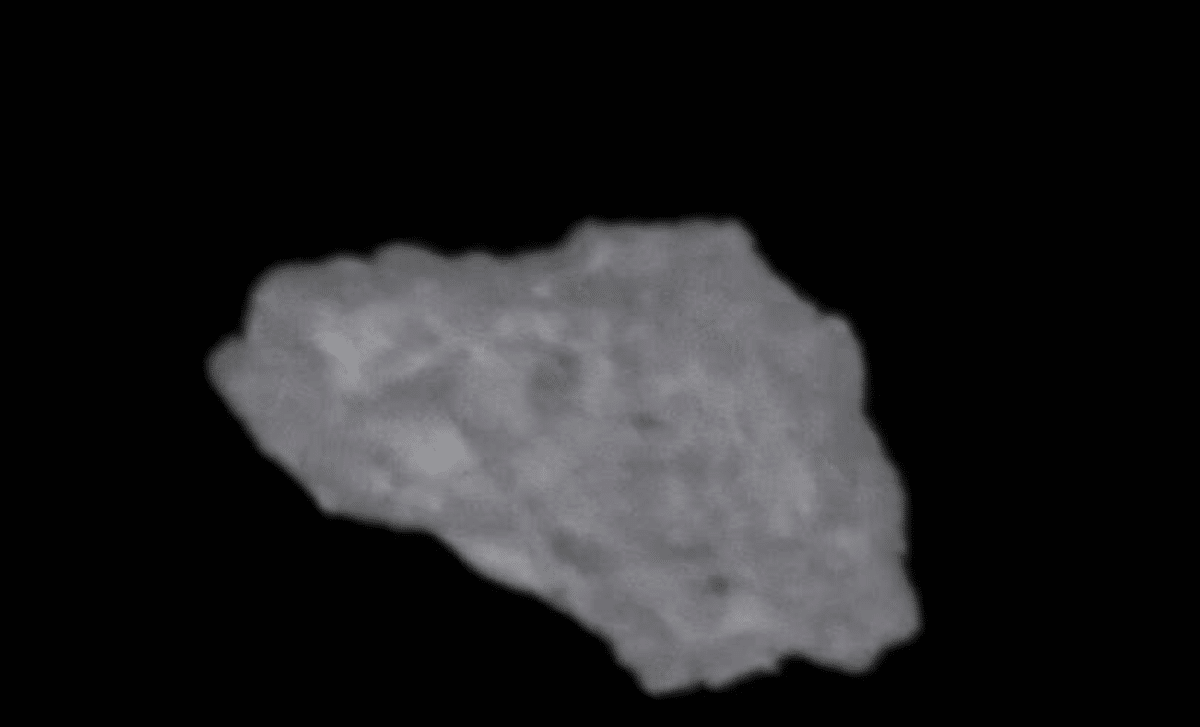
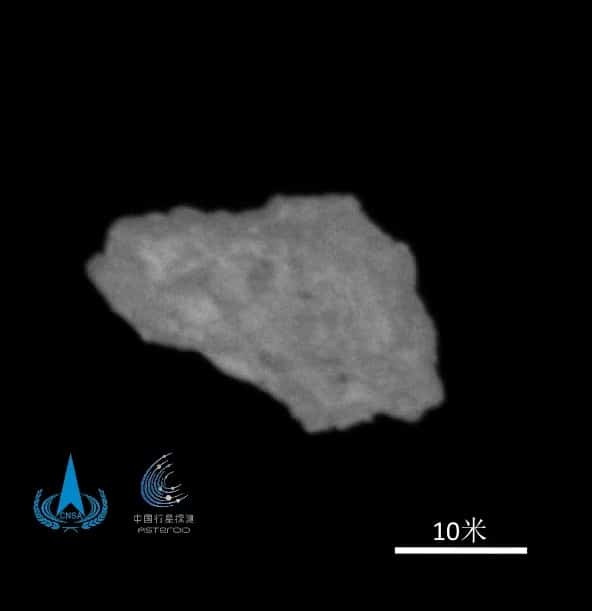
China’s pioneering spacecraft Tianwen-2 has achieved a critical milestone by coming within 20 kilometers of the near-Earth asteroid 2016 HO3, initiating the mission’s scientific observation stage. As reported by Xinhua, this arrival concludes a journey spanning close to 400 days and nearly 1 billion kilometers, positioning the probe to conduct detailed asteroid studies before attempting to collect samples that could shed light on the Solar System’s formation and history.
Entering a New Operational Phase Near Asteroid 2016 HO3
The spacecraft’s approach to 2016 HO3 marks a shift from long-distance travel to detailed examination. Launched on May 29, 2025, Tianwen-2 is China’s inaugural project aiming to retrieve asteroid samples, expected to span a decade with several targets. After sampling the near-Earth asteroid, it is slated to continue onward to the main-belt comet 311P, broadening the scope and scientific output of this extensive mission.
During approach, the onboard instruments captured high-resolution images, while navigation systems refined the spacecraft’s course continuously. According to the China National Space Administration (CNSA), optical navigation sharply enhanced the accuracy of the asteroid’s location—from uncertainties of hundreds of kilometers based on Earth observations down to just a few kilometers. This precision is key to maneuvering safely near the small asteroid and preparing for the challenging sampling operations ahead.

A Meticulously Executed Deep-Space Voyage
The mission’s success depended on a series of precise maneuvers to achieve exact positioning. Throughout the deep-space cruise, Tianwen-2 carried out trajectory course corrections and propulsion burns to stay on target. The initial detection of 2016 HO3 was made on June 6, 2026. Just a day later, the spacecraft adjusted to a coplanar orbit with the asteroid about 30,000 kilometers away. By June 19, this gap closed to roughly 2,000 kilometers, setting the stage for the close approach at 20 kilometers.
These accomplishments highlight the complexities of autonomous navigation near small bodies with minimal gravity. Unlike planetary missions, asteroid exploration demands constant navigational tweaks and ultra-precise optical tracking to ensure the mission’s safety and scientific success.
Scientific Exploration of 2016 HO3 Now Underway
With the probe now operating in close proximity to 2016 HO3, efforts focus on gathering unparalleled data to understand the asteroid’s characteristics prior to any sample collection. The spacecraft will utilize an array of instruments to examine the asteroid’s shape, surface texture, chemical makeup, and inner structure through detailed inspection.
As stated by the CNSA, “The probe will progressively conduct more detailed scientific exploration to acquire data on the asteroid’s morphology, material composition and internal structure, laying the groundwork for subsequent sample collection operations.”
The official statement, reported by Xinhua, reflects the cautious approach being taken before initiating one of the mission’s most complex tasks. Each new measurement enriches engineers’ ability to determine the safest, most scientifically valuable site for extracting asteroid material.
Significance of the Mission in Advancing Planetary Science
Asteroids like 2016 HO3 serve as historical archives from the Solar System’s infancy. Having undergone little alteration over billions of years, the collected samples may reveal crucial information about the primordial substances involved in planet formation. These investigations could also clarify how essential compounds such as water and organics arrived on Earth.
For China, Tianwen-2 exemplifies a growing capacity to conduct sophisticated interplanetary exploration. Success in this mission will demonstrate mastery of autonomous guidance, close-proximity asteroid maneuvers, sample retrieval, and extended spaceflight. With plans to visit comet 311P afterward, the spacecraft is set to produce groundbreaking discoveries well beyond its time at 2016 HO3, marking the start of a larger scientific journey.
- Categories:
- News







0 comments
Sign in to Comment