
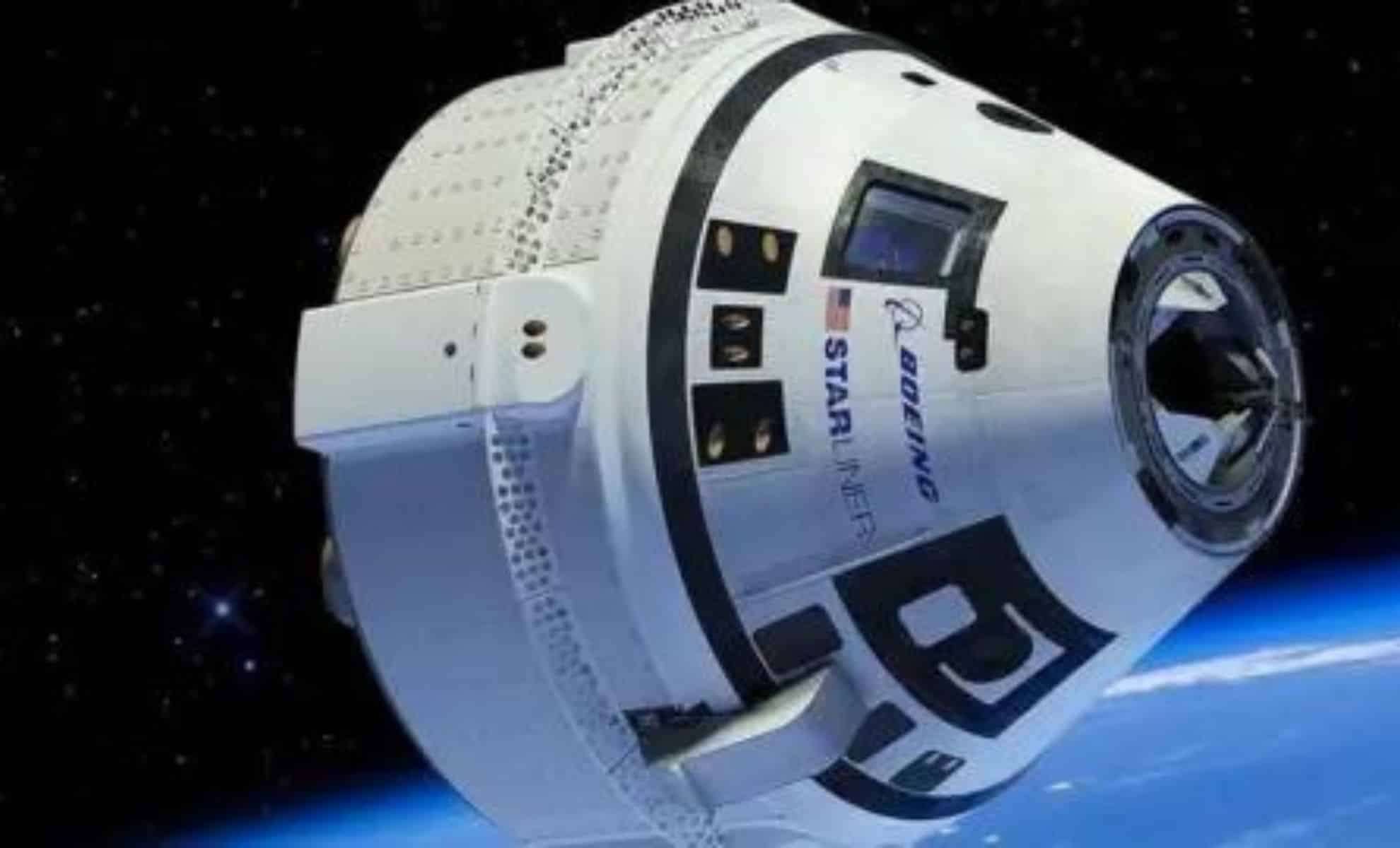
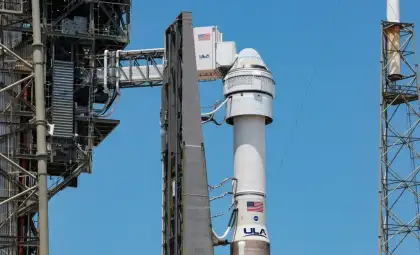
Boeing’s latest spacecraft, the Starliner, has triumphantly reached the International Space Station (ISS), overcoming a series of technical hurdles along the way.
Onboard were NASA astronauts Butch Wilmore and Suni Williams, who guided the capsule to a successful docking despite facing thruster malfunctions and helium leaks that threatened the mission’s progress. This flight represents Boeing’s first crewed test mission, marking a pivotal achievement for the aerospace company.
Addressing Thruster Malfunctions and Helium Leak Issues
The Starliner encountered a helium leak shortly before liftoff; despite this, Boeing and NASA leadership gave the go-ahead, confident in their ability to manage the problem. During flight, two further helium leaks appeared, with another detected post-docking.

Helium plays a critical role in pressurizing the thrusters’ fuel lines, essential for controlling the spacecraft’s trajectory. According to Mark Nappi, Boeing’s program manager, “A tiny defective rubber seal, no larger than a shirt button, is thought to have caused the initial leak.”
In addition to these leaks, five of the Starliner’s 28 thrusters failed during flight. The crew successfully reactivated four, maintaining sufficient control to complete docking procedures. Steve Stich, NASA’s commercial crew manager, clarified that the thruster issues were separate from the helium leaks and reaffirmed that the mission team has effective solutions for these technical challenges.
Successful ISS Docking and Crew Interaction
Despite encountering multiple setbacks, the Starliner docked with the ISS roughly 260 miles above the Indian Ocean after an intense period of troubleshooting. The two astronauts received a warm welcome from the seven astronauts aboard the station.
Williams entered first, breaking into a celebratory dance, followed by Wilmore, who snapped his fingers as they greeted the onboard crew. Williams described the moment as “a great welcome, a little dance party,” capturing the spirited environment during their arrival.
Importance of the Starliner Mission
The Starliner is scheduled to remain attached to the ISS for a minimum of eight days before returning to Earth. This mission is a crucial milestone for Boeing, which has faced repeated delays and technical obstacles in developing a dependable spacecraft to transport astronauts for NASA. Since the retirement of the space shuttle, NASA has relied on Boeing and SpaceX to supply crew transportation services. While SpaceX launched operational missions starting in 2020, Boeing’s timeline has been pushed back due to safety tests and technical complications. The docking success demonstrates significant progress in validating the Starliner’s readiness and dependability.
Steve Stich emphasized that no issues arising from this flight will necessitate another crewed test before certification for routine missions. This feat reflects the dedication and expertise of the teams at Boeing and NASA, who have successfully tackled these challenges. Their ability to resolve in-flight problems provides essential experience and confidence, boosting prospects for upcoming flights.
Future Prospects
Boeing’s successful ISS docking represents a notable advancement in NASA’s Commercial Crew Program and the broader effort to ensure diverse spacecraft options for astronaut transport. This accomplishment brings Boeing closer to providing regular service alongside SpaceX, reinforcing America’s human spaceflight capabilities. As Boeing continues refining the Starliner by addressing encountered hurdles, the knowledge gathered will enhance the vehicle’s robustness and mission readiness.
Furthermore, this mission highlights the critical value of having multiple providers in space transport, offering redundancy and fostering innovation. The collaboration between Boeing and SpaceX helps guarantee consistent and adaptable access to the ISS, a key factor for sustaining current space operations and supporting ambitious future projects. Insights from this flight will also contribute to the evolution of next-generation spacecraft and spaceflight technologies, pushing the frontier of exploration even further.
- Categories:
- Astronomy ,
- News ,
- Space ,
- Nasa ,
- Aircraft







0 comments
Sign in to Comment