
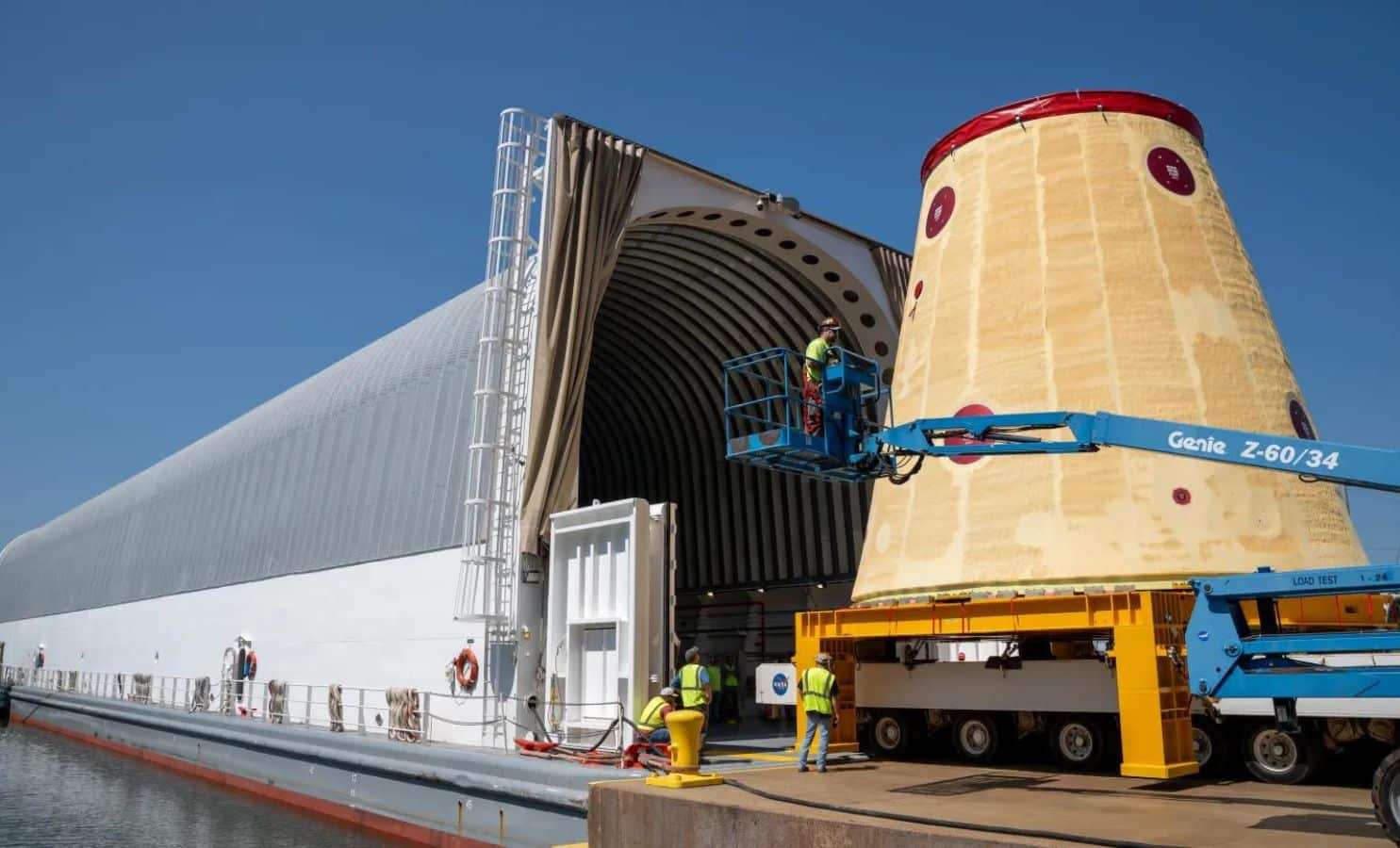
NASA’s Artemis II mission, which aims to return astronauts to lunar orbit after nearly five decades, has achieved a major milestone with the successful transfer of the Launch Vehicle Stage Adapter (LVSA) from its manufacturing site at Marshall Space Flight Center in Huntsville, Alabama.
This essential component of NASA’s formidable Space Launch System (SLS) rocket is now on its way to Kennedy Space Center in Florida, where it will be assembled with the rest of the Artemis II vehicle in preparation for its targeted 2025 launch.
Vital Hardware for Moon Mission Success
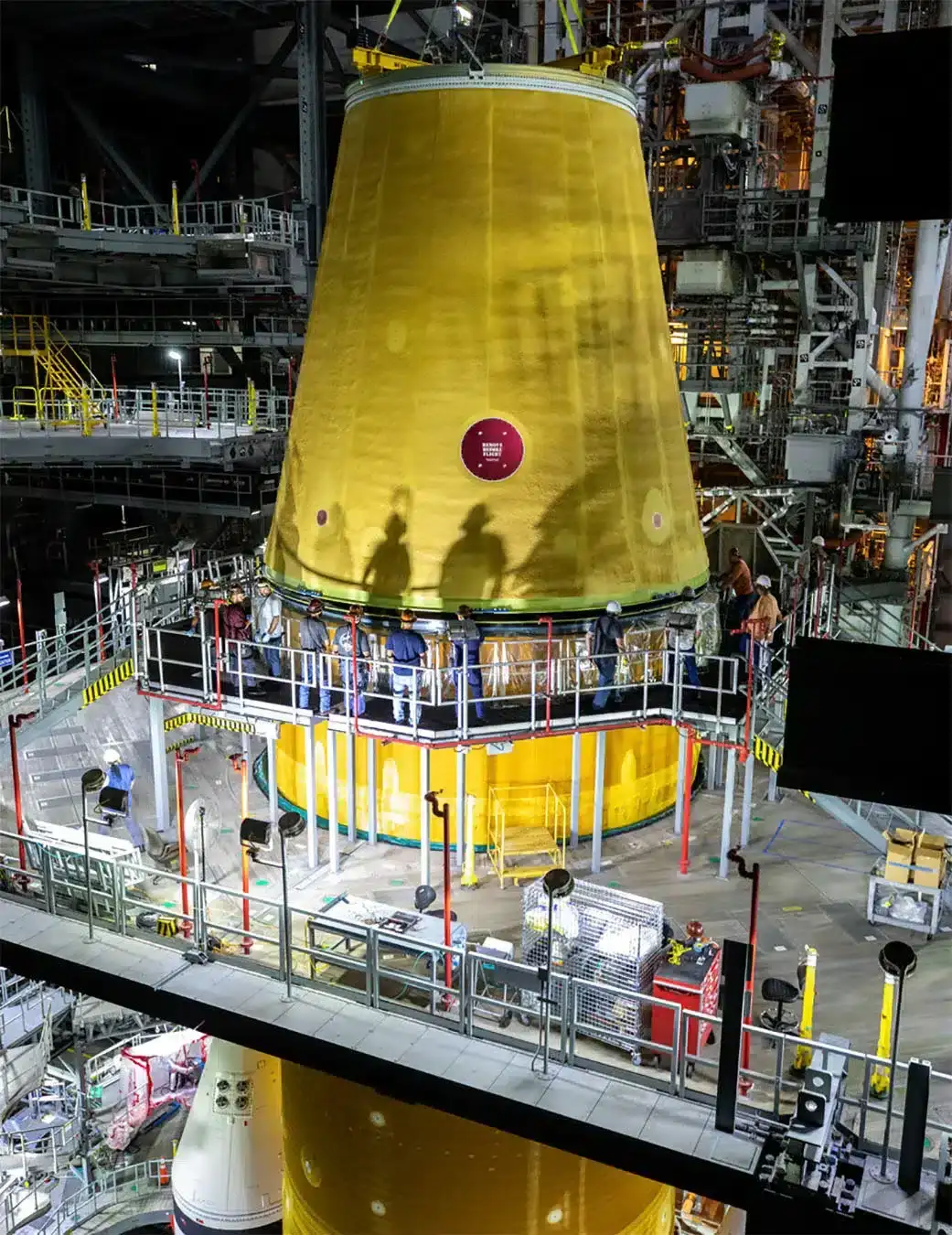
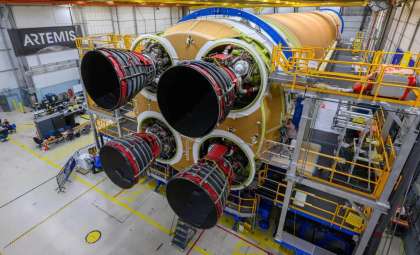
The LVSA is a fundamental element of NASA’s SLS rocket, designed to carry the Orion spacecraft and crew on their lunar voyage. Measuring approximately 40 feet tall, this adapter forms the essential connection between the rocket’s large core stage and the interim cryogenic propulsion stage (ICPS). The ICPS delivers the final thrust needed to send astronauts into orbit around the Moon. Weighing close to 1,600 pounds, this tapered structure is critical to the Artemis II mission’s ability to break free from Earth’s orbit and embark on its historic journey.

Years of development and testing at Marshall Space Flight Center have culminated in the LVSA’s completion. NASA explained its function: “It supports the weight of the ICPS and Orion spacecraft, while transmitting thrust from the four RS-25 engines and two five-segment solid rocket boosters on the core stage.” This underscores the LVSA’s pivotal role in enabling Artemis II to reach its goal of advancing human space exploration around the Moon.
Transporting the LVSA to the Launch Site
Following its assembly in Alabama, the LVSA was meticulously prepared for transport to Florida’s Kennedy Space Center, where it will be integrated with other SLS components. On August 21, 2024, the adapter was loaded onto NASA’s specially designed Pegasus Barge for its journey down the Tennessee River. This barge is tailored to carry oversized rocket parts efficiently between NASA facilities.
NASA noted, “The Pegasus Barge will ferry the LVSA down the Tennessee River to Michoud Assembly Facility in New Orleans for additional outfitting before proceeding to Kennedy Space Center for final integration.” This transit phase is crucial as the Artemis II rocket nears completion. Upon reaching Kennedy, NASA’s Exploration Ground Systems teams will carefully mount the LVSA onto the SLS core stage, securing all connections ahead of launch preparations.
Artemis II: Pioneering Lunar Exploration
The Artemis II mission marks NASA’s first crewed lunar orbit flight since the Apollo era, transporting four astronauts aboard the Orion spacecraft on a path around the Moon before returning to Earth. Its success represents a critical juncture in NASA’s expansive Artemis program, which aspires to land the first woman and next man on the lunar surface within the next several years. Artemis II will serve as a vital test of the SLS rocket and Orion’s systems during deep-space flight, verifying their readiness for forthcoming crewed lunar landings.
NASA’s Space Launch System (SLS) stands as the agency’s most powerful rocket ever constructed, engineered to propel astronauts farther into space than ever before. The LVSA is integral to mission success, ensuring the core and upper stages are firmly connected and enabling the spacecraft to attain the speed required for lunar orbit insertion. According to NASA, “Its specialized design withstands extreme stresses during launch and space travel.” The adapter’s capability to relay engine thrust to the upper stage and spacecraft is essential to Artemis II’s mission structure.
With the LVSA now en route to Florida, final mission preparations are entering a critical phase. Artemis II represents a significant leap toward establishing a sustained human presence on the Moon and will yield critical data for subsequent Artemis missions, such as Artemis III, which targets a lunar surface landing by 2028. Insights gained here will also support NASA’s ambitions for Mars and beyond.
Looking Ahead to New Horizons
The LVSA’s transit from Marshall to Kennedy Space Center marks a key achievement in Artemis II’s progress. NASA’s drive to return astronauts to the Moon and proceed onwards to Mars depends on the success of missions like this. Every element, from the LVSA to the Orion capsule, plays a vital role in turning these visions into reality.
As NASA pushes the frontiers of space exploration, the Artemis program embodies a bold initiative to establish permanent human presence on the Moon, paving the way for crewed missions to Mars. The LVSA’s safe delivery and integration signify a major step forward, illustrating what can be achieved when innovation meets determination in humanity’s quest for discovery.



0 comments
Sign in to Comment