
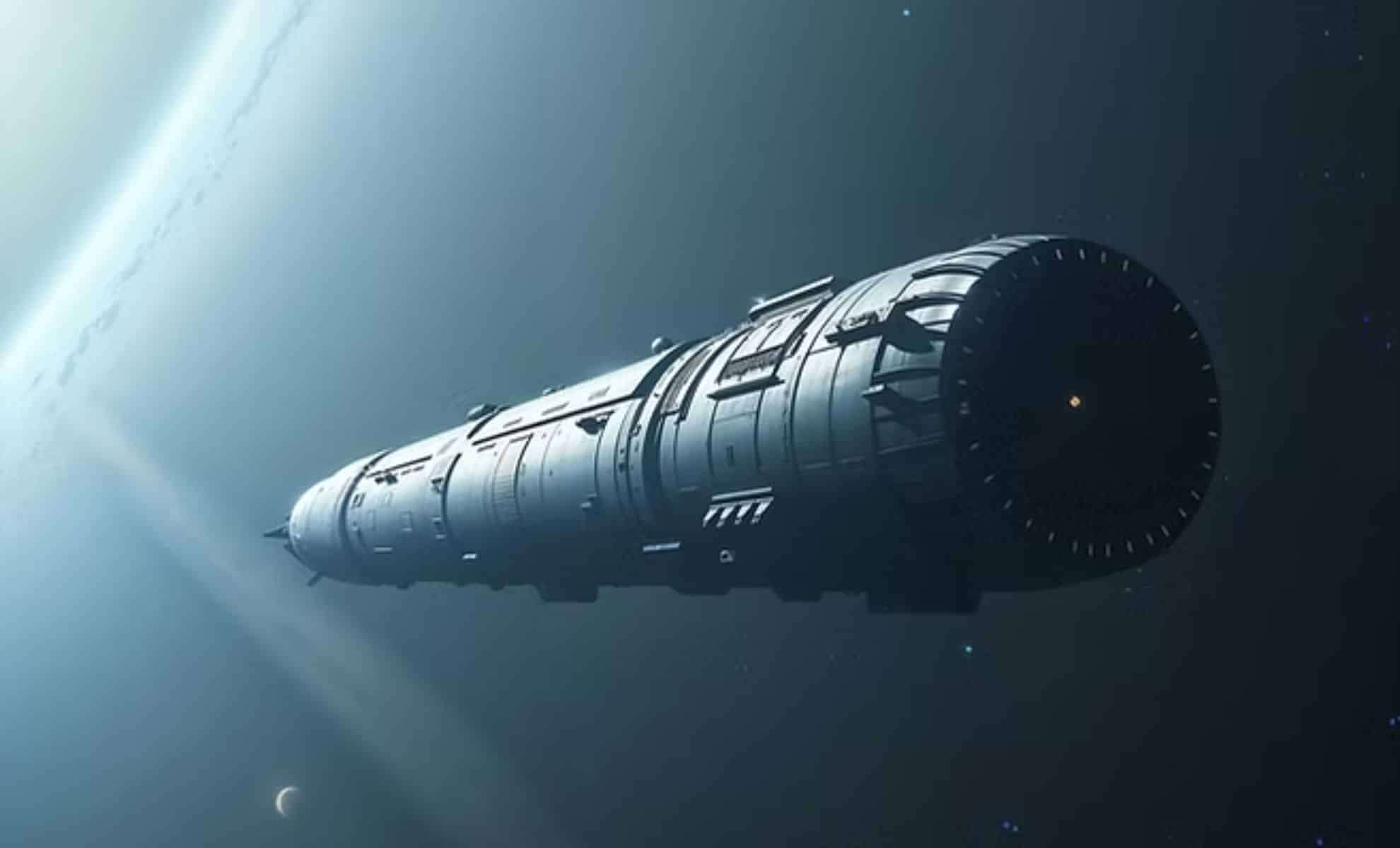
Imagine a sprawling starship, rivaling the size of a small metropolis, designed to transport generations of humans to Alpha Centauri, our closest stellar neighbor. Dubbed Chrysalis, this colossal vessel would span an impressive 58 kilometers in length and accommodate up to 1,000 inhabitants embarking on a centuries-long, one-directional voyage—not with passengers in suspended animation, but with continuous generations living and growing in space.
Engineers and designers collaborated on this blueprint as part of the Project Hyperion competition. Their work has been applauded for realistic engineering proposals, comprehensive psychological planning, and visionary architectural design. Central to the project is a tremendous undertaking: creating not just a vehicle, but a self-sustaining society capable of thriving isolated from Earth for over 400 years.
“Chrysalis is not just a spacecraft, it’s a living environment designed to host human consciousness, community and culture in motion,” the team wrote in its submission, which was awarded first prize by the Initiative for Interstellar Studies.
Add Cosmo Herald as a Preferred Source

Spinning Cylinders, Earthlike Biomes, and Artificial Ecosystems
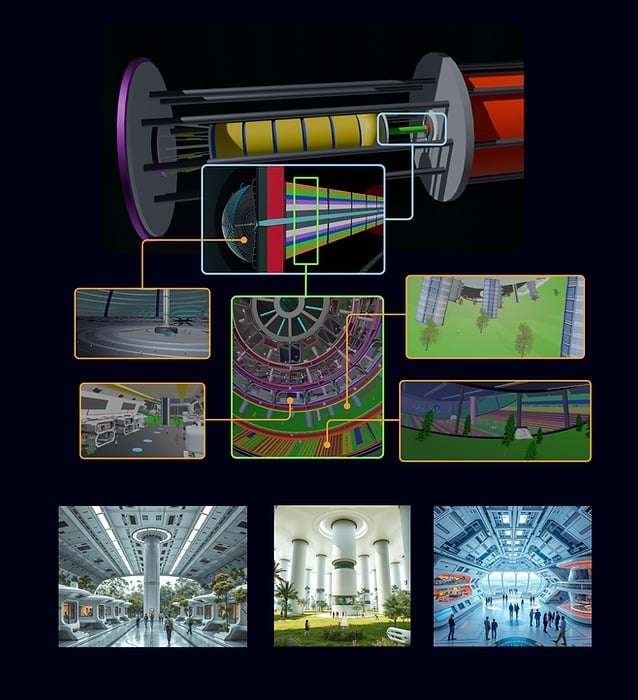
To counteract the profound health risks posed by prolonged weightlessness—such as bone density decline and cardiovascular strain—Chrysalis would employ artificial gravity generated through its controlled rotation. Its design features concentric cylindrical sections that spin to produce centrifugal forces strong enough to simulate gravity, securing residents safely to the floors. Smaller vessels can’t achieve this without inducing severe motion sickness, making the enormous scale a necessity.

Powering the ship would be nuclear fusion reactors, delivering the sustained energy required to maintain onboard systems and nurture the ship’s life-supporting biomes. Inside the expansive hull, multiple habitats would mimic Earth’s diverse environments—ranging from tropical rainforests to boreal forests and dry scrublands—designed to sustain food production, biodiversity, and the crew’s psychological well-being.
One of the most remarkable areas is the cosmos dome, a soaring 130-meter-tall observation deck with transparent walls facing away from the ship’s trajectory, granting spectacular views of deep space and the fading Sun. This space not only provides a social hub and symbolic core for the crew but also hosts important annual gatherings.
Constructed in Orbit, Shaped by Antarctic Trials
Weighing an estimated 2.4 billion tons, Chrysalis would be assembled not on Earth but at Lagrange Point 1—a gravitationally balanced zone between our planet and the Moon ideal for large-scale manufacturing with minimal fuel consumption. As NASA explains, L1 serves as a stable vantage point suitable for parking spacecraft.
Prior to launch, the human element of the mission would be honed on Earth—specifically in Antarctica. Volunteers would endure polar isolation for 70 to 80 years, simulating the psychological and social dynamics of a sealed, self-reliant community far from outside contact. The designers emphasize that “adaptation will be more cultural than biological,” indicating that communal resilience, rather than physiological change, remains the chief challenge.
A comprehensive genetic repository storing seeds, embryos, and DNA samples would accompany the voyagers, ensuring species survival and enabling future planetary colonization. The probable endpoint? Proxima Centauri b, a candidate for habitability located about 4.2 light-years away.
Speculation or the Dawn of Interstellar Civilization?
Although no timeline exists for launching such a craft, Chrysalis represents one of the most thorough and credible designs addressing generation starships—a staple of sci-fi edging toward scientific possibility. Interest has surged amid concerns over Earth’s long-term future and humanity’s need to explore new worlds.
Among numerous international proposals in the Hyperion contest, Chrysalis distinguished itself through seamless system integration, refined aesthetics, and thoughtful cultural planning. With modular habitats, AI-assisted governance, and open family models, it envisions a future where humans no longer just explore the stars but establish a permanent cosmic community.
Acknowledging the challenges, aerospace expert Dr. John Page from the University of New South Wales noted that “producing gravity through rotation demands enormous scale to avoid disorienting or harmful effects.”
Despite these obstacles, the project signals growing enthusiasm for life beyond planets. While pioneers like Elon Musk and his Starship focus on near-term interplanetary travel, Chrysalis imagines a radical future where humanity journeys permanently through the cosmos.
For more technical details, the full proposal is hosted by Project Hyperion, which also offers insights into competing concepts, radiation shielding strategies, and closed-loop biosphere engineering.
- Categories:
- Space












0 comments
Sign in to Comment