
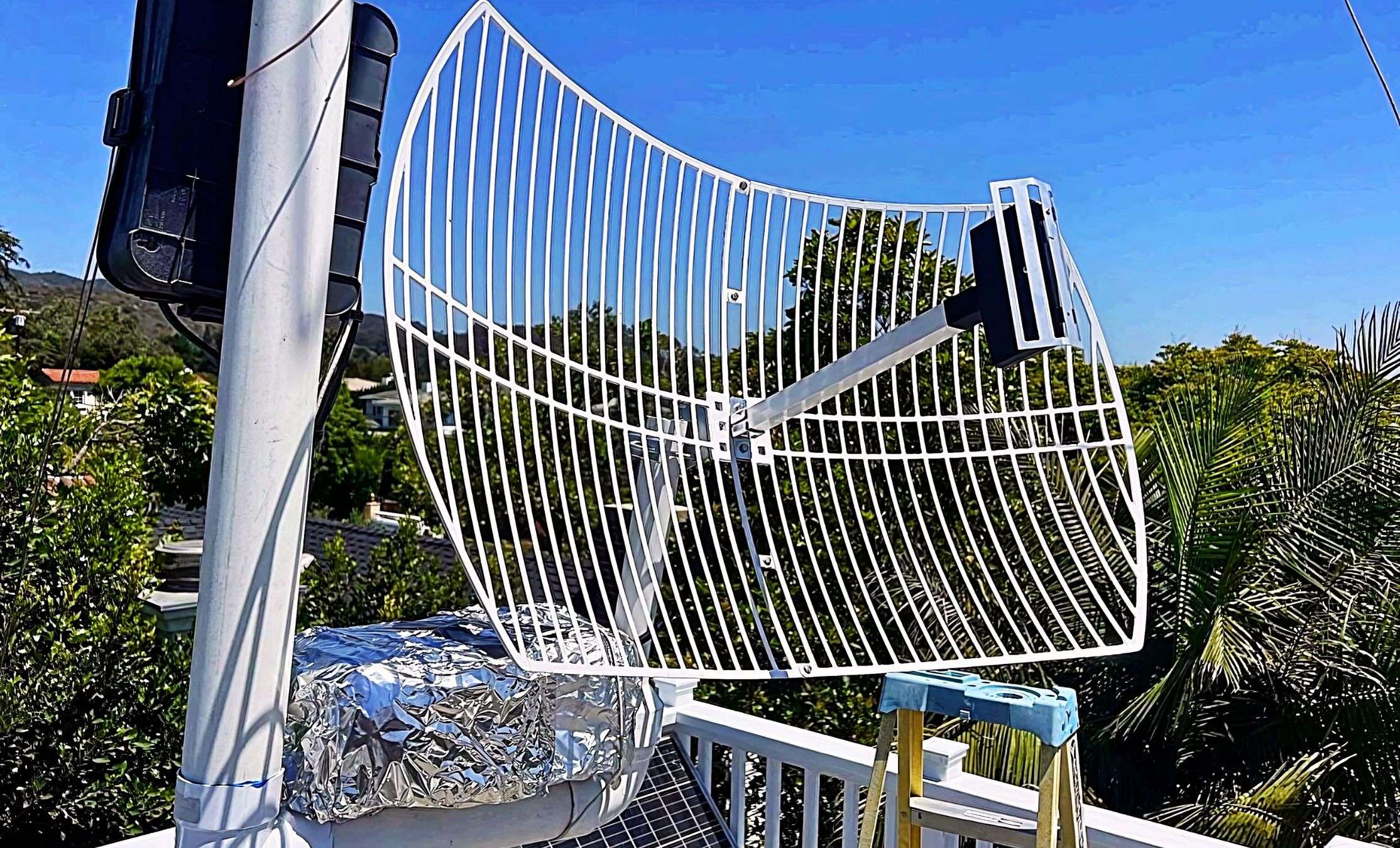
For those intrigued by exploring the cosmos independently, a new DIY radio telescope design brings this dream closer to reality. Utilizing commonly available parts such as a 1-meter satellite dish, a Raspberry Pi, and budget-friendly electronics, you can tune into the universe’s radio waves just like seasoned astronomers.
Revolutionizing Amateur Radio Skywatching
In a recently published study on the arXiv repository, scientist Jack Phelps outlines the construction of a compact radio telescope capable of capturing cosmic signals. Unlike the enormous dishes used by research facilities, this instrument resembles a standard TV satellite dish installed in a backyard. Despite its unassuming appearance, it serves as a gateway to detecting distant hydrogen clouds and signals emitted by our Milky Way.
Designed to be user-friendly and cost-effective, this radio telescope is ideal for beginners and amateur astronomers. The heart of the device targets the 21-centimeter hydrogen line at 1420.405 MHz—a signal generated by neutral hydrogen atoms, the most abundant matter across the universe.

Decoding the 21-cm Signal: Hydrogen’s Astronomical Importance
The 21-centimeter wavelength is a faint but powerful emission stemming from the hyperfine spin-flip transition in neutral hydrogen atoms. Although subtle, this signal unveils extensive information about galactic structures and the interstellar medium. Neutral hydrogen clouds broadcast these emissions, enabling astronomers to chart the composition and motion of our galaxy, including the spinning movement of the Milky Way.
Detection of this spectral line historically contributed to the discovery of dark matter, the invisible component influencing galactic formation through gravity. By monitoring this emission, amateur radio astronomers gain direct access to critical evidence supporting the existence of dark matter from the comfort of their homes.
Beyond Hydrogen: A Spectrum of Celestial Targets
Hydrogen is a central focus, but this compact telescope can capture additional radio sources as well. The Sun emits strong radio frequency waves, and Jupiter broadcasts distinctive signals thanks to its powerful magnetic field. Other observable targets include echoes from supernova remnants, neighboring galaxies, and pulsars. This DIY device unlocks a new perspective on the night sky, revealing phenomena undetectable by conventional optical telescopes.

Step-by-Step Guide to Building Your Radio Telescope
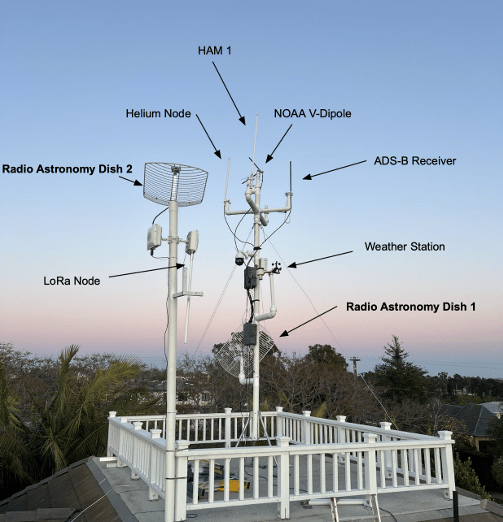
Thanks to Phelps’ comprehensive instructions, assembling your own radio telescope is now more accessible. Essential components include:
- A 1-meter satellite dish
- Raspberry Pi for processing the incoming signals
- Analog-to-digital converters to digitize radio waves
- Additional electronics for boosting signal quality and managing data
These elements collaborate to capture, digitize, and interpret cosmic radio signals. Setting up the Raspberry Pi involves configuring it to process and analyze incoming radio data, turning your computer into a window on the universe.
Whether you have experience with electronics or are simply fascinated by space, this hands-on project democratizes radio astronomy. It allows anyone with curiosity and determination to explore celestial radio waves from their own backyard.
- Categories:
- Astronomy ,
- Space ,
- Tech











0 comments
Sign in to Comment