
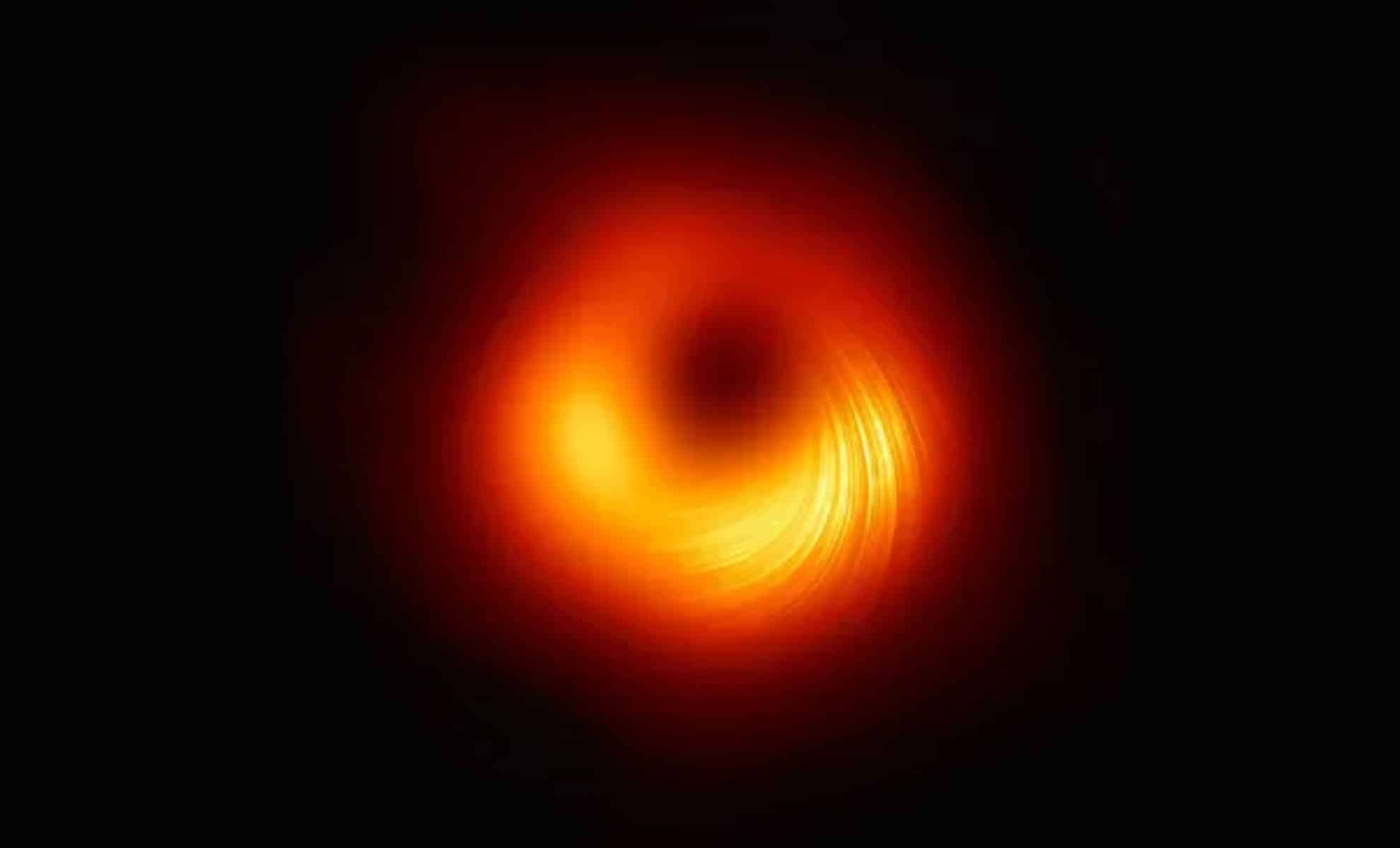
Astronomers have focused much attention on the supermassive black hole anchoring the galaxy M87. Recent studies, highlighted by LiveScience, reveal this enormous entity is rotating at an astonishing 80% of the maximum speed physics allows. Utilizing images from the Event Horizon Telescope (EHT), scientists gained fresh insights into the extreme dynamics of black holes and their gravitational grip on their host galaxies. This remarkable speed also clarifies how aggressively this black hole is pulling in surrounding matter, advancing our grasp of these immense cosmic forces.
Decoding the Spin Rate of M87’s Central Black Hole
M87’s black hole boasts a mass roughly 6.5 billion times that of the Sun. Beyond its colossal scale, its rapid rotation adds a key dimension to its complex behavior. Scientists now estimate it spins at about 80% of the universe's ultimate rotational speed, challenging prior assumptions and pushing the limits of astrophysical theory.
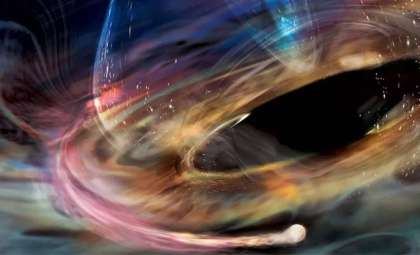
To put this velocity into perspective, the innermost region of the black hole’s accretion disk—where matter swirls inward before crossing the event horizon—moves at nearly 14% of light speed, around 42 million meters per second. This pace is roughly 3,000-fold faster than the swiftest human-made spacecraft. Since the spin edges close to the theoretical cap of 99.8% the speed of light, this discovery opens new frontiers in studying extreme relativistic environments.

Relativistic Doppler Beaming Illuminates Black Hole Spin
The key breakthrough came from analyzing the bright spot in the original Event Horizon Telescope images. Far from a mere artifact, this feature is a direct result of relativistic Doppler beaming. Because material on one side of the accretion disk hurtles toward Earth at tremendous speed, it appears much brighter than the receding side, creating a stark brightness contrast.
By quantifying this brightness imbalance, researchers determined the black hole’s rotational speed with unmatched precision. This technique leverages relativistic effects to deepen understanding of how black holes behave under extreme conditions, underscoring the critical role of relativistic physics in modern astrophysics.
Revealing the Rate of Matter Consumption by M87’s Black Hole
In addition to spin, scientists investigated how fast the black hole ingests matter. Results indicate the black hole attracts material at roughly 70 million meters per second, or about 23% the speed of light. Though impressive, this feeding speed is moderate for a supermassive black hole of M87’s scale.
This accretion rate is below the Eddington limit, which represents the maximum stable consumption rate before radiation pressure disperses in-falling gas and dust. Currently, the black hole is in a relatively subdued phase of activity, far from its feeding capacity. Despite this, it remains a powerful cosmic force impacting its environment.
The Power Behind M87’s Enormous Galactic Jet
One of M87’s most intriguing features is its enormous plasma jet, stretching thousands of light-years and traveling near light speed. The relationship between the accretion process and jet energy has long been debated. The new findings reveal that the energy from matter falling toward the black hole corresponds closely to the jet’s energetic output.
This supports the view that the jet is directly powered by the black hole’s feeding activity. As material spirals inward, vast energy is created, some of which channels along magnetic field lines, launching the jet outward. This mechanism influences galaxy evolution by affecting star formation and shaping the galactic ecosystem.
- Categories:
- News







0 comments
Sign in to Comment