
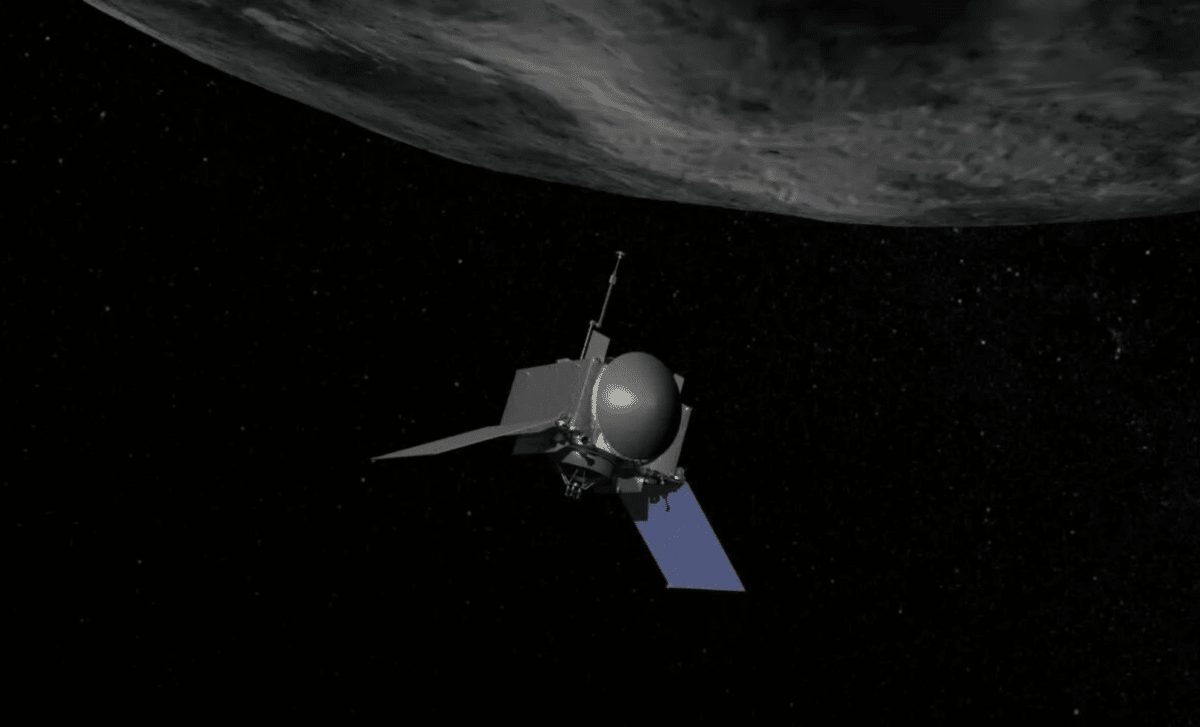
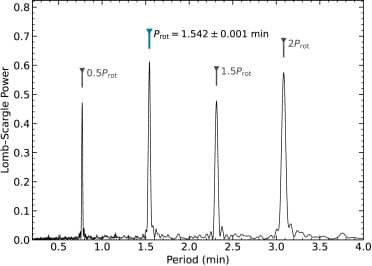
The small celestial body known as 2022 OB5 has presented a surprising challenge to space mining endeavors by rotating exceedingly fast—once every 1.542 minutes. Documented in a recent Icarus study, this rapid spin distinguishes it as one of the quickest-rotating minor asteroids observed, highlighting a widening divide between asteroids that are theoretically reachable versus those feasibly exploitable. For companies planning to extract metals in space, these findings illustrate how demanding asteroid mining operations can become.
Attempting a Close Encounter: The Odin Mission
AstroForge, a frontrunner in private space mining, pinpointed 2022 OB5 as the target of their Odin Mission, featuring a 100 kg probe designed to evaluate the asteroid’s metal reserves. Launched on a Falcon 9 rocket in February 2025, the mission encountered difficulties early on. After several weeks of failed communication attempts, AstroForge concluded that Odin had likely lost control and was tumbling erratically in space. Despite this complication, 2022 OB5 remained appealing due to its low delta-v—the lower energy cost to reach it—and its promise as a metal-rich asteroid.
Measuring the Asteroid’s Rapid Rotation
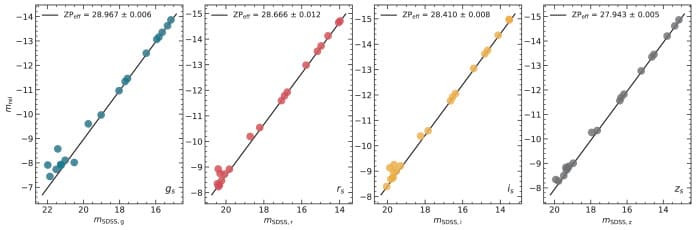
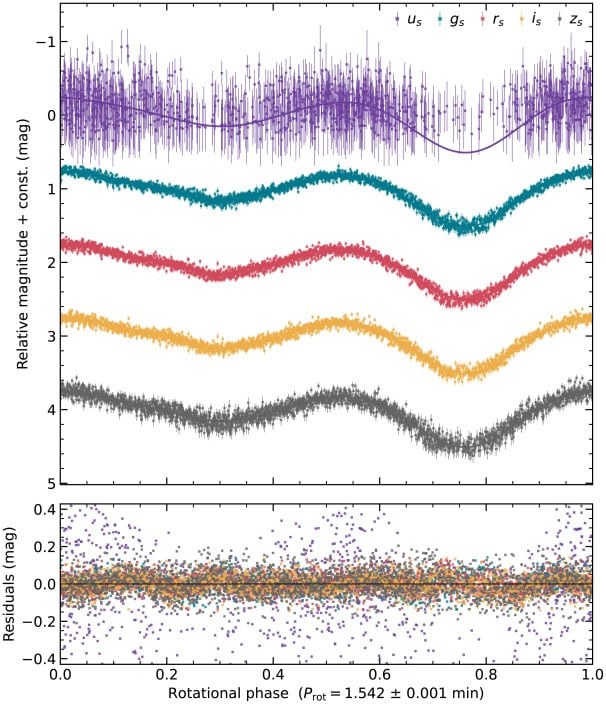
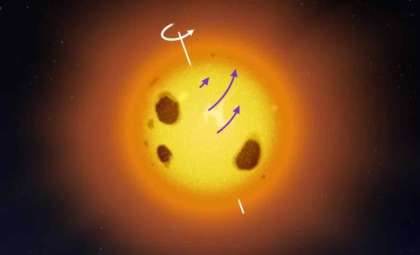
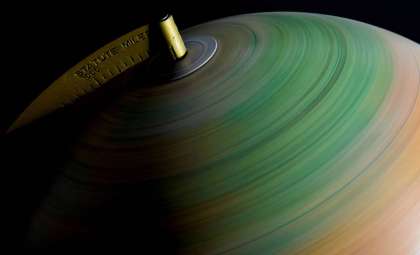
To gain more insight, scientists used the HiPERCAM multi-band imager at the Gran Telescopio Canarias in La Palma, Spain, to observe 2022 OB5 from Earth. By capturing simultaneous images in five optical wavelengths, HiPERCAM helped sidestep data distortion caused by the asteroid's swift spin. Confirmations showed 2022 OB5 completes a full rotation every 1.542 minutes, categorizing it as an ultra-fast rotator. This rapid spinning produces centrifugal forces nearly 100 times greater than the asteroid’s own gravity, which would likely eject loose surface material, greatly complicating landing or mining efforts.

Engineering Obstacles for Extracting Resources
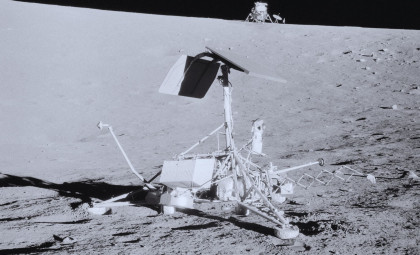
The asteroid’s extraordinary spin rate poses serious technological difficulties. Conventional approaches to anchoring or landing may fail, reminiscent of the issues encountered by Rosetta’s Philae Lander when it bounced across comet 67P in 2014 after unsuccessful attachment attempts. As a result, firms like AstroForge are compelled to innovate with sophisticated station-keeping mechanisms or rethink which asteroids qualify as practical mining targets. Upcoming initiatives such as Deepspace-2, slated to explore metallic asteroids later this year, are expected to integrate these lessons, prioritizing accuracy and safety in their designs.
Asteroid Composition and Mining Potential
Despite the complications imposed by its rapid rotation, 2022 OB5 remains a high-interest object thanks to its classification within the X-Complex group, often linked to iron-nickel metallic content. Recent research published in Icarus proposes that some similarly sized, fast-spinning rubble-pile asteroids can stay intact through van der Waals forces binding surface dust grains together. This insight suggests that while mining 2022 OB5 is technically challenging, it remains a feasible prospect. However, it also emphasizes the critical difference that being reachable does not necessarily mean being mineable.
Changing the Landscape of Extraterrestrial Resource Harvesting
The revelation of 2022 OB5’s unusually fast rotation acts as a critical reminder for asteroid mining companies. Even as space technology evolves, the conditions presented by such swift-spinning asteroids affirm the harsh realities of off-world resource extraction. Emphasizing remote analysis, rapid imaging capabilities, and selective targeting, this case underlines the importance of precision and innovation. Future missions stepping into asteroid prospecting will need to devise new strategies to safely and successfully tap these extraterrestrial deposits.
- Categories:
- News








0 comments
Sign in to Comment