
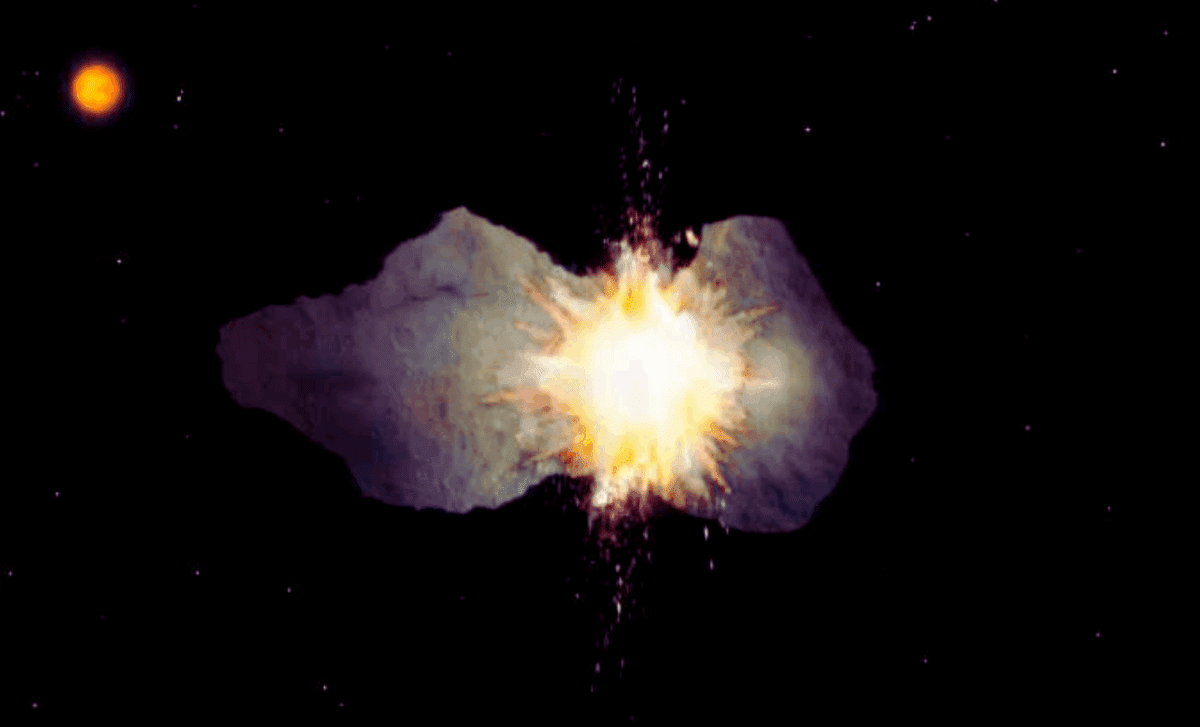
Breakthroughs in the study of asteroids, fueled by data from the European Space Agency’s Gaia mission, have shed new light on how these ancient celestial bodies rotate. By integrating sophisticated data analysis with machine learning techniques, researchers have gained fresh perspectives on why some asteroids maintain steady spins while others exhibit erratic tumbling. This research, authored by Dr. Wen-Han Zhou and colleagues, introduces innovative approaches to explore the inner structures of asteroids.
Unraveling the Mystery of Asteroid Spin: Order vs. Chaos
A key puzzle in planetary science involves the contrasting rotational behaviors of asteroids—some spin with stability, while others tumble unpredictably. Zhou’s group at the University of Tokyo has identified a complex dynamic between two main influences: impacts from collisions and internal damping forces within the asteroids. Traveling through the asteroid belt, these space rocks can be knocked into chaotic motions by collisions. Yet, internal friction gradually acts to dampen these irregular movements, guiding asteroids back to a steady spin. This interplay results in a "natural boundary" separating asteroids that tumble slowly from those that rotate smoothly. Zhou explains,
“We built a new model of asteroid-spin evolution that considers the tug of war between two key processes, namely collisions in the asteroid belt that can jolt asteroids into a tumbling state, and internal friction, which gradually smooths their spin back to a stable rotation.”
Add Cosmo Herald as a Preferred Source

This advanced model offers a new framework to comprehend why some asteroids display chaotic tumbling while others remain steadily rotating. It emphasizes the importance of these competing forces for astronomers aiming to forecast asteroid spin behaviors. Continued observations promise to enhance our understanding of how these influences shape asteroid rotations over time.
Gaia’s Vital Contribution to Mapping Asteroid Spin Patterns
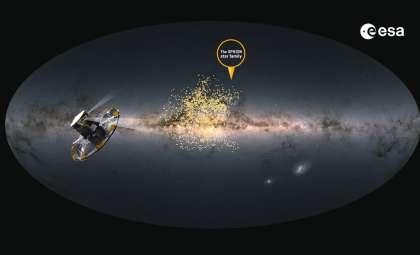
Gaia’s vast sky survey has produced an unparalleled dataset on asteroid rotational properties by analyzing changes in their light intensity as they spin, known as light curves. These variations reveal vital information about asteroid shape, size, and spin characteristics. When examined, the data uncovers a distinct separation: two asteroid groups divided by a notable gap. Below this gap are slower tumblers, while those above it spin fast and steadily. This previously unexplained division now aligns well with Zhou’s innovative spin evolution model.
Gaia’s role goes beyond data collection. It serves as a powerful platform for probing the physics behind asteroid rotation. By applying machine learning, Zhou’s team precisely predicted the position of this division in spin periods. This breakthrough provides greater insight into asteroid interiors, which is critical for formulating strategies to divert threatening celestial objects.
The Sun’s Effect: How Solar Radiation Alters Asteroid Spins
Another intriguing aspect of this investigation concerns the influence of sunlight. The Yarkovsky effect, caused by the uneven emission of heat from an asteroid’s surface after absorbing solar radiation, imparts subtle forces altering its rotation. This thermal recoil can either accelerate or decelerate an asteroid’s spin depending on its orientation.
For those asteroids tumbling unpredictably, however, the Yarkovsky effect is comparatively weak. Their rotation’s chaotic nature means the sunlight-driven force lacks a consistent direction, making it ineffective at stabilizing or speeding up their rotation. As a result, these tumbling bodies linger in a "slow-rotation zone" below the gap observed in Gaia’s data. Understanding this nuanced relationship between sunlight and asteroid spin is essential to anticipate their future trajectories, particularly if any pose an impact risk to Earth.
What Lies Beneath: Asteroids as Loose Assemblies
Comprehending asteroid composition is vital for improving planetary defense methods. Zhou’s study sheds light on a crucial aspect: many asteroids might be “rubble pile” structures rather than solid rocks. These loosely bound aggregates held together mainly by gravity contain numerous voids, differentiating them significantly from dense, monolithic objects.
This insight holds major implications for asteroid deflection attempts. A solid asteroid would react differently to impact forces than a rubble pile would. For example, NASA’s DART mission, which tests asteroid deflection, must consider that a rubble pile asteroid might absorb impact energy unpredictably, influencing the success of trajectory alteration. Zhou’s findings underscore the need to better understand asteroid interior makeup to refine deflection techniques and enhance Earth’s planetary defense.
- Categories:
- News




0 comments
Sign in to Comment