

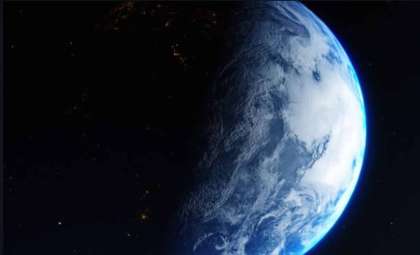
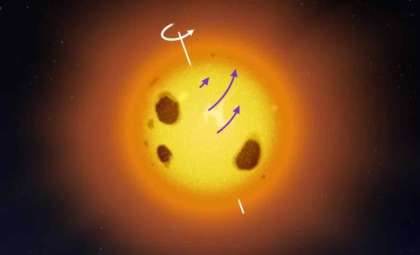
The planet's rotation is accelerating, leading to noticeably shorter days. Since 2020, Earth has broken records for the fastest spin, cutting down our day length by milliseconds. Approaching mid-2025, scientists anticipate even quicker rotations, possibly setting a new fastest-day record since record-keeping began in 1973.
The Countdown to Shorter Days
Earth traditionally completes one full rotation in 24 hours—exactly 86,400 seconds—which has long defined our daily cycle. However, recent measurements reveal Earth is spinning increasingly faster. On July 19, 2020, the rotation took 1.47 milliseconds less than 86,400 seconds, setting a new benchmark. By July 5, 2021, this accelerated further, shortening the day by 1.66 milliseconds.
Authorities such as Timeanddate.com and the International Earth Rotation and Reference Systems Service (IERS) forecast potential record-breaking fast days around July 9, July 22, or August 5, 2025, marking an ongoing trend though the exact date remains uncertain.

Unraveling the Causes Behind Faster Spins
The reasons for Earth’s quicker rotation aren’t fully understood, but researchers offer several plausible explanations. Changes in Earth’s inner core dynamics, redistribution of mass caused by glacial melting, and alterations in ocean currents likely play vital roles. The "Chandler wobble", a subtle shift of Earth’s poles, might also contribute to these changes.
Historically, Earth's rotation has been gradually slowing, but the current acceleration is puzzling. The thawing of major ice sheets and glaciers redistributes Earth's mass, which may subtly influence rotational speed. Although these variations are minuscule, atomic clocks can detect them.
Challenges Posed by Leap Seconds
Leap seconds are occasionally applied to keep civil time aligned with Earth's rotation. Traditionally, slowed rotation meant adding a leap second. However, with the planet spinning faster, the need for negative leap seconds (subtracting a second) has become a topic of debate.
Earlier in 2025, the IERS officially announced that no leap second will be introduced this year. Since the last leap second was added in 2016, experts now consider the possibility of removing seconds to adjust for Earth’s faster spin, though discussions are ongoing.
Implications of a Speeding Earth
While the changing rotation rate may seem negligible, it profoundly impacts technology reliant on precise timing, such as GPS and satellite communications. These systems demand exact synchronization to operate effectively, from navigation tools to financial markets.
As Earth’s rotation fluctuates, global networks relying on precise timing will face challenges in maintaining accuracy. Timekeepers must innovate to keep atomic clocks aligned with natural cycles, especially as the persistence of this acceleration remains uncertain.
- Categories:
- News








0 comments
Sign in to Comment