
Researchers at NASA have discovered that certain fungal species might exhibit the exceptional durability necessary to endure the extreme environment on the way to Mars and beyond. Featured in Applied and Environmental Microbiology, the research focuses on fungal spores from Aspergillus calidoustus that survived simulated space conditions as well as factors representative of the Martian surface. These findings challenge preconceived notions about life's resilience and enhance NASA’s protocols aimed at preventing biological contamination across planets.
Fungi Show Remarkable Endurance Against Space Stressors
Fungi are well-known for thriving in Earth's harshest habitats, but this new investigation reveals their potential survivability in outer space conditions. Scientists collected spores from NASA’s sterile cleanrooms, environments rigorously maintained to keep spacecraft free from biological contamination. These spores were then exposed to conditions simulating space travel and the Martian environment, including intense radiation, frigid temperatures, and reduced atmospheric pressure.
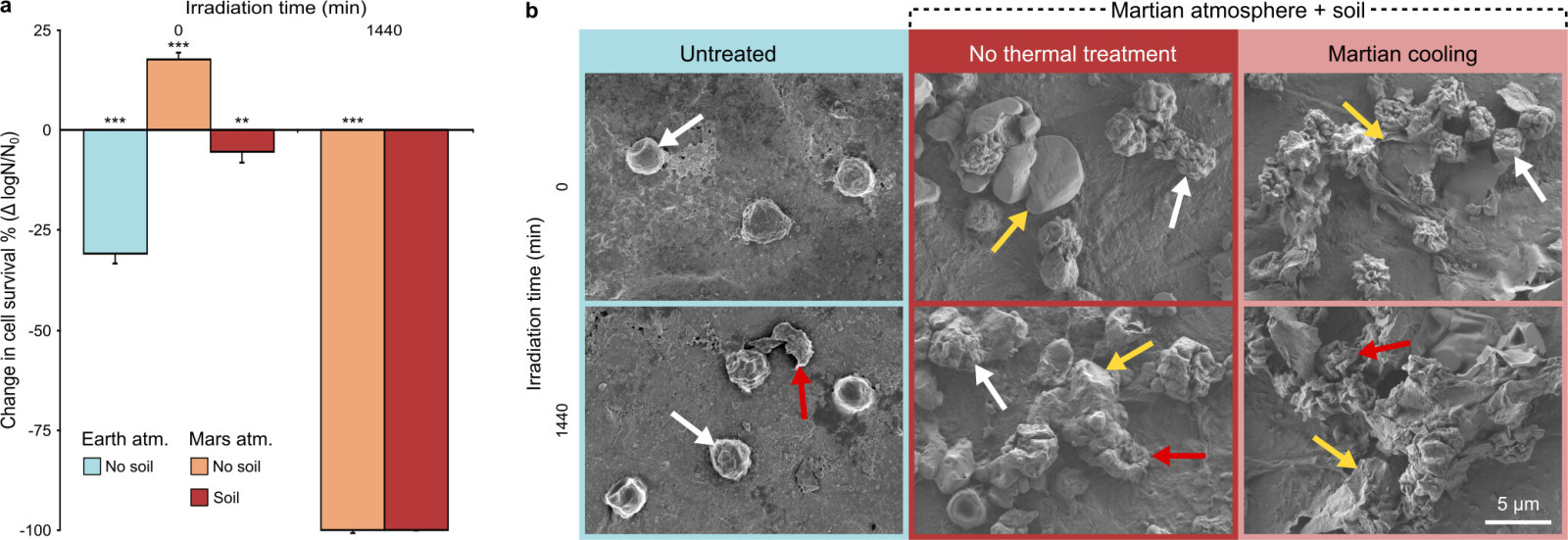
Notably, Aspergillus calidoustus spores demonstrated a surprising capacity to survive these combined stresses. Although fungal spores did not endure every stressor tested, this species showed that an arsenal of tolerance strategies could enable survival under some of the most extreme conditions conceivable. This discovery expands our understanding of how life might persist beyond Earth.

“This does not mean contamination of Mars is likely, but it helps us better quantify potential microbial survival risks,” said Dr. Kasthuri Venkateswaran, the study’s leader and a former Senior Scientist in NASA’s Biotechnology and Planetary Protection Group.
The Mechanisms Behind Fungal Survival in Space
This investigation, detailed in Applied and Environmental Microbiology, subjected fungal spores to space-like stressors including ionizing radiation, ultraviolet light, and thin atmospheric pressure, replicating harsh conditions spacecraft encounter en route to Mars. Aspergillus calidoustus stands out due to its ability to withstand these combined dangers, shedding light on fungal robustness in settings beyond Earth.
The Planetary Protection Group at NASA, which develops measures to prevent cross-planetary microbial contamination, has primarily examined bacterial resilience until now. This research pivots toward fungal organisms, which are more complex eukaryotes, possessing nuclei and intricate cellular structures. This is the first evidence that such eukaryotic microbes may survive space transit and the Martian milieu.
Consequences for Space Missions Targeting Mars
Beyond expanding scientific knowledge of microbial endurance, these results have practical importance for upcoming Mars explorations. With spacecraft like NASA’s Perseverance rover currently on Mars, the possibility of unintentional transfer of Earth-based microorganisms raises concerns. While the risk of actual contamination remains low, these findings provide crucial data aiding NASA’s ongoing efforts to protect other worlds by better understanding microbial survival probabilities.
“Microbial survival is not determined by a single environmental stress but rather by combinations of stress tolerance mechanisms,” Venkateswaran explained.
These insights could reshape sterilization procedures for spacecraft and influence strategies to minimize microbial transfer during planetary missions.
By pinpointing which microbes can withstand the formidable challenges of space travel, scientists are better equipped to anticipate the potential existence or introduction of life—whether microbial or more complex—on Mars.
- Categories:
- Science





0 comments
Sign in to Comment