
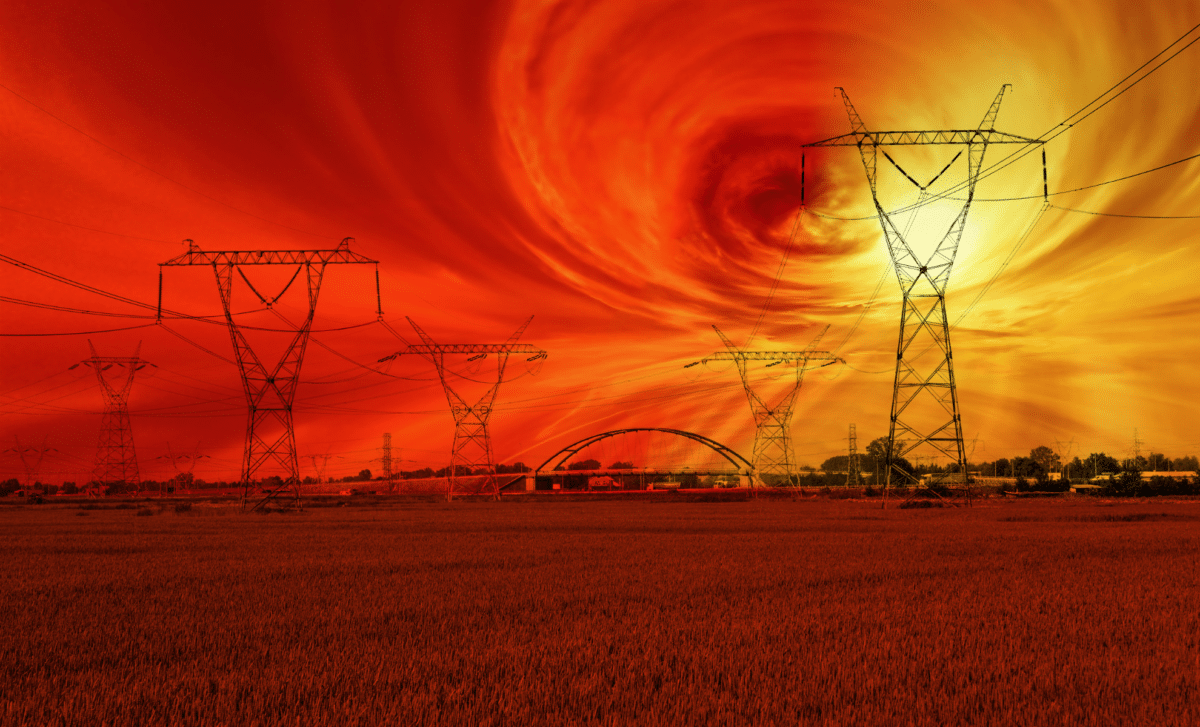
Envision a colossal solar storm capable of disabling satellites, GPS networks, and electrical grids—a scenario that might sound like science fiction but is increasingly recognized as a tangible threat. As our reliance on technology grows, the fallout from a major geomagnetic storm could be catastrophic, compromising everything from communication systems to daily power usage. Recent research emphasizes the grave dangers posed by space weather and stresses the need for comprehensive preparedness against these rare yet devastating phenomena.
Examining the Most Severe Solar Storm Event
Solar storms, or geomagnetic storms, arise when the sun unleashes a significant burst of charged particles into space. Upon reaching Earth’s magnetic field, these particles can trigger a chain reaction potentially harmful to modern technologies. A study spearheaded by the U.K.’s Science and Technology Facilities Council (STFC) outlines a “worst-case” scenario in which such a solar eruption severely compromises the operation of satellites, power grids, and communication infrastructures globally. Although events of this scale are rare, happening perhaps once every 100 to 200 years, their impact could be immense enough to cause significant concern.
As reported by Space.com, the research underscores the vulnerability of satellites orbiting Earth, which can suffer intense radiation damage from solar flares. This radiation can impair satellite electronics, degrade solar panels, and shorten their operational lifespan. In extreme conditions, satellite malfunctions might become permanent, disrupting key systems such as GPS, weather monitoring, and global communication networks for prolonged periods.

Solar Storms’ Threat to Power Infrastructure
A pivotal concern detailed in the study involves the possibility of widespread power outages. Interaction between solar radiation and Earth’s atmosphere can induce strong electric currents in terrestrial power lines. Known as geomagnetically induced currents (GICs), these can overload transformers, cause circuit breakers to trip, and potentially trigger extensive blackouts. Beyond immediate disruptions, severe damage to transformers could lead to long-term difficulties in restoring electrical service across affected regions.
The report warns that in extreme cases, power grids might be pushed to the verge of failure, jeopardizing electricity supply to homes, businesses, and critical infrastructure such as hospitals, emergency responders, and transportation networks. The cascading consequences of such breakdowns could roll across entire areas, requiring extended periods for recovery and repair.
Impact on Satellites and Navigation Systems
Satellites are essential for numerous functions including navigation and communications. The STFC findings reveal how an intense solar storm could severely disrupt satellite operations, causing both immediate damage and long-term degradation. Charged particles during such an event bombard satellites, harming their vital electronics and solar arrays. This can drastically reduce satellite lifespans or even result in complete failures.
Another significant effect involves the expansion of Earth’s atmosphere triggered by solar flares, which increases atmospheric drag on satellites, accelerating orbital decay. Satellites that previously maintained stable orbits might be forced to re-enter and burn up in the atmosphere, as demonstrated in 2022 when about 40 Starlink satellites were lost. The worst-case scenario described could intensify this phenomenon, complicating efforts to monitor and manage satellites and increasing space debris risks.
Communication Network Interruptions
The dangers from solar storms extend well beyond satellites and electrical systems to numerous communication platforms, especially those dependent on radio waves. Solar flares emit powerful radiation bursts that interfere with radio transmissions, potentially shutting down long-distance communication networks for extended durations. This disruption threatens crucial operations in aviation, maritime navigation, and defense sectors.
As solar storms degrade or entirely block radio signals, technologies reliant on detecting faint signals, such as GPS and radar, may become nonfunctional. The study highlights that the agricultural industry, for instance, suffered significantly during a geomagnetic disturbance in May 2024, incurring estimated losses around $500 billion in the U.S. While temporary interruptions can be damaging, prolonged outages could wreak havoc on industries dependent on exact positioning and communication capabilities.
- Categories:
- Science









0 comments
Sign in to Comment