
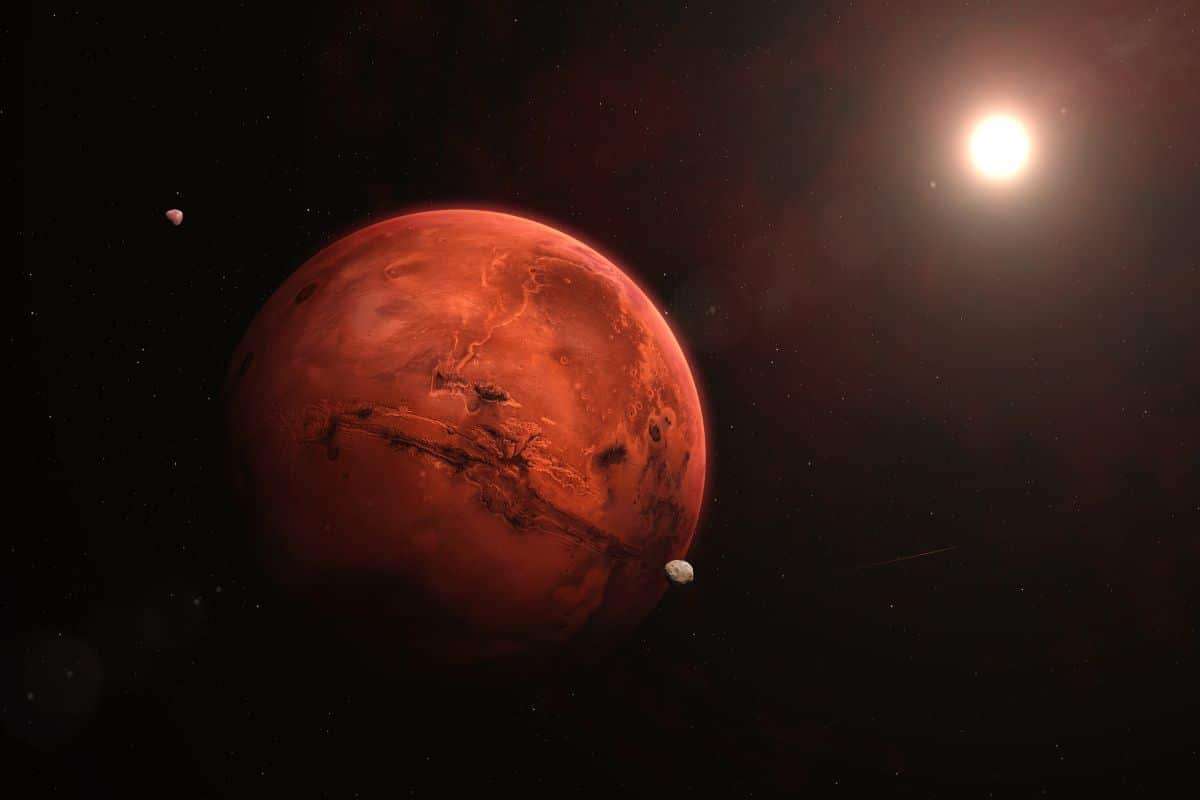
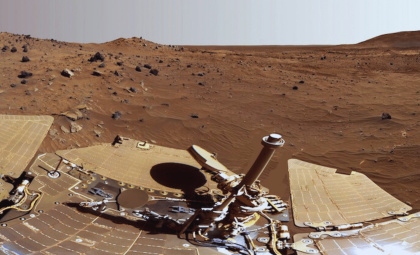
Mars has long captured the interest of scientists, often called the Red Planet because of its signature reddish surface. Traditionally, this color was believed to result from iron minerals rusting over billions of years under dry conditions.
However, recent studies are challenging this view by indicating that rusting could have started much earlier in Mars’ history, potentially linked to liquid water.
Beyond the Classic Rust Explanation
For many years, the prevailing theory credited the distinctive Martian color to iron-rich minerals reacting with oxygen, with winds dispersing the reddish dust globally.
Despite this, experts recognized that not all iron oxides form the same way. Some arise in arid environments, while others require the presence of water.

Identifying which iron oxides dominate the Martian regolith provides crucial clues about the planet’s former climate. Should the dust contain oxides formed in watery environments, it implies Mars once had conditions milder than previously assumed.
“Decoding the formation of rust gives us important insight into whether Mars was ever warm and wet or perpetually cold and dry—and critically, whether it could have supported life,” notes Adomas Valantinas, a postdoctoral researcher at Brown University.
Ferrihydrite’s Unexpected Contribution
A group of scientists attempted to simulate Martian dust using specialized grinding techniques to generate particles similar to those on Mars.
Analysis revealed these samples matched best not just with ordinary iron oxide, but also included basaltic volcanic rock combined with ferrihydrite.
This discovery is notable because ferrihydrite is a mineral formed in presence of liquid water under cool, wet conditions. Finding it on Mars points to an iron oxidation process influenced by early surface water.
Remarkably, ferrihydrite has remained chemically stable despite billions of years of exposure. “Since ferrihydrite can only originate when liquid water existed on the surface, it means Mars began rusting earlier than we thought,” Valantinas explains. “And this mineral remains stable under current Martian conditions.”
Stronger Evidence for Mars’ Watery Past
Finding ferrihydrite supports the idea that Mars once had abundant surface water, indicating the planet’s environment was not always the desolate desert it is today.
“This work leverages data from international Mars missions operating in orbit and on the ground,” says Colin Wilson, project scientist for the Trace Gas Orbiter (TGO) and Mars Express.
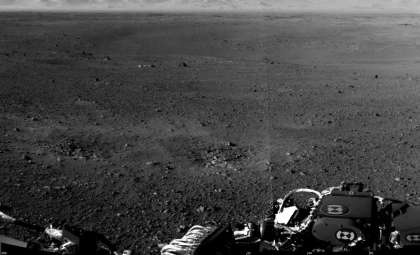
Complementary data from spacecraft like NASA’s Mars Reconnaissance Orbiter and rover missions including Curiosity, Pathfinder, and Opportunity confirm ferrihydrite’s presence.
Ferrihydrite's formation in mild, Earth-like environments hints that early Mars could have been more conducive to microbial life than previously assumed.
Up Next: Missions to Deepen Understanding
While these findings transform our perspective on Mars’ signature color, scientists anticipate further breakthroughs. “We look forward to data from upcoming explorations such as ESA’s Rosalind Franklin rover and the NASA-ESA Mars Sample Return mission,” says Colin Wilson.
NASA’s Perseverance rover is actively gathering dust samples containing iron-bearing minerals. Once returned to Earth, these samples will clarify ferrihydrite’s abundance and implications for Mars’ hydrologic history and habitability.
“Analyzing these rare specimens in laboratories will determine precisely how much ferrihydrite is in the dust and what it means for water’s legacy—and life potential—on Mars,” Wilson adds.
These groundbreaking insights recast Mars’ history as more complex and potentially life-friendly than ever before. “Mars remains the Red Planet,” Valantinas reflects, “but our understanding of its redness has spectacularly evolved.”








0 comments
Sign in to Comment