
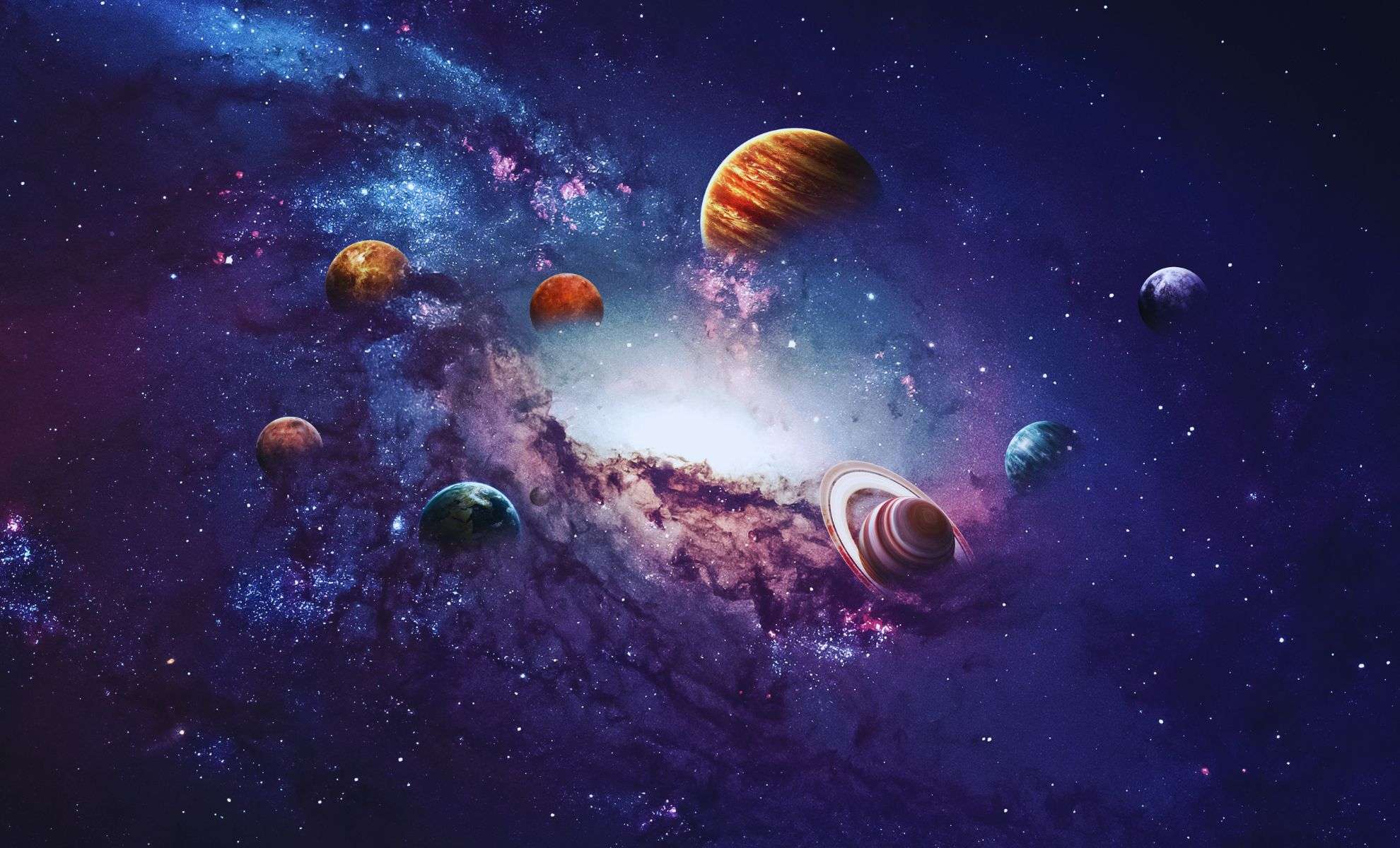
Recent research suggests there might be a Neptune-sized planet quietly orbiting in the remote reaches of the Oort cloud, the icy frontier that marks the outer limits of our solar system. Current estimates assign about a 7 percent likelihood to the existence of such a planet, sparking curiosity among astronomers.
Should this planet be confirmed, it would imply our solar system harbors more large celestial bodies than previously recognized. This elusive object might be a vestige from the early days of planetary formation, possibly hurled into the distant cloud during a tumultuous period or even captured from interstellar space.
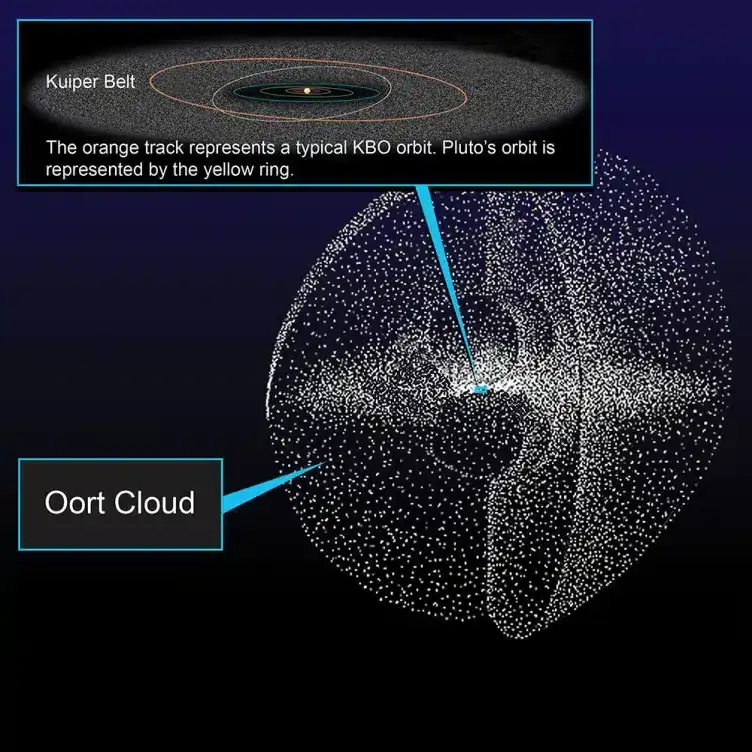
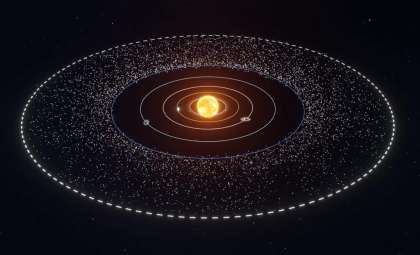
The Oort cloud is theorized to be a colossal shell of frozen debris, lying thousands of times farther from the Sun than Earth. It is considered the origin of many long-period comets. The possibility that a substantial planet could reside here challenges and enriches our understanding of solar system architecture and evolution.

How Might a Planet End Up in the Oort Cloud?
A recent paper on arXiv proposes that giant gas planets like Jupiter and Saturn often form in paired systems. Their intense gravitational interactions can destabilize nearby objects. During our solar system’s infancy, one such planetary companion might have been flung outward, forced to orbit far beyond the recognized planets, yet still tethered gravitationally to the Sun.
Instead of escaping completely, this celestial body could have settled into a distant, elongated orbit within the Oort cloud. Sean Raymond from the University of Bordeaux describes the unusual orbits of today’s outer giants as “scars from their violent pasts,” capturing the legacy of the solar system’s chaotic formation.
Why Is Detecting This Planet Such a Challenge?
The notion of this hidden world prompts the question: why hasn’t it been observed yet? The main hurdle is that discovering a planet at such a staggering distance is beyond the capabilities of current telescopes. Even sizable solar system objects are notoriously difficult to detect when located so far away.
“It would be extremely hard to detect,” Raymond notes. At such a remote distance from the Sun, any planet would reflect very little sunlight, moving so slowly across the sky that its presence could easily evade existing surveys.
Backing this up, MIT astronomer Malena Rice, who was not a part of the original research, commented:
“if a Neptune-sized planet existed in our own Oort cloud, there’s a good chance that we wouldn’t have found it yet.”
She further remarked that, surprisingly, planets in other star systems might be more readily observed due to favorable viewing angles and techniques like transit photometry.
Introducing a New Category of Solar System Objects
The prospect of a planet residing in the Oort cloud broadens the scope of overlooked celestial bodies. Nathan Kaib from the Planetary Science Institute describes this as potentially “a class of planets that should definitely exist but have received relatively little attention.”
This research shifts focus onto such elusive worlds that blur the boundary between confirmed planets and theoretical constructs. Without direct sighting and only indirect clues, the existence of this distant giant remains hypothetical, but grounded in realistic models.
With advances in probing the solar system’s outermost zones, astronomers are eager to continue the search. As Kaib and Raymond emphasize, exploring these remote regions could uncover not just cometary debris, but even entire planets hidden in the shadows of space.
- Categories:
- News





0 comments
Sign in to Comment