
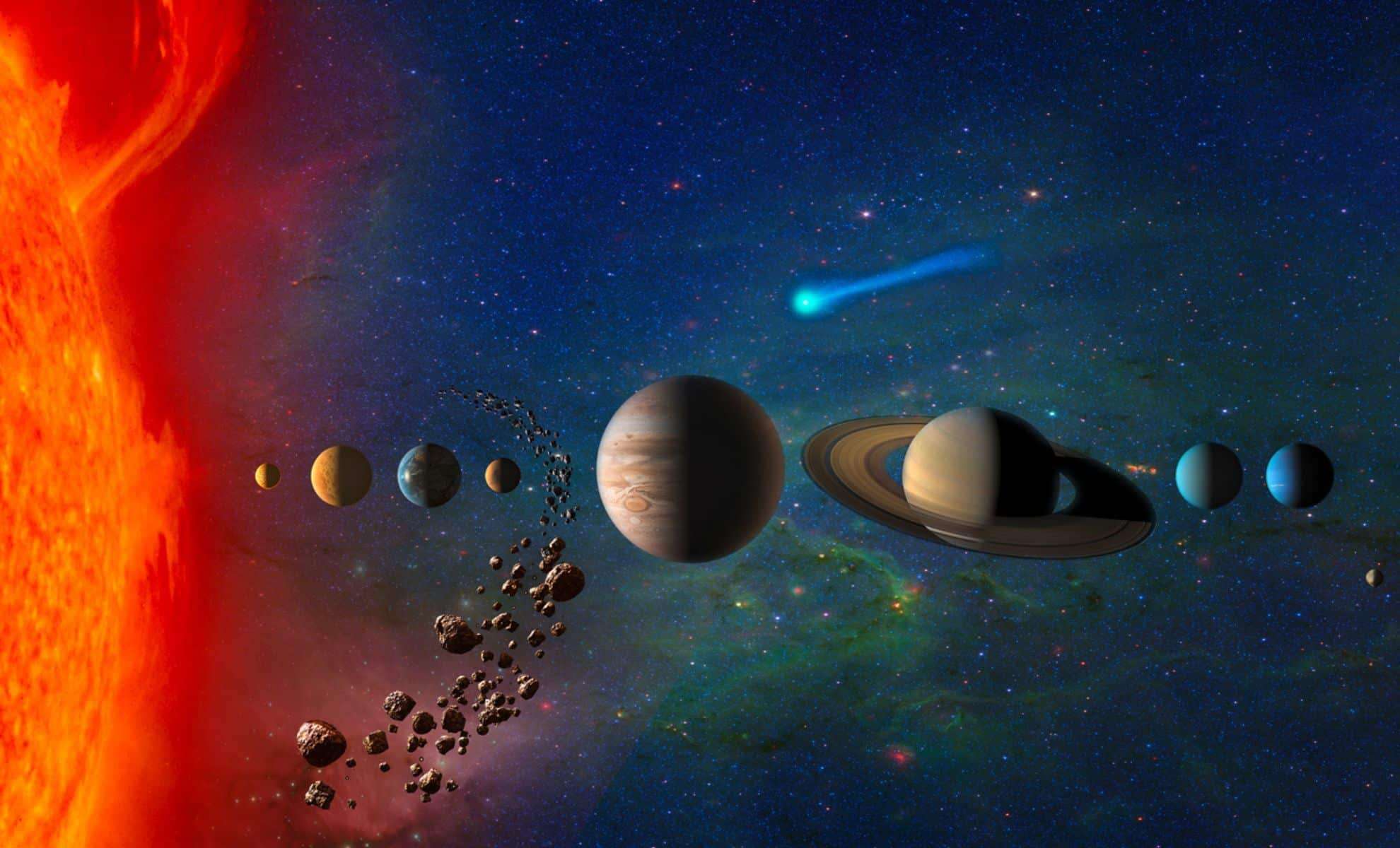
Our solar system, often seen as a stable collection of planets, moons, and distant objects, might have undergone a significant transformation due to an unexpected visitor from beyond its boundaries. This enigmatic interstellar traveler, distinct from any known planet or comet, has prompted scientists to reconsider the forces influencing our cosmic neighborhood. Its passage could have unsettled the careful orbital arrangements of the giant planets, causing shifts in their paths and tilts that were previously considered unlikely. But what exactly transpired, and how does this change our understanding of solar system stability?
An Invisible Influence That May Have Disrupted Planetary Harmony
For years, astronomers have meticulously mapped the orbits of planets, projecting their futures with remarkable precision. Recently, however, a startling discovery emerged. A colossal object, unlike typical asteroids or comets, surged through the solar system at extraordinary speed and distance, leaving behind perplexing consequences. According to recent research, this massive interstellar visitor, estimated to weigh between 2 and 50 times the mass of Jupiter, may have dramatically influenced the gas giants.
The study describes how just one close approach from this object—passing closer than 20 astronomical units with a hyperbolic excess speed under 6 kilometers per second—could have excited the orbital eccentricities and inclinations of Jupiter, Saturn, Uranus, and Neptune to their current observed levels. This finding sheds light on how external cosmic forces might mold the architecture and dynamics of our solar system.

What Sets This Interstellar Visitor Apart?
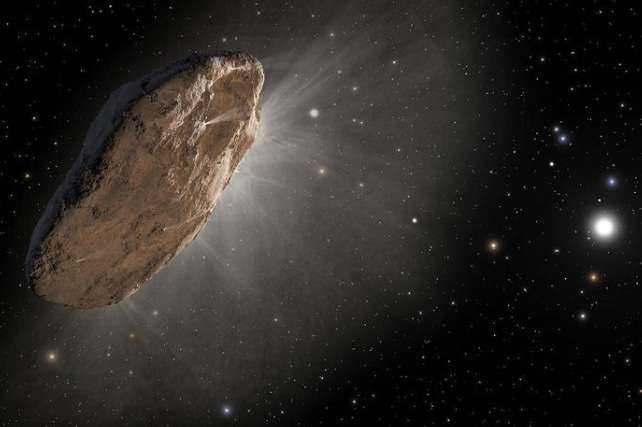
This interstellar object, traveling from beyond our solar system, is particularly exceptional due to its speed and path. Unlike other comets or asteroids that orbit our sun, this visitor followed a hyperbolic trajectory, indicating it was only transiently within the solar system and not gravitationally bound to the Sun.
Its highly unusual journey and velocity classify it as a rogue entity, drifting freely through the void of interstellar space. Its rare entrance into our cosmic system is known to be unprecedented. Scientists are now intensely focused on the potential ramifications this object might have triggered in the orbital dynamics within the solar system.
Altering the Giants: A New Chapter in Planetary Science
The gravitational influence from such a massive interstellar passerby may have been sufficient to tweak the orbits of the solar system’s largest planets. The gas giants’ paths are not fixed; they respond to gravitational nudges from other bodies. This visitor might have altered their orbital eccentricities—the degree to which their orbits deviate from a perfect circle—and their mutual inclinations, which is the tilt angle of their orbits relative to one another.
Though these variations might appear subtle initially, they could provoke significant long-term shifts. Changes to one planet’s orbit can ripple through the system, potentially reconfiguring the orbits of others or even increasing the risk of collisions. All of these effects could stem from an object traveling at a velocity much higher than anything encountered previously.
How Might the Giants' Orbits Have Changed?
While the idea of an unbound interstellar object disturbing the giant planets was once largely hypothetical, current findings suggest such encounters may have occurred and left lasting marks. This interaction could have boosted the eccentricities and inclinations of the gas giants’ orbits, diverting them from their initial courses.
Such evidence opens up new perspectives about the solar system’s evolving nature. Were the orbits of Jupiter, Saturn, Uranus, and Neptune influenced by visiting interstellar bodies in the past? If so, what implications does this have for the overall longevity and stability of our solar neighborhood? These insights underscore the importance of cosmic influences beyond our immediate environment, continuing to sculpt the planetary motions we observe today.
- Categories:
- News



0 comments
Sign in to Comment