
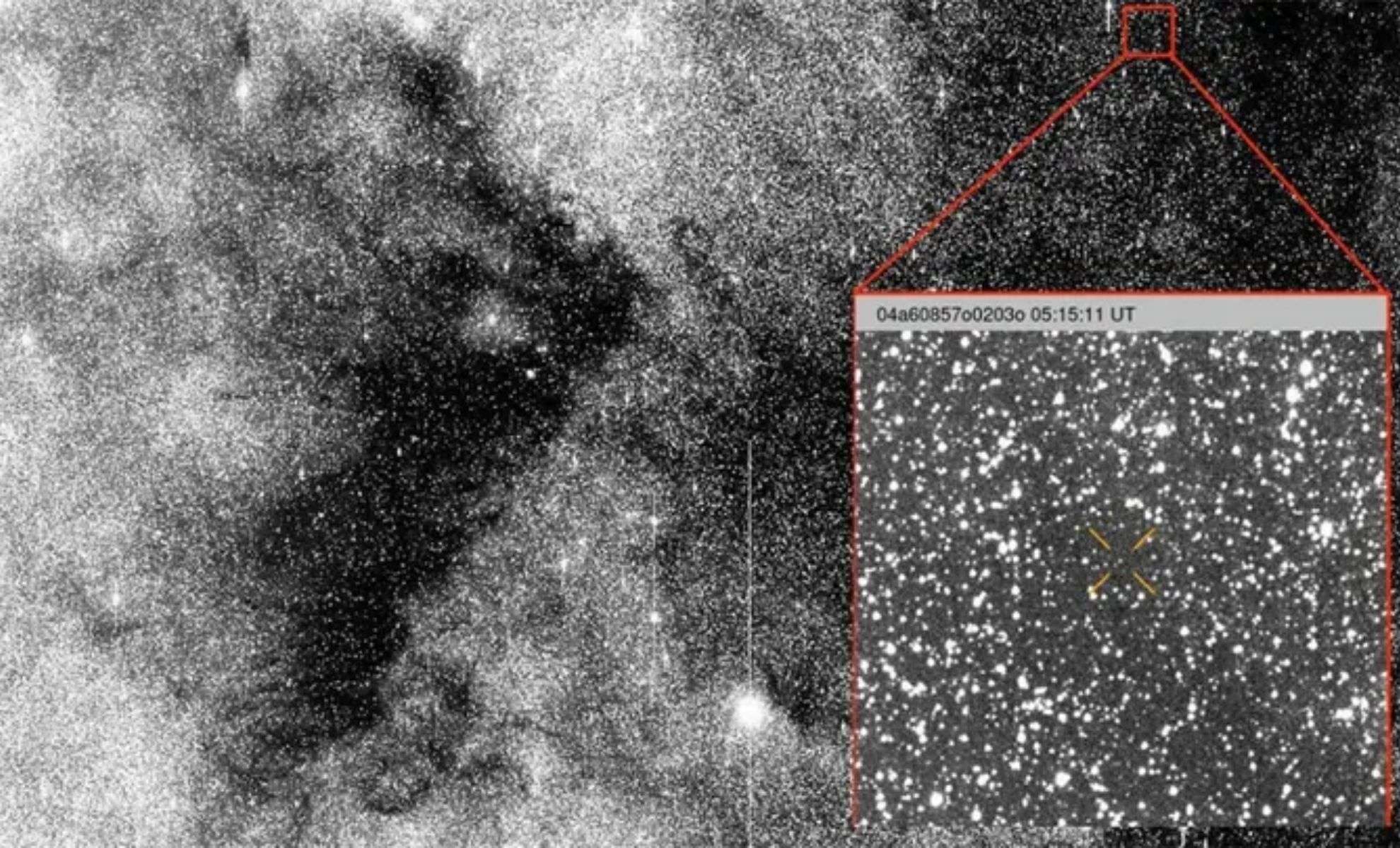
Harvard astrophysicist Dr. Avi Loeb has recently highlighted an intriguing interstellar visitor, 3I/ATLAS, discovered by the ATLAS telescope network. In a Fox News feature, Loeb proposed that this object's unusual traits may suggest it’s not a natural body but rather an artificial probe designed for reconnaissance. This possibility invites deep questions about the existence of alien civilizations and echoes earlier ideas regarding potential encounters with extraterrestrial technology. To grasp the significance of Loeb’s theory, it is essential to examine the object’s peculiar behavior, its physical properties, and what it might mean for uncovering the cosmos.
Understanding 3I/ATLAS and Its Unique Features
Spotted in July 2025 by the ATLAS observatory in Chile, 3I/ATLAS is an interstellar entity notable for defying typical comet behaviors. Loeb points out that the object’s orbital path is highly atypical, suggesting it may have been purposefully charted. “The trajectory could have been deliberately planned,” Loeb told Fox News Digital. “If it’s on a reconnaissance effort, possibly deploying smaller probes or surveilling planets... it appears quite anomalous.”
With an estimated diameter near 20 kilometers, 3I/ATLAS is sizable—comparable or even surpassing familiar vast asteroids like Manhattan-sized bodies. Additionally, the object’s luminescence is unconventional. Instead of the usual gas and dust tails seen trailing comets, 3I/ATLAS displays a distinct glow ahead of its motion. This phenomenon challenges conventional explanations based on known cometary physics.


The Enigma of 3I/ATLAS’s Forward Glow
A striking aspect of 3I/ATLAS is the bright illumination glowing in front of it, contrasting with the typical trailing comet tails made of dust and gas scattering sunlight. Loeb explained to Fox News, “Normally, comets have a luminous tail trailing behind them due to dust and gas reflecting sunlight. Here, the glow appears on the front side, which is highly unusual.” This feature raises intriguing questions about the physical makeup of the object and how it interacts with its cosmic surroundings.
Researchers speculate that the glow may result from surface materials with novel reflective properties, or it could hint at an artificial light source or an unknown energy mechanism. The origin and nature of this unusual glow make 3I/ATLAS a captivating focus for astrophysical studies aiming to decipher whether it stems from natural causes or something unprecedented.
The Remarkable Orbit of 3I/ATLAS
The trajectory of 3I/ATLAS adds another layer of mystery. While other interstellar visitors have entered our solar system, this object’s path aligns closely with the orbits of planets like Mars, Venus, and Jupiter—a highly improbable scenario for a randomly arriving body. Loeb highlighted this, stating that “only about one in 500 objects coming in from random directions would align so precisely with planetary orbits.”
This rare orbital alignment suggests to Loeb that the object may have been deliberately directed. If 3I/ATLAS is a probe, it could be surveying these planets, gathering information, and conducting observations. This points to a trajectory potentially engineered by an intelligent source with advanced navigation capabilities.
Is 3I/ATLAS an Alien Spacecraft?
Loeb’s most bold hypothesis is that 3I/ATLAS represents an extraterrestrial technological artifact rather than a natural object. He remarked in his Fox News Digital interview, “Discovering its technological nature would profoundly influence humanity’s future. We must consider how to respond.” This raises numerous questions about how society might handle direct evidence of alien intelligence, particularly in the form of advanced probe technology.
Despite its controversial nature, this idea aligns with scientific efforts like the SETI initiative, which assumes advanced civilizations might dispatch probes to investigate other star systems. Loeb’s viewpoint proposes that 3I/ATLAS could be part of an extraterrestrial exploratory network, signaling that intelligent life beyond Earth may be observing us. This possibility carries significant implications for humankind’s understanding of its cosmic context and the prospect of encountering alien life.
- Categories:
- News













0 comments
Sign in to Comment