
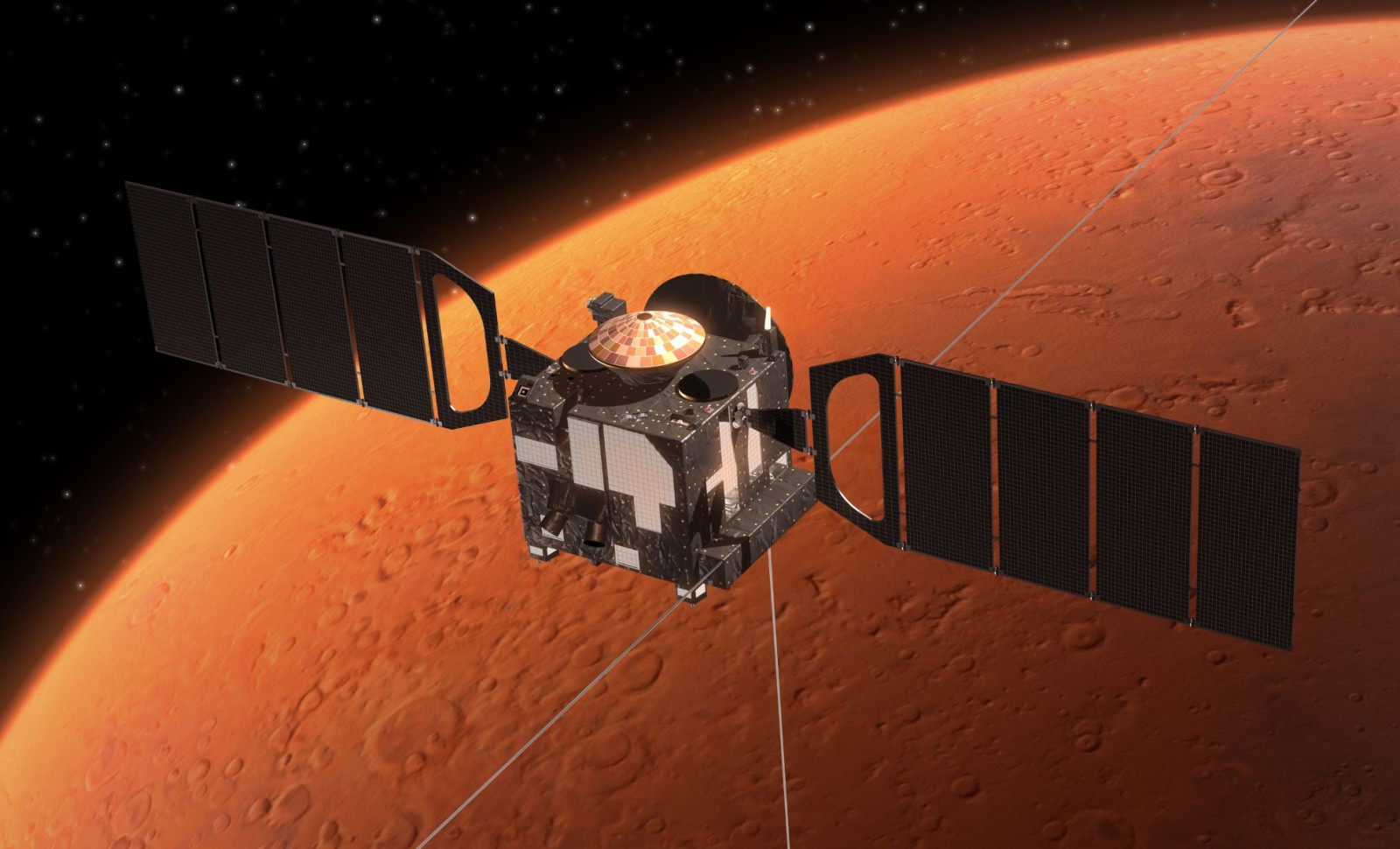
NASA is quickly losing vital communication channels with its Mars exploration efforts. Following the recent loss of contact with the MAVEN spacecraft, the space agency now confronts the imminent deactivation of the Mars Odyssey orbiter, which has been orbiting Mars for more than 20 years. As these orbiters approach retirement, NASA must urgently address how it will sustain data transmission for ongoing and future missions on the Red Planet.
These spacecraft have been fundamental to NASA’s Mars exploration strategy, and their declining status raises urgent concerns about the long-term resilience of NASA’s Mars mission network.
Exploring Mars Through NASA’s Orbital Pioneers
Orbiters serve as crucial links, relaying information between Mars’ surface and Earth’s mission control centers. While rovers like Curiosity and Perseverance communicate directly with Earth, orbiters provide a more reliable relay system capable of handling large volumes of data.

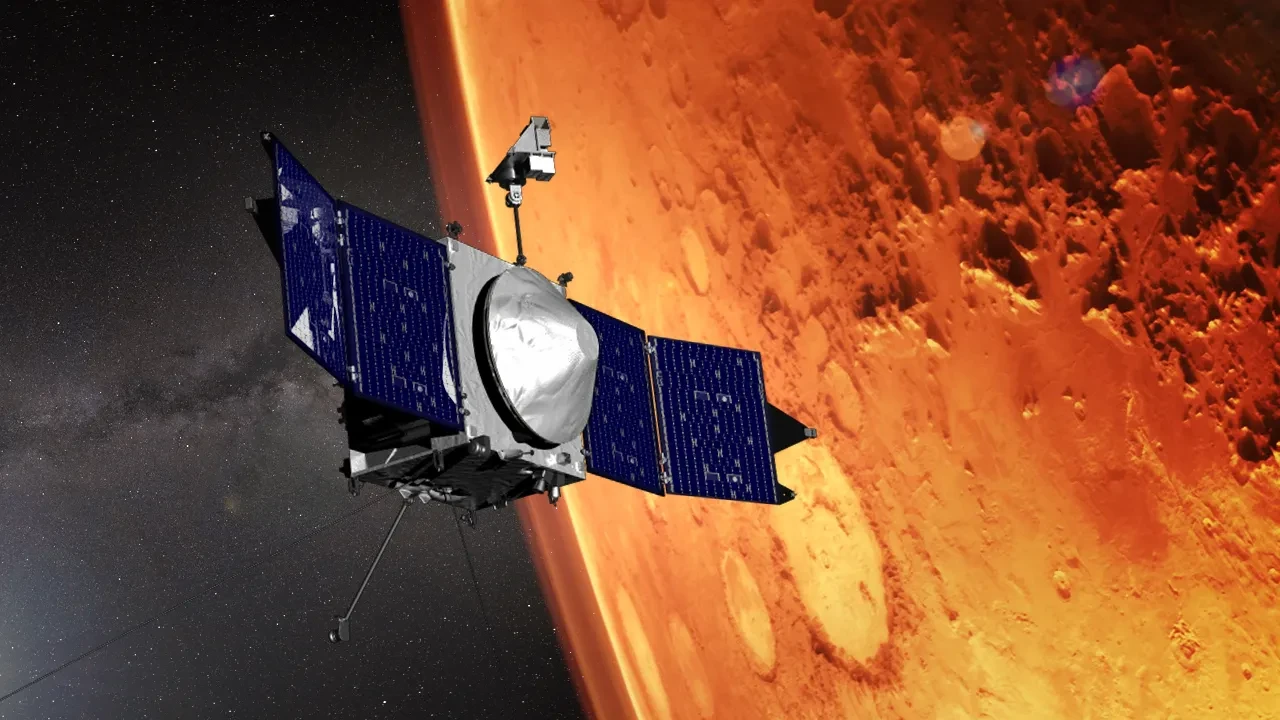
MAVEN’s high-altitude trajectory enables it to relay data for extended periods—up to 30 minutes per pass—significantly longer than lower orbiters. As highlighted by Ars Technica, this capability makes MAVEN an indispensable component of Mars communication infrastructure.
Both MAVEN and Mars Odyssey, launched in 2013 and 2001 respectively, have surpassed their designed mission durations and now face dwindling fuel supplies. Although Mars Odyssey may continue operating a few more years, MAVEN is anticipated to cease operations sooner. This situation pressures NASA to strategize for uninterrupted communication support ahead of upcoming Mars ventures.
Global Collaborations Striving to Bridge the Gap
NASA is not alone in its Mars endeavors. Europe’s ExoMars Trace Gas Orbiter and Mars Express spacecraft orbit the planet, assisting in data relay tasks. Nonetheless, their capacities fall short compared to NASA’s orbiters. Mars Express, operational for over two decades, is also facing aging challenges. According to the European Space Agency, the ExoMars Trace Gas Orbiter has similarly outlived its initial mission expectations.
Other countries, such as China and the United Arab Emirates, have launched orbiters to Mars, but these lack the comprehensive relay functions to fully substitute NASA’s aging orbiters. Consequently, NASA continues to depend heavily on its own spacecraft to support ongoing surface exploration missions.
Advancing Technology to Address Orbiters’ Retirement
The impending retirement of MAVEN and Mars Odyssey presents a significant challenge for NASA: maintaining seamless communication with Mars missions. The Mars Reconnaissance Orbiter (MRO) is still operational and expected to function into the 2030s, yet it cannot shoulder the entire data relay workload. While MRO’s advanced imaging helps select potential landing sites, its communication bandwidth cannot match MAVEN’s.
This impending shortfall underlines the urgent necessity for new orbital platforms to succeed MAVEN and Odyssey. NASA is actively funding future missions, but the lack of immediate replacements raises the stakes, emphasizing the need to deploy new communication satellites to ensure uninterrupted data flow for Mars exploration.
- Categories:
- Space






0 comments
Sign in to Comment