
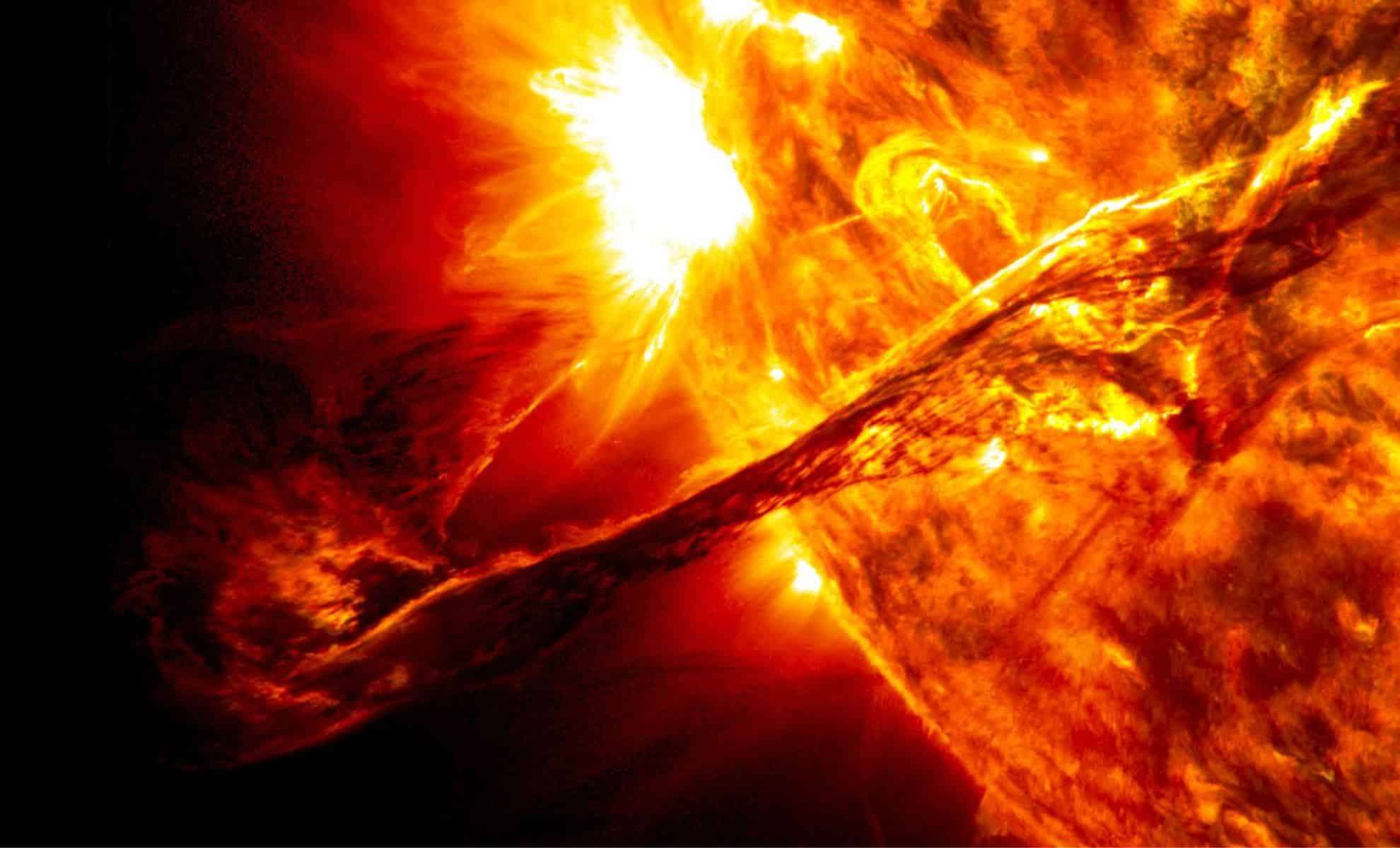
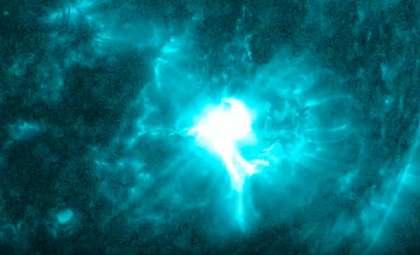
Earth could experience a geomagnetic disturbance on Wednesday, September 25, triggered by a significant solar eruption from the active sunspot AR3835. This powerful coronal mass ejection (CME) unexpectedly erupted on Sunday, September 22.
While the majority of the solar debris is projected to bypass our planet, a partial impact remains in the forecast. The timing is especially notable as this event aligns with Earth's autumnal equinox, a window when the likelihood of geomagnetic activity increases due to precise magnetic field orientations between Earth and the sun.
Surprise Solar Flare Emerges from Sunspot AR3835
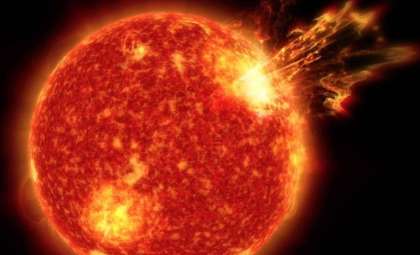
Sunspot AR3835 was initially considered stable, with little indication it would produce major solar disturbances. Yet, at 5:39 p.m. EDT on Sunday, September 22, it released an M-class flare, propelling solar plasma outward at speeds exceeding 650,000 miles per hour (nearly 1 million kilometers per hour). These powerful explosions, termed coronal mass ejections, eject gigantic amounts of solar material capable of interacting with Earth's magnetosphere and potentially causing disruptions.

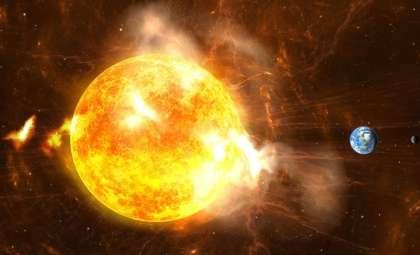
NASA simulations suggest that although most of the plasma cloud will miss Earth, some of the material could still graze the planet’s magnetic shield. Ordinarily, this would produce minimal effects, but during the equinox, when Earth's magnetic axis is aligned in a way that increases solar wind penetration, even minor hits can trigger notable geomagnetic responses.
Happy #SunDay! This week’s space weather report includes:
· 13 M-class flares
· 1 X-class flare
· 27 coronal mass ejections
· 2 geomagnetic stormsThis video from NASA’s Solar Dynamics Observatory shows the week’s activity.
More about flares: https://t.co/SrEf4df5Ws pic.twitter.com/xEkhzrxD0i— NASA Sun & Space (@NASASun) September 22, 2024
Equinoxes Amplify Geomagnetic Storm Potential
Equinoxes take place twice yearly when Earth's axis does not tilt toward or away from the sun, resulting in nearly equal day and night lengths worldwide. This celestial event also influences how Earth's magnetic field interacts with the continuous stream of charged particles emitted by the sun, known as the solar wind. During these times, the magnetic alignment favors a stronger influx of solar wind into Earth's magnetosphere, reducing the planet's ability to deflect charged particles and increasing susceptibility to coronal mass ejections.
This phenomenon is described by the Russell-McPherron effect, named after the scientists who identified it in 1973. Their work showed that the seasonal spike in geomagnetic storms correlates to this special magnetic configuration during equinoxes. Analysis of solar storm data from 1932 to 2014 confirms that geomagnetic disturbances almost double in frequency around equinoxes compared to solstice periods, when Earth's magnetic field provides stronger shielding.
Potential Effects of the Approaching Geomagnetic Event
Geomagnetic storms represent disturbances within Earth's magnetic environment caused by interactions with solar material such as that released during a CME. These events are measured on a scale from G1 (minor) to G5 (severe) by the NOAA Space Weather Prediction Center. While intense G5 storms can lead to widespread power outages and major communication disruptions, the forecast for this event on September 25 suggests a much milder impact.
Predictions point to a G1 or G2 storm, which may cause minor techno-interference primarily at higher latitudes. Possible effects include brief radio signal disruptions and small fluctuations within power grids, especially in sensitive infrastructures. Satellites could experience slight operational anomalies, though these should be manageable for operators.
One striking outcome of geomagnetic storms is the production of auroras, spectacular light shows in the polar skies known as the Northern or Southern Lights. These glowing displays result when energetic solar particles collide with Earth's upper atmosphere. This event may offer excellent viewing opportunities for auroras across northern Canada, Alaska, and parts of northern Europe.
The Importance of Tracking Geomagnetic Activity
Even though the upcoming storm is forecast to be minor, it underscores the critical need for ongoing solar monitoring. As the sun enters a more active phase of its 11-year cycle, increased solar flare and CME activity may elevate geomagnetic storm risks. Historical events, like the severe 1989 storm that blacked out Quebec for hours, demonstrate the potential hazards.
Organizations such as NASA and NOAA continually observe solar behavior to better anticipate and mitigate geomagnetic storm impacts. By analyzing past occurrences and current solar dynamics, scientists refine prediction models and develop methods to safeguard essential systems. Enhanced forecasting enables utilities, satellite operators, and airlines to implement timely precautions, minimizing the chances of serious damage.
Looking Ahead
While this week's geomagnetic disturbance is expected to remain gentle, it highlights the magnifying influence of equinox periods on solar-terrestrial interactions. As solar activity strengthens, more powerful storms may arise, posing growing risks to technological networks globally. Persistent vigilance and preparedness are key to reducing these threats.
For residents of higher latitudes, the event also presents a chance to experience the awe-inspiring beauty of auroras firsthand. As Earth encounters this surge of solar material, skywatchers could witness a brilliant natural light display—an enduring testament to the dynamic link between our planet and the sun.
- Categories:
- News







0 comments
Sign in to Comment