
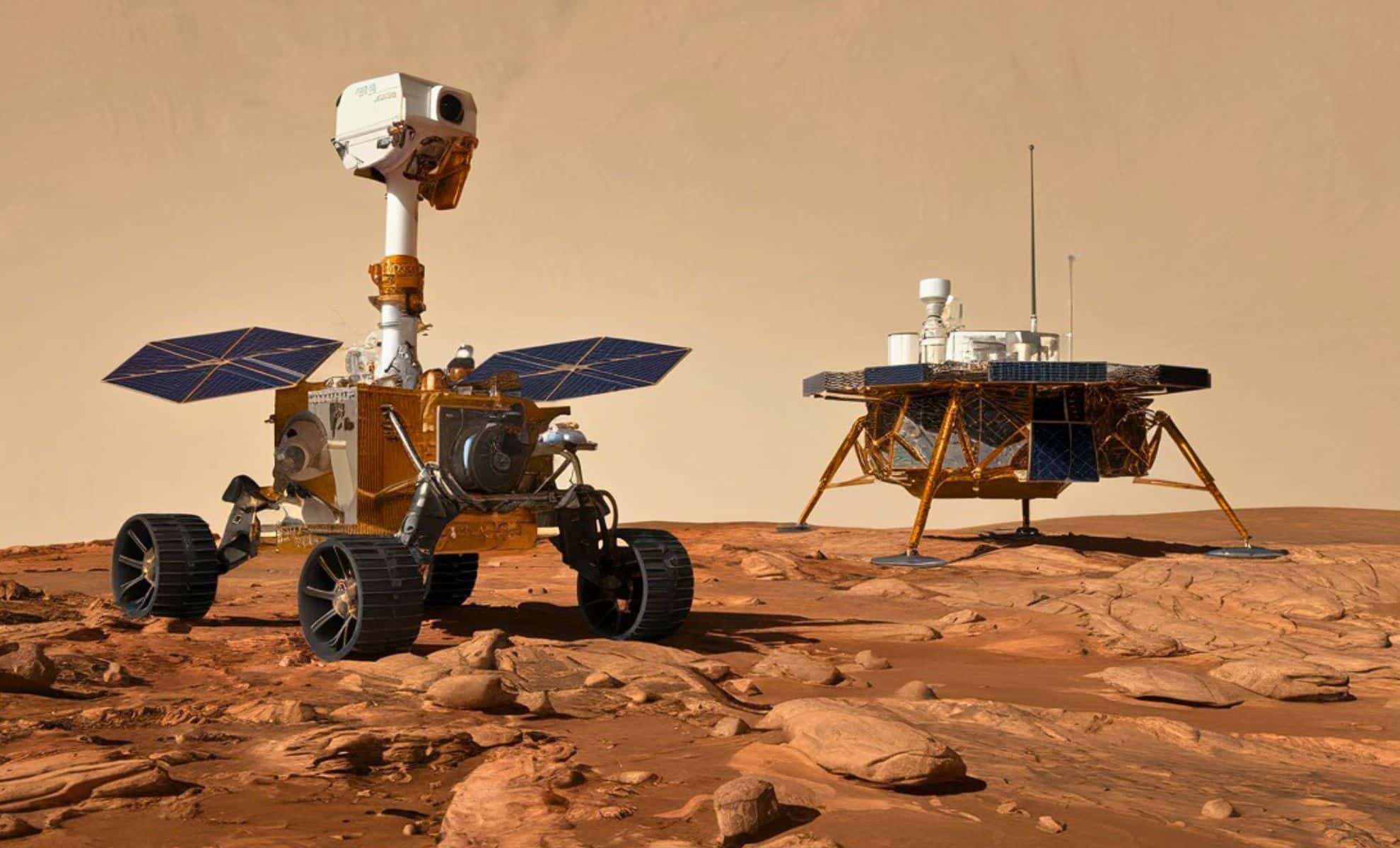
The Chinese Mars rover Zhurong, part of the Tianwen-1 expedition, has uncovered what might be a groundbreaking indicator of Mars’s watery history. Experts from Hong Kong Polytechnic University interpret the rover’s observations as evidence pointing to an ancient shoreline within the Utopia Planitia area, offering fresh insight into the Red Planet’s past water activity.
Could Mars Have Hosted a Frozen Sea? Revelations From Zhurong’s Exploration
After its touchdown in May 2021, Zhurong has utilized sophisticated instruments to conduct detailed investigations of Mars’s terrain and beneath its surface. The rover carries these key scientific tools:
- Ground-penetrating radar (GPR): Capable of scanning up to 100 meters below the surface to detect underground layers and water ice.
- Multispectral camera: Used to examine the mineralogical makeup of Martian rocks and soil.
- Navigation and topography cameras: Provide high-definition images essential for mapping and geological analysis.
- Mars surface magnetic field detector: Measures variations in the local magnetic environment.
- Mars meteorological measurement instrument: Tracks atmospheric conditions on Mars.
These tools helped reveal geological formations such as crater-like pitted cones, ancient sediment channels, and mud volcanoes. These features closely resemble shoreline structures observed on Earth. The research indicates this ancient ocean likely existed about 3.68 billion years ago and was rich in silt, resulting in layered sediment deposits.

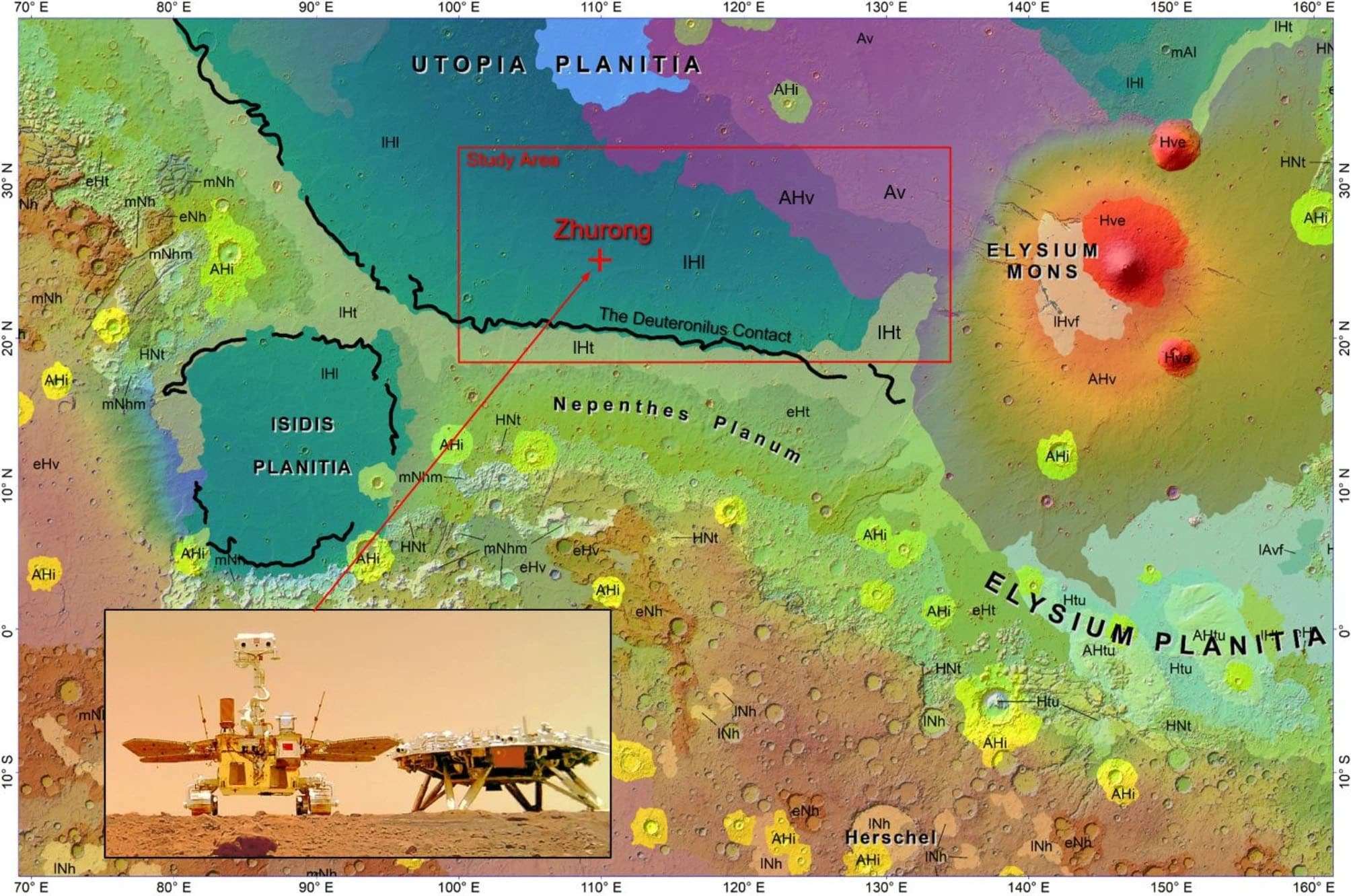
Does This Confirm Mars’s Ancient Oceans?
The study proposes that the ocean likely remained frozen for tens of thousands of years before evaporating roughly 260 million years later. This freeze would have safeguarded shoreline characteristics, leaving behind the sedimentary strata detected by Zhurong.
For years, the existence of extensive water bodies on Mars has been debated. Findings from Zhurong support the idea that the northern lowlands were once covered by an ocean during the Hesperian period. Confirming this would be a major development in decoding Mars’s climatic evolution and its potential to support life.
The Debate Over Erosion and Preservation
However, skepticism remains. Scientists like Pennsylvania State University’s Benjamin Cardenas question whether erosion processes over billions of years would have preserved such fragile features. The researchers counter this by suggesting that asteroid impacts may have refreshed parts of the shoreline, allowing these ancient formations to remain intact for Zhurong to detect.
Broader Implications for Habitability and Upcoming Expeditions
Water is fundamental to life as we understand it, and the possibility of an ancient ocean heightens questions about Mars’s habitability. Was this ancient sea conducive to life forms billions of years ago? Could microbial life still lurk beneath Mars’s surface today? Such questions propel ongoing studies and missions.
China’s forthcoming Tianwen-3 Mars sample return mission, slated for 2031, aims to bring Martian material back to Earth, potentially offering conclusive data. Concurrently, NASA’s sample-return effort is positioned as a partner in uncovering Mars’s enigmatic history.
As Zhurong’s discoveries reshape our knowledge of the Red Planet, scientists edge closer to resolving the profound inquiry: Did Mars ever harbor life? The answers await further exploration and analysis.
- Categories:
- News










0 comments
Sign in to Comment