

Recent research has unveiled that Komodo dragons, the planet’s largest lizards, have a distinctive iron-enriched layer on their teeth.
This landmark discovery offers a deeper understanding of how these powerful predators evolved to sharpen their hunting capabilities.
Iron’s Role in Komodo Dragons’ Razor-Sharp Teeth
Komodo dragons, native to Indonesia’s islands, are famous for their formidable size and predation techniques. Weighing as much as 175 pounds, they dominate their ecosystems. Scientists at King’s College London recently identified that their teeth are not only serrated and curved but uniquely coated with iron. This iron concentration, especially along the edges, empowers Komodo dragons to slice through flesh and bone efficiently, positioning them as apex predators with enhanced killing tools.

Dr. Benjamin Tapley, Reptile and Amphibian Curator at the Zoological Society of London, highlighted the importance of the findings: “As the largest lizards on Earth, Komodo dragons are truly remarkable. After more than a decade working with them at London Zoo, this discovery deepens our appreciation of their extraordinary biology.”
The study found that the iron deposits accumulate around the serrated margins of the teeth, functioning similarly to a saw blade. This specialized structure enables these lizards to efficiently tear apart large prey, a vital trait for their survival in the wild.
Linking Komodo Dragon Teeth to Ancient Predators
Finding iron-reinforced teeth in Komodo dragons not only reveals a remarkable modern reptilian adaptation but also draws parallels with ancient predatory species. Paleontologist Dr. Aaron LeBlanc, part of the research team, explained, “Komodo dragons’ curved, serrated teeth are reminiscent of those seen in carnivorous dinosaurs. The iron coating helps maintain the sharpness necessary for successful hunting.”
Researchers compared Komodo dragon teeth with those from other reptiles, such as crocodiles and monitor lizards, as well as fossilized dinosaur teeth. While trace iron levels were found in other reptiles, the amount and visibility of iron were markedly higher in Komodo dragons. This indicates a specialized evolutionary development aimed at preserving dental sharpness and strength, akin to the adaptations seen in some dinosaur species.

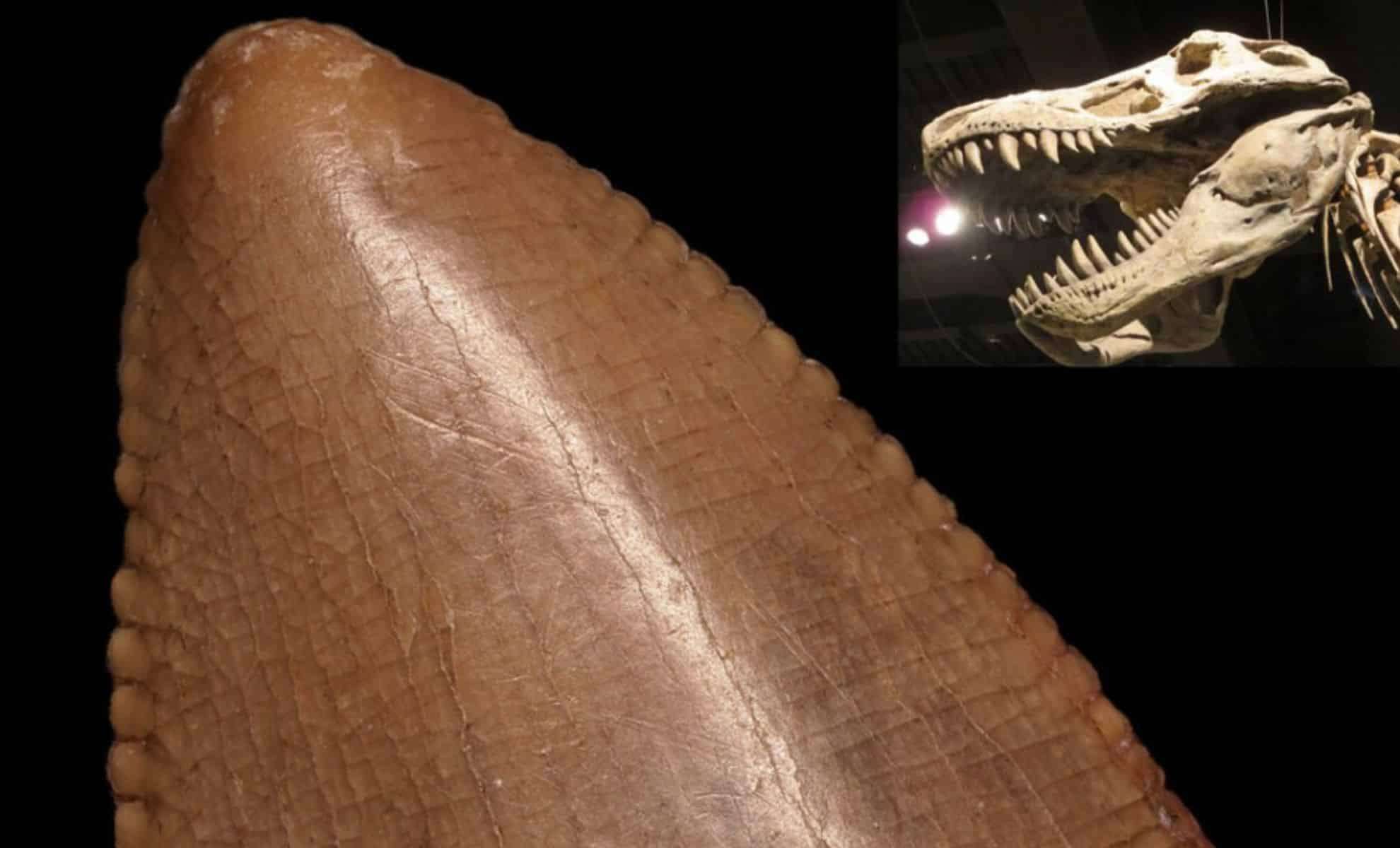
Dr. LeBlanc pointed out the paleontological implications: “Currently, our technology doesn’t allow us to definitively measure iron content in fossilized dinosaur teeth. However, we observed that large carnivorous dinosaurs, like tyrannosaurs, altered the enamel structure on their tooth edges to enhance cutting ability.” This suggests a possible evolutionary connection between the iron-coated teeth of Komodo dragons and the specialized enamel in dinosaur teeth, both serving to improve durability and slicing power.
Evolutionary Significance and Conservation Priorities
The recognition of iron-enriched teeth in Komodo dragons offers valuable insights into evolutionary biology, indicating that different predator lineages may have independently developed strategies to sustain sharp, resilient teeth in response to similar ecological pressures. This opens further research opportunities into dental adaptations across both present-day and extinct reptiles.
Domenic D’Amore, a paleontologist and co-author, remarked, “The presence of iron in reptile teeth is unprecedented and very exciting, heralding a new path for scientific investigation.” This study prompts inquiry into whether other reptiles, living or extinct, share this dental feature and what it could mean about their behavior and ecological roles.
Beyond its scientific value, the research underscores the conservation urgency for Komodo dragons, which are endangered. Their unique dental traits emphasize their ecological importance and the critical need to protect their populations. Dr. Tapley emphasized, “These discoveries underline how special Komodo dragons are and the importance of safeguarding these incredible creatures.”
The team hopes this knowledge will advance understanding of the species’ evolution and inspire ongoing conservation efforts. It highlights the complexity found in even well-studied animals and the necessity of continual biodiversity research and preservation.
Further Investigations into Iron-Enhanced Teeth Evolution
Uncovering iron-fortified teeth in Komodo dragons marks a significant leap in studying reptilian evolution. It invites deeper exploration into whether such traits are present across other reptiles, both modern and fossilized. Scientists are keen to investigate iron concentrations in dinosaur teeth, which might illuminate the feeding habits and ecological roles of ancient predators.
Dr. LeBlanc and his research team intend to expand their work by examining additional specimens with advanced imaging tools to better understand the role and distribution of iron in reptile teeth. They also aim to trace the evolutionary origins of iron-coated teeth in Komodo dragons and similar species.
As research progresses, these revelations highlight the vital role interdisciplinary approaches play in unraveling evolutionary mysteries. Such studies not only enrich our comprehension of Komodo dragons but also contribute broadly to evolutionary science, revealing the diverse survival adaptations animals have evolved through time.













0 comments
Sign in to Comment