
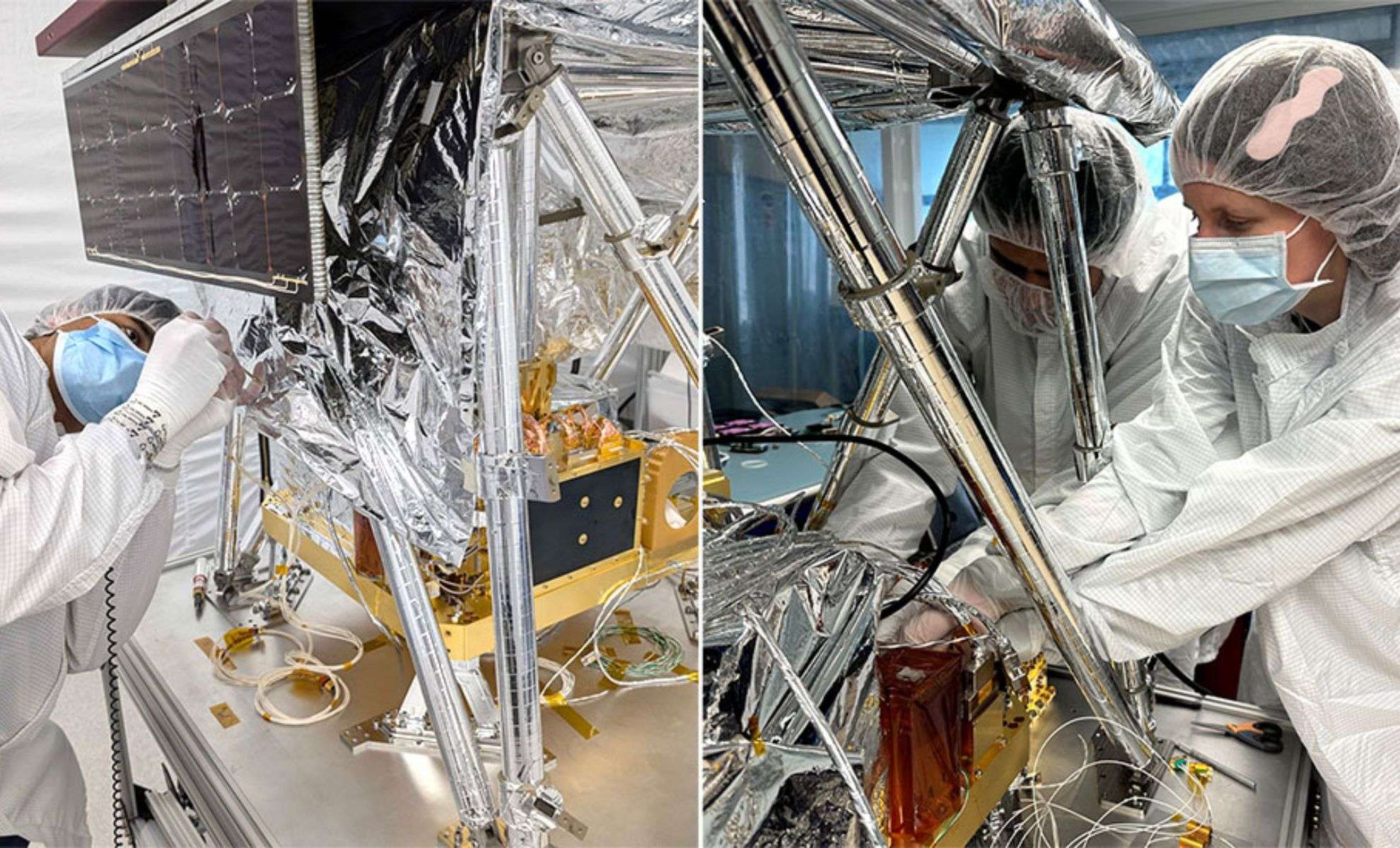
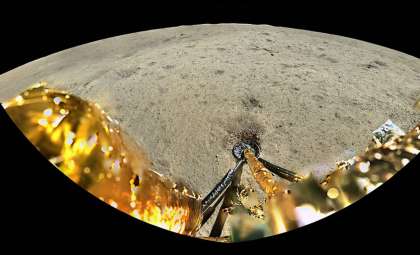
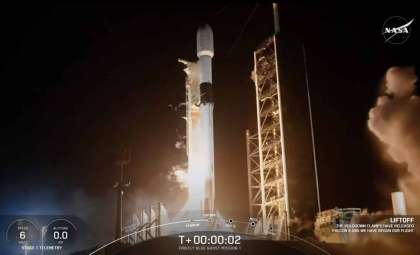
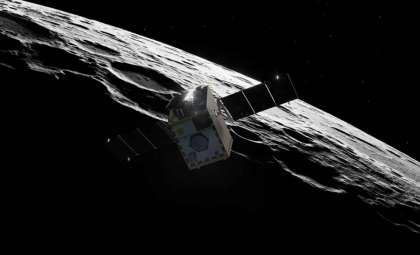
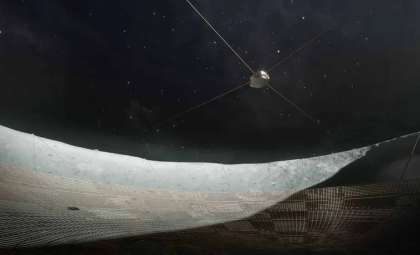
The upcoming Lunar Surface Electromagnetics Experiment (LuSEE-Night) mission is set to propel radio astronomy into a new era by deploying the inaugural radio telescope on the Moon’s far side. This project aims to capture vital observational data in an area shielded from Earth-based radio noise. Developed through a partnership involving the Brookhaven National Laboratory under the U.S. Department of Energy, NASA, and leading scientific organizations, the instrument will focus on detecting low-frequency cosmic signals that have been inaccessible to ground-based observatories. This initiative marks a significant milestone toward advancing space-based radio astronomy.
Targeting the 21-centimeter emission line of neutral hydrogen, the telescope will shed new light on the Cosmic Dark Ages — a formative epoch prior to star and galaxy creation. Positioned on the Moon’s far side, LuSEE-Night will benefit from an unprecedented radio-quiet environment, free from terrestrial interference. As launch preparations unfold, attention turns to the innovative design, cutting-edge technology, and unique challenges intrinsic to this lunar radio observatory.
Why Place a Radio Telescope Beyond Earth?
Radio astronomy has been critical for exploring phenomena like pulsars, quasars, and supermassive black holes. Still, Earth's atmosphere and burgeoning human-made radio emissions hinder observations at some frequencies. From everyday devices such as microwave ovens and GPS to satellite transmissions and ionospheric reflections, these signals create noise that obscures faint cosmic sources. This ongoing interference has driven astronomers to seek platforms beyond Earth’s radio-rich environment.

The Moon’s far side offers an exceptional natural radio shield, blocking Earth-originating transmissions and establishing an ideal setting for recording pristine, low-frequency cosmic waves. The LuSEE-Night endeavor represents a vital advancement toward leveraging this advantage for novel space-based radio observations.
Engineering the Lunar Radio Explorer
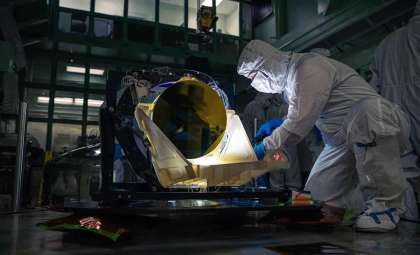
Equipped to detect radio frequencies spanning 0.1 to 50 MHz, LuSEE-Night incorporates a sophisticated 4-channel, 50-MHz Nyquist baseband receiver alongside a radio spectrometer that isolates targeted signals from background noise. Anže Slosar, the mission's science collaboration lead, highlights, “Our spectrometer is highly capable and adaptable, featuring extensive hardware and software functionalities.”
The telescope's design includes four 3-meter antenna rods that rotate to dynamically aim and calibrate measurements. This antenna array enables precise targeting of celestial regions and sharpens data quality. Powered by solar energy and backed by a 40-kilogram lithium-ion battery, the system is engineered to operate continuously through the 14-day lunar night, enduring temperatures plummeting to -173.15°C (-279.6°F). The battery's capacity is critical for sustaining functionality amid these extreme conditions.
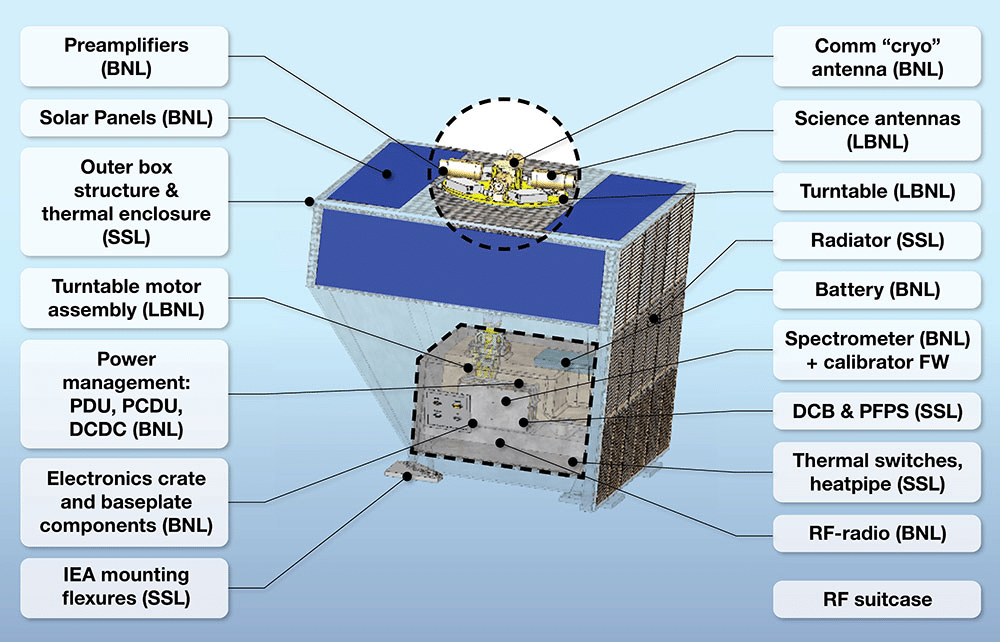
Overcoming Power Challenges for Lunar Survival
Ensuring sufficient energy storage to endure the lunar night presented a major obstacle for the LuSEE-Night team. Sven Herrmann, the mission’s project leader, describes the decision-making process: “A primary consideration was how large the battery needed to be… Ultimately, we selected a 50-kilogram (110-pound) battery.” This substantial battery is vital not only for powering the telescope but also for safeguarding it from freezing in the frigid lunar conditions.
Balancing power supply with operational needs requires meticulous planning. Mission instrument scientist Paul O’Connor explained, “Figuring out how to balance the energy required for science functions with the battery capacity necessary to keep the system alive was a delicate task.” These strategic choices illustrate the complex interplay between engineering and science to create a lunar instrument capable of withstanding harsh environments while producing groundbreaking data.
- Categories:
- News






0 comments
Sign in to Comment