
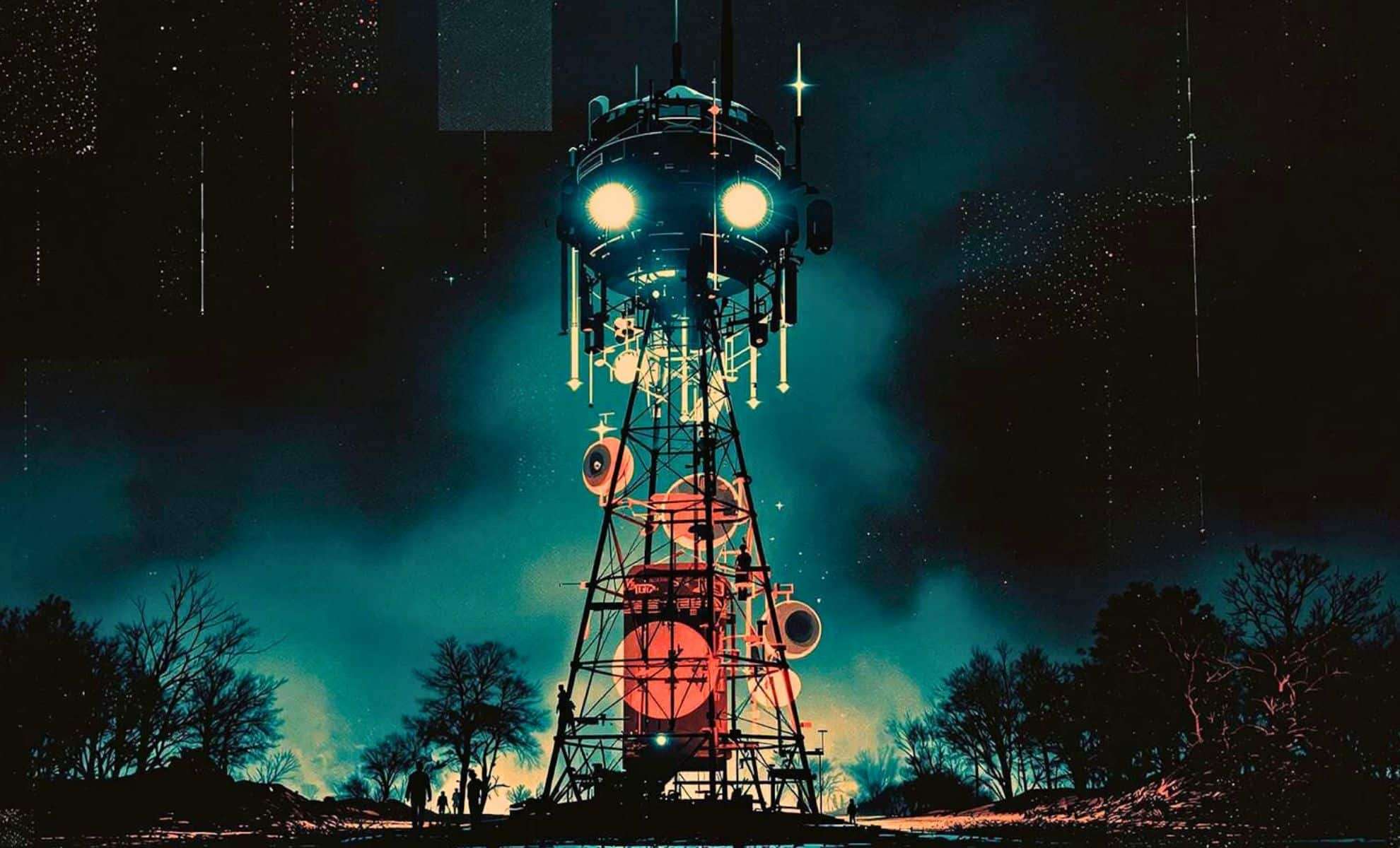
A long-standing enigmatic shortwave radio transmission that has confounded intelligence experts and radio enthusiasts for years has once again emitted a fresh coded broadcast. Originating from UVB-76, commonly referred to as “The Buzzer”, this Soviet-era radio station remains shrouded in secrecy despite continuous transmission from within Russia.
This recent message, detected on September 8, 2025, included an unusual mix of Russian personal names, random numerical sequences, and puzzling phrases, stirring renewed curiosity about whether this signal is still embedded in Russia’s military communication system or serves a more mysterious function.
A Cold War Relic With Ongoing Mystery
Active since at least the mid-1970s, UVB-76 broadcasts persistently on the 4625 kHz shortwave band, maintaining a characteristic buzzing tone interrupted occasionally by voice transmissions. These spoken segments typically comprise lists of names, numbers, or cryptic codes relayed in a monotone by male and female speakers.

According to Priyom.org, a trusted group monitoring radio signals, UVB-76 likely forms part of a military communication network connected to Russia’s Western Military District. Its broadcasts have been divided into three main categories—Monolith, Uzor, and Command—each thought to correspond to distinct military functions.
Despite extensive study over decades, the exact objective of these broadcasts remains elusive. A 2011 report by The Guardian speculated on links to Russia’s "dead hand" nuclear fail-safe, but no conclusive evidence supports this idea. Officially, the Russian authorities have never confirmed the station’s role or existence.
Latest Message Fuels New Speculations
The transmission captured on September 8 and relayed by Russian media outlet RT included Russian names such as Nikolai, Zhenya, Tatiana, Ivan, Olga, Elena, and Leonid, along with numbers: 38, 965, 78, 58, 88, and 37. It also contained phrases like “soft signal”, “five signs”, and “reception”.
RT pointed out that these elements might relate to the code NZHTI, a callsign previously linked to UVB-76 transmissions. Although RT shared the recording on its X (formerly Twitter) feed, the post was blocked within the EU due to restrictions on Russian state media.
The message’s timing is notable. UVB-76 transmissions were largely silent through 2024 and 2025, with only infrequent voice messages. This broadcast stands out for the diversity of personal names and seeming instructions and was aired twice in one day—an unusual occurrence typically tied to phases of military or geopolitical tension.
Deliberate Puzzle and Strategic Disinformation
The Buzzer’s signals are thought to originate from multiple locations near Saint Petersburg and Moscow, managed via legacy Soviet communication centers such as the 60th and 69th Communication Centers, as compiled by Priyom.org. The use of outdated equipment often causes frequency interference, with faint Morse code leaking into voice broadcasts.
This interference further deepens the mystery for analysts attempting to decode the transmissions. Dr. Natalia Tuchkova, a cybersecurity expert at the University of Helsinki, noted in a 2023 publication on military signals intelligence:
“There is strong evidence that some of these coded messages are intentionally ambiguous. It may be an act of psychological warfare—designed not to communicate with allies, but to confuse adversaries.”
The idea that The Buzzer serves as a means of strategic ambiguity is credible. During the Cold War, both the Soviet Union and the United States employed "numbers stations," radio broadcasts that conveyed encrypted instructions to field agents.
Unlike similar Western stations, UVB-76 has never stopped transmitting post-Cold War. Activity has arguably intensified since 2010, coinciding with Russia’s military reforms and rising regional conflicts.
- Categories:
- News













0 comments
Sign in to Comment