
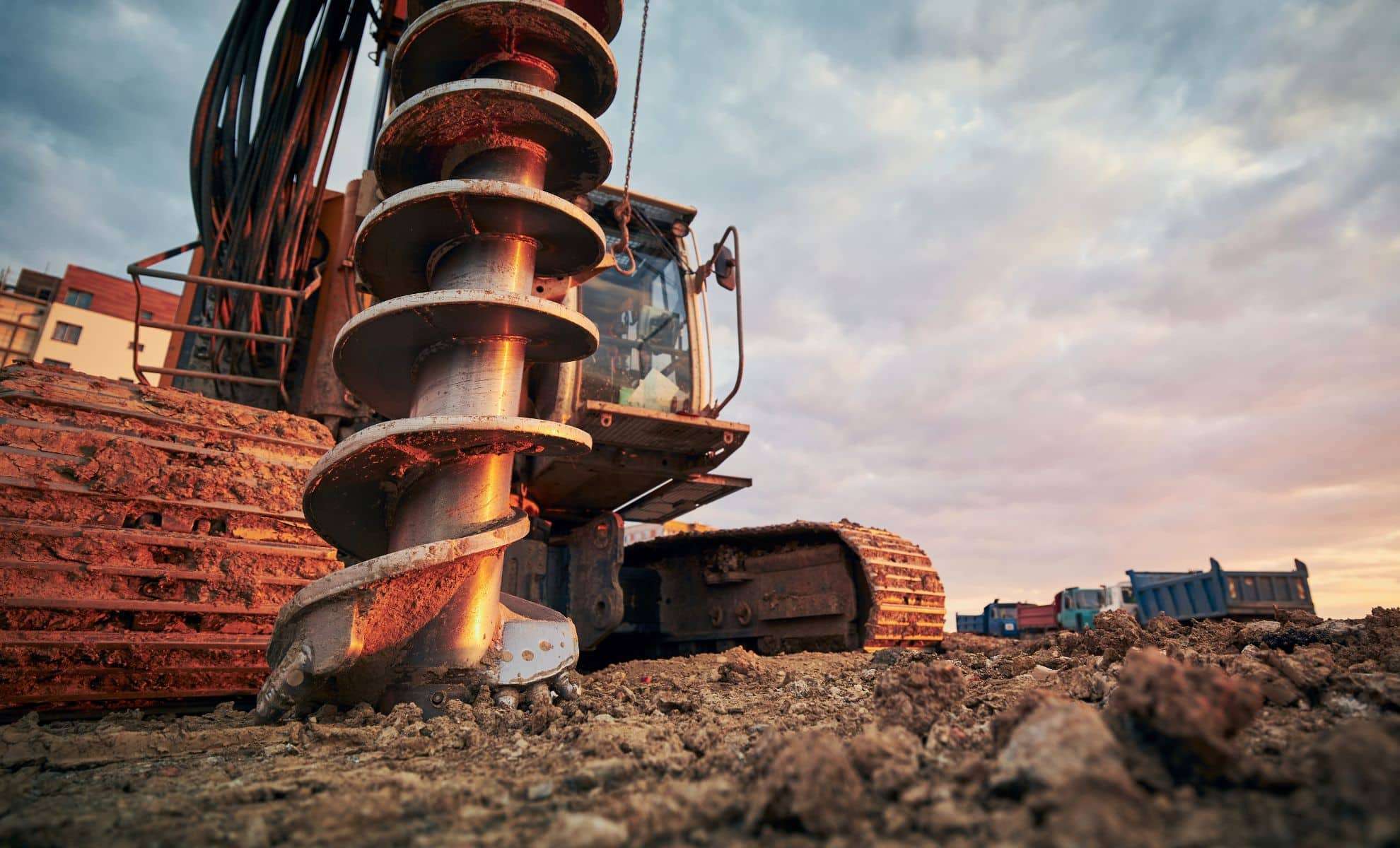
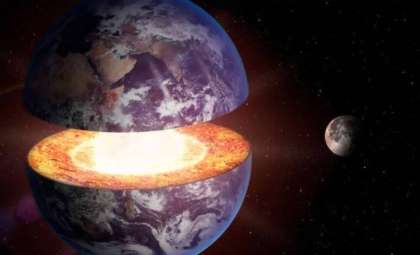
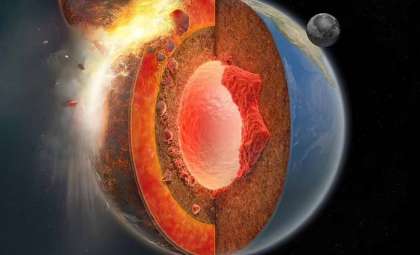
A pioneering marine drilling expedition has achieved unprecedented penetration into the Earth’s mantle, shedding new light on the planet’s internal composition. The results, featured in a recent Science publication, originate from a deep-ocean drilling operation near the Mid-Atlantic Ridge, close to the undersea Atlantis Massif. This effort represents a significant breakthrough in obtaining direct samples from the mantle—the vast rocky layer beneath the crust that makes up about 70% of Earth’s mass and 84% of its volume. Despite its crucial role in geological and tectonic processes, direct access to mantle rocks has been incredibly rare until now.
Reaching Unprecedented Depths in Mantle Sampling
Scientists aboard the JOIDES Resolution ship aimed to extract cores from beneath the seafloor, focusing on mantle rocks exposed by natural thinning of the crust and faulting near the Lost City hydrothermal vent. Johan Lissenberg, a petrologist at Cardiff University and co-author of the study, shared with Nature, they initially intended to drill just 200 meters, the deepest depth previously achieved in mantle rock. Unexpectedly, the operation proceeded three times faster, enabling retrieval of a 1,268-meter-long core primarily composed of abyssal peridotites, notably harzburgite—a mantle rock formed by partial melting. These rocks displayed mineral changes caused by seawater interaction, a process known as serpentinization, which imparts a distinctive greenish, marble-like texture. The success greatly surpassed expectations, providing new opportunities to explore Earth's inner layers.
Insights from Mantle Materials at the Atlantis Massif
This extensive core sample grants rare access to the geological foundation beneath the Lost City hydrothermal area, a location of strong scientific interest due to its unique chemical environment and implications for life's origins. The mantle rocks recovered showcase complex seawater-mantle interactions that help illustrate how hydrothermal fluids rich in hydrogen, methane, and various carbon compounds develop in such settings. Andrew McCaig of the University of Leeds, co-author of the research, explained in The Conversation that this mixture of harzburgite and gabbros reveals valuable information about partial melting and magmatic activities beneath ocean ridges. Such data enrich our understanding of tectonic forces and the processes that continuously reshape the oceanic lithosphere.

Obstacles and Outlook for Future Mantle Exploration
Although this project marked a major achievement, the team was not able to fully cross the Mohorovičić discontinuity—the Moho—the critical boundary separating Earth’s crust from untouched mantle. Reaching this would require drilling through thinner crustal zones or leveraging newer technologies. The expedition concluded early partly due to limited operating time and funding restrictions, as the U.S. National Science Foundation decided against extending financial support beyond 2024. Despite these challenges, the scientific community remains hopeful that further explorations near the Atlantis Massif or similar thin-crust areas will eventually yield direct access to pristine mantle rocks, enhancing our comprehension of Earth's composition and evolution.
- Categories:
- News




0 comments
Sign in to Comment