
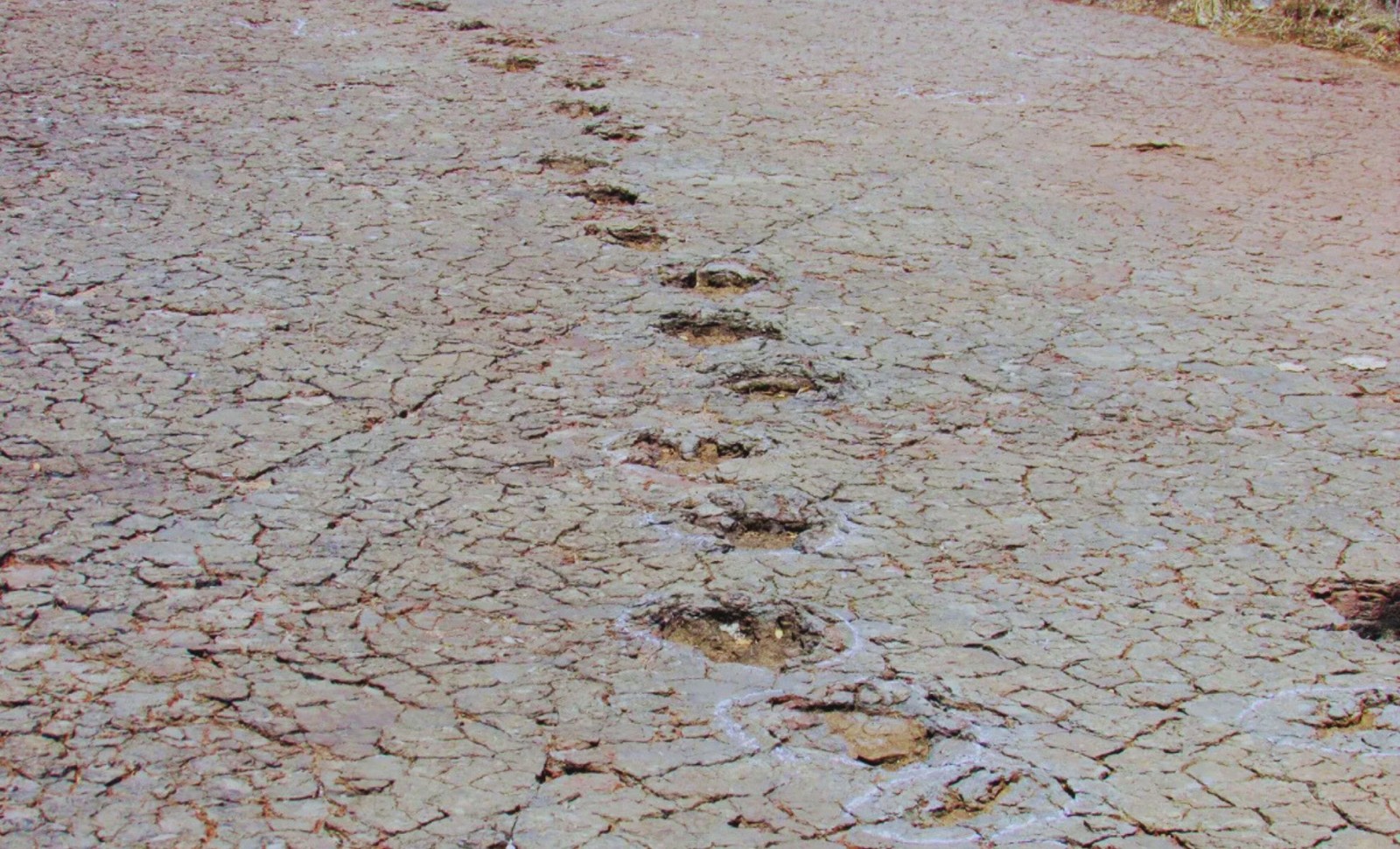
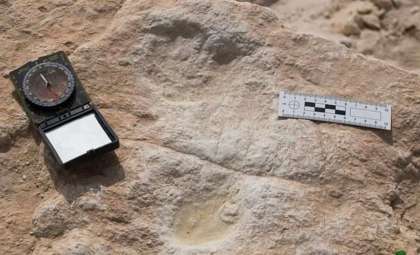
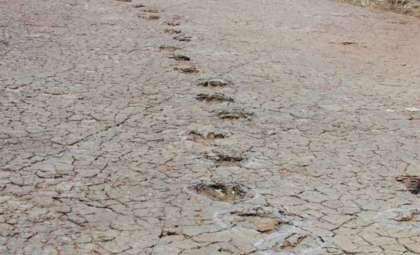
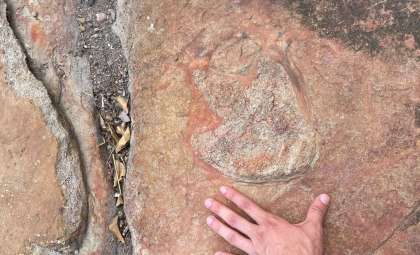
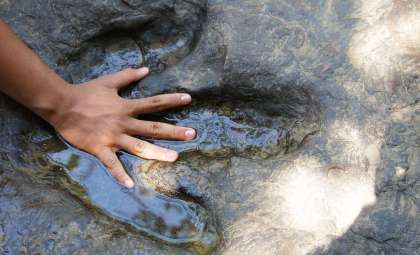
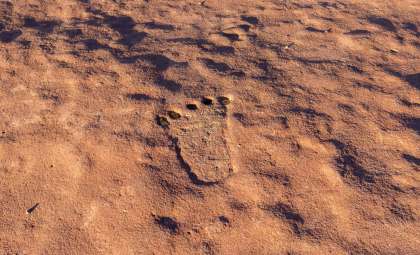
Researchers have identified corresponding dinosaur footprints located on opposite shores of the Atlantic Ocean—in northeastern Brazil and in Cameroon. The findings, reported by the New Mexico Museum of Natural History & Science, mark a significant discovery in paleontology.
These ancient footprints, embedded in river and lake sediments, suggest that dinosaurs once inhabited a unified landmass prior to the separation of continents. Estimated to be about 120 million years old, these tracks provide valuable insight into the movement and behavior of dinosaurs across the supercontinent.
Landmasses Once Joined as One
Louis L. Jacobs, lead author and paleontologist at Southern Methodist University, explains that the footprints share notable features. Both sets were preserved in ancient river valley deposits, ideal for tracing prehistoric animal movement.

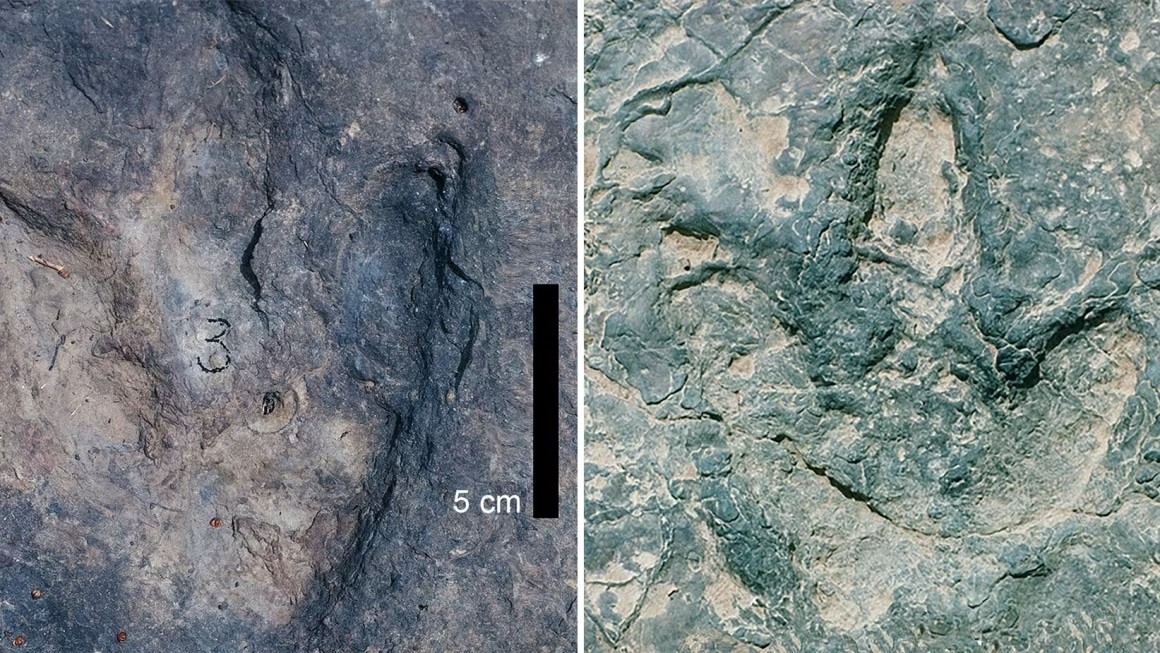
“We determined that in terms of age, these footprints were similar,” Jacobs said. “In their geological and plate tectonic contexts, they were also similar. In terms of their shapes, they are almost identical.
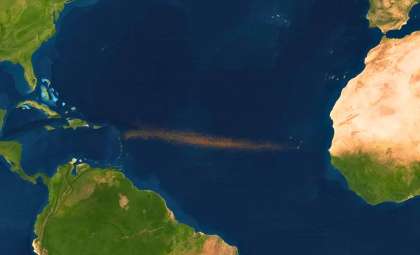
During that era, Brazil and Cameroon were part of a vast connected land region, allowing species to easily traverse between the areas. Jacobs points out that this “narrow stretch of land” served as a corridor facilitating faunal exchange before the South Atlantic Ocean formed.
He notes that the continents began to drift apart roughly 140 million years ago, eventually leading to the ocean's creation. Before this separation, dinosaurs could roam freely across the land bridge linking Africa and South America.
What Tracks Reveal About Dinosaur Life
The research highlights how footprints offer a unique window into dinosaur behavior, revealing their movement patterns and social behavior.
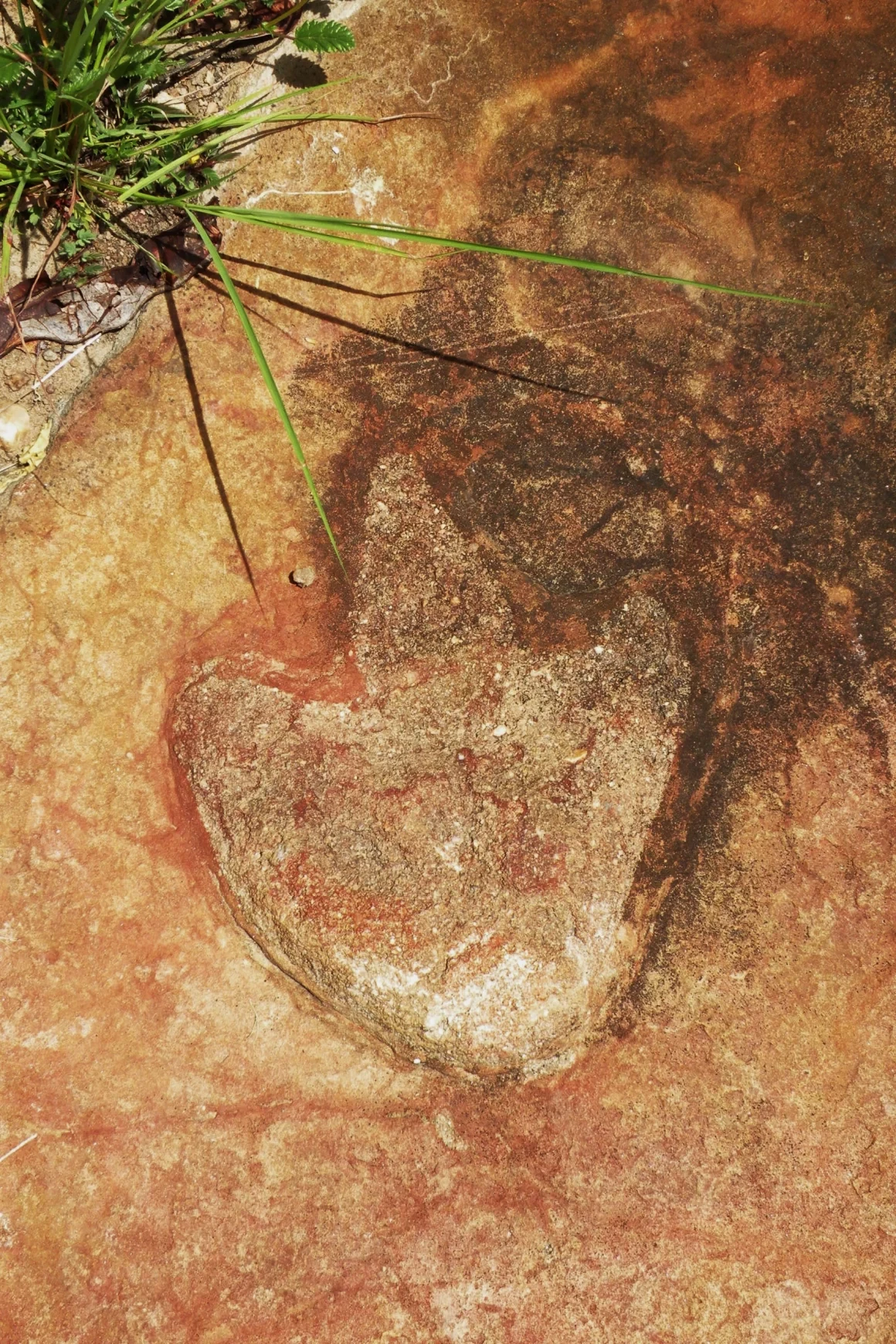
The tracks from Brazil and Cameroon are believed to belong to a combination of theropods—bipedal carnivorous dinosaurs—and larger quadrupedal groups such as sauropods or ornithischians. Jacobs describes these traces as a distinctive type of fossil, which he terms “behavioral fossils.”
“Dinosaur tracks are not rare, but unlike the bones usually found, footprints are the proof of dinosaur behavior, how they walked, ran or otherwise, who they walked with, what environment they walked through, what direction they were going, and where they were when they were doing it.”
The footprints likely formed in soft, muddy riverbeds, capturing a detailed snapshot of the dinosaurs’ environment and movement. Such evidence suggests that these creatures possibly migrated or traveled in groups, echoing the patterns of modern animals who follow established paths for feeding or migration.
- Categories:
- News




0 comments
Sign in to Comment