
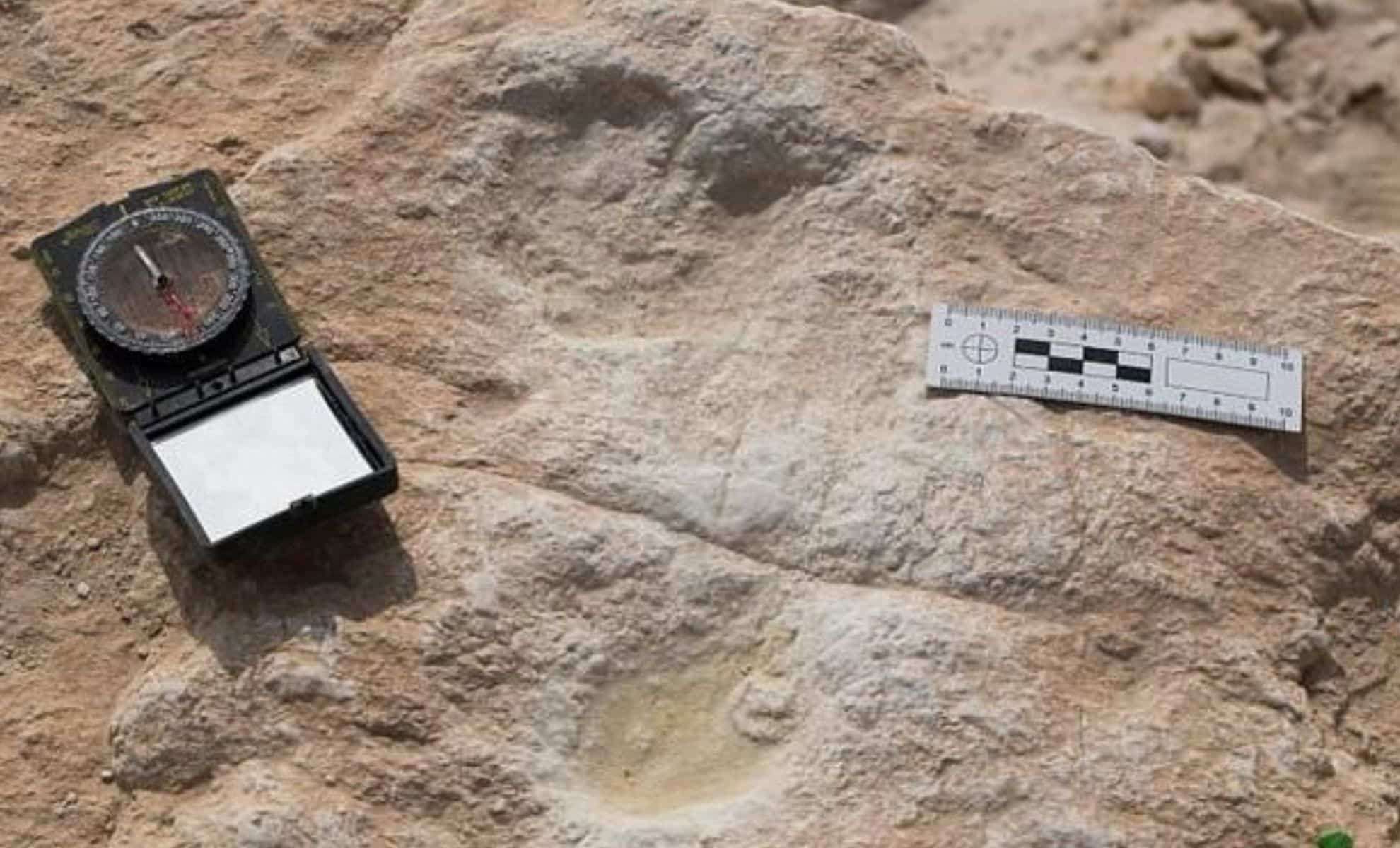
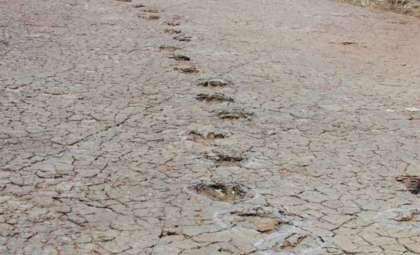
A remarkable find in northern Saudi Arabia has revealed prehistoric human footprints dating back over 115,000 years, offering fresh perspectives on how early humans left Africa. These impressions were discovered near the Alathar paleolake, amid a mix of animal tracks including elephants, camels, and giant buffalo. They capture a snapshot of a time when early Homo sapiens traversed a lush Arabian Peninsula abundant in life and vital resources.
Regarded as one of the earliest indicators of human presence in this area, the footprints challenge conventional models of migration that focus predominantly on the Levant corridor. Instead, they emphasize Arabia’s essential role as a connective land bridge. These traces also reveal how early humans adapted to evolving landscapes by pursuing freshwater habitats crucial for their survival.
Frozen Footsteps in History
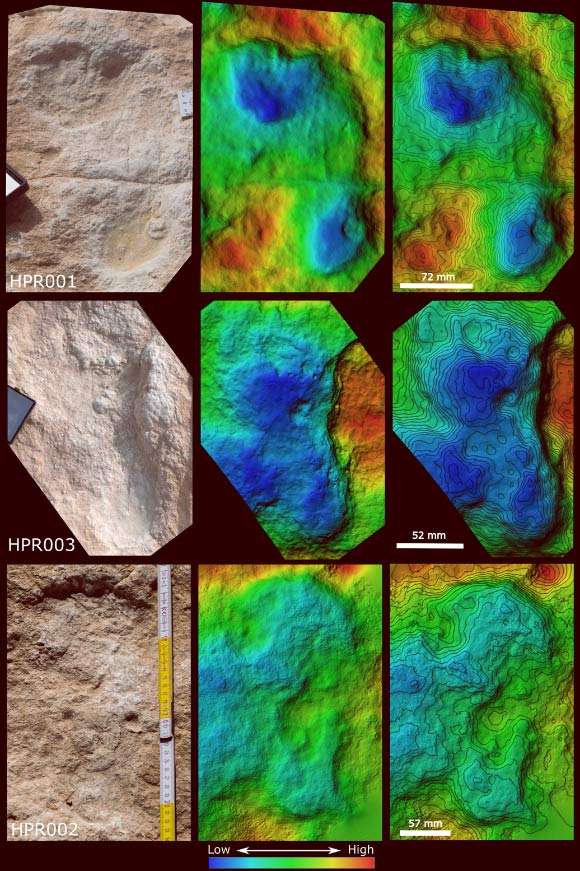
Initially unnoticed, the 376 oval impressions found in 2017 blended into the dry northern Saudi Arabian terrain. Detailed study exposed their significance: an array of animal prints plus seven human footprints located near a desiccated lake bed. Preserved in soft mud, these footprints provide a rare, tangible glimpse of early Homo sapiens’ daily existence.

“It’s like a snapshot from the distant past,” explains Michael Petraglia of the Max Planck Institute, the lead scientist on the project. “It sparks imagination — what did these individuals look like? What was their purpose here? And after the lakes vanished, where did they go? These questions fuel our curiosity.”
Timeframe analysis suggests these imprints were made within a short period, capturing humans and wildlife exploiting a dwindling water source. The footprints offer a unique behavioral snapshot. As Appalachian State University geologist Cynthia Liutkus-Pierce explains, “Footprints provide insights into past behaviors rarely preserved by bones or tools.”
Arabia’s Pivotal Role in Human Migration
The Arabian Peninsula has long been underappreciated in early human migration studies. However, its strategic location connecting Africa, Asia, and Europe underscores its importance as a migration corridor.
“Understanding Arabia is essential to grasping human dispersal out of Africa,” says Petraglia. This find reveals how much there remains to learn about Arabia’s impact on early human movements.
Once vibrant with grasslands, rivers, and lakes, the peninsula offered a hospitable environment for humans and animals alike. Footprints and other finds, such as a 90,000-year-old human finger bone nearby, indicate that Homo sapiens not only passed through but also took refuge in the region’s sustainable ecosystems.
Migration Guided by Habitat Availability
Rather than choosing a straightforward northern path through the Levant, early Homo sapiens likely adjusted their routes based on resource availability. Craig Feibel from Rutgers notes, “Their movement was probably dictated by the presence of water and food, not just geography. They sought out hospitable environments to support their growing populations.”
This discovery disrupts the notion of human migration as a simple, linear journey and instead highlights a network of adaptations to shifting environmental conditions.
“This ongoing research drives our understanding of early human dispersal through underexplored regions like Arabia,” Petraglia adds.
Decoding Ancient Clues
Although the footprints yield vital information, many mysteries endure. Who exactly were these early travelers? What interactions did they have with the surrounding fauna? And how integral was the Arabian Peninsula to the broader migration story?
“Arabia’s past remains partly unknown, but discoveries like this signal there’s more hidden in plain sight,” says Kevin Hatala, evolutionary biologist at Chatham University. “This opens the door to uncovering previously overlooked evidence.”
Footprints, often disregarded, tell compelling stories. “They are narratives etched into the sand,” Hatala emphasizes. “The challenge is knowing where to look.”








0 comments
Sign in to Comment