
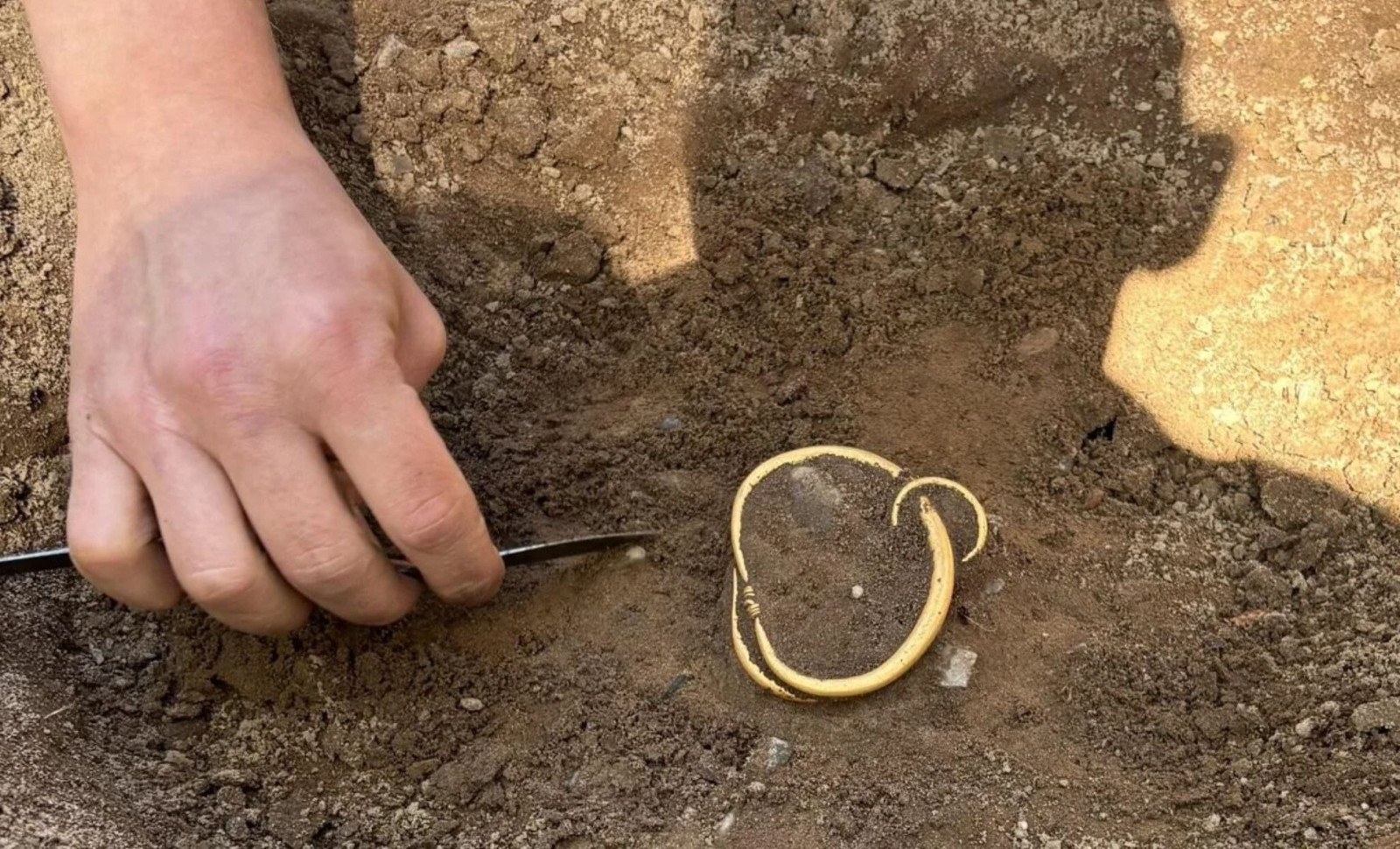
Six solid gold arm rings estimated to be over a millennium old were uncovered near Rold in northern Denmark, representing one of the largest Viking Age gold caches ever found within the country. This remarkable hoard, termed the Rold Treasure, sheds light on the riches and elite status of influential Viking figures.
The find began when a local walker noticed two gold rings partially exposed in the ground beside a forest pathway near Rold in Himmerland. Upon handing over the relics to the archaeological team at the Museums of North Jutland, specialists quickly recognized their significant value.
Following the initial discovery, a metal detector survey in the vicinity revealed an additional four gold bracelets. All six pieces were intact and crafted from pure gold, collectively weighing 762.5 grams. According to the Museums of North Jutland, this ranks as Denmark’s third-largest Viking Age gold discovery to date.

Viking-Era Gold Uncovered After a Thousand Years
The Rold Treasure traces back to the late Viking Age, roughly between AD 900 and 1000. This era witnessed the consolidation of Danish local rulers into a more centralized kingdom.
This period coincides with the reign of King Harald Bluetooth, known for uniting much of Denmark and commemorated on the iconic Jelling Stone dated around AD 965.
While bracelets were common across Viking Scandinavia, most were fashioned from silver, making gold examples particularly rare and typically associated with the wealthiest elites. Archaeologist Torben Sarauw, cultural heritage manager at the Museums of North Jutland, remarked:
“Gold in the Viking Age was concentrated among the absolute elite of society, and that is precisely why finds of this type are extremely rare.”
The bracelets likely symbolized the owner’s rank, influence, and connections within elite Viking circles.
Ancient Metalworking Skills Evident in Viking Gold Bracelets
None of the six gold arm rings are identical, exhibiting a range of metalworking styles. Three were crafted by twisting two gold rods together. One of these features delicate gold wire ornamentation and knob-shaped terminations.
Others were made from solid gold rods or gold wire, ending in tightly wound closures called running knots. One bracelet stands out with its flattened ends decorated with zigzag and triangular motifs.
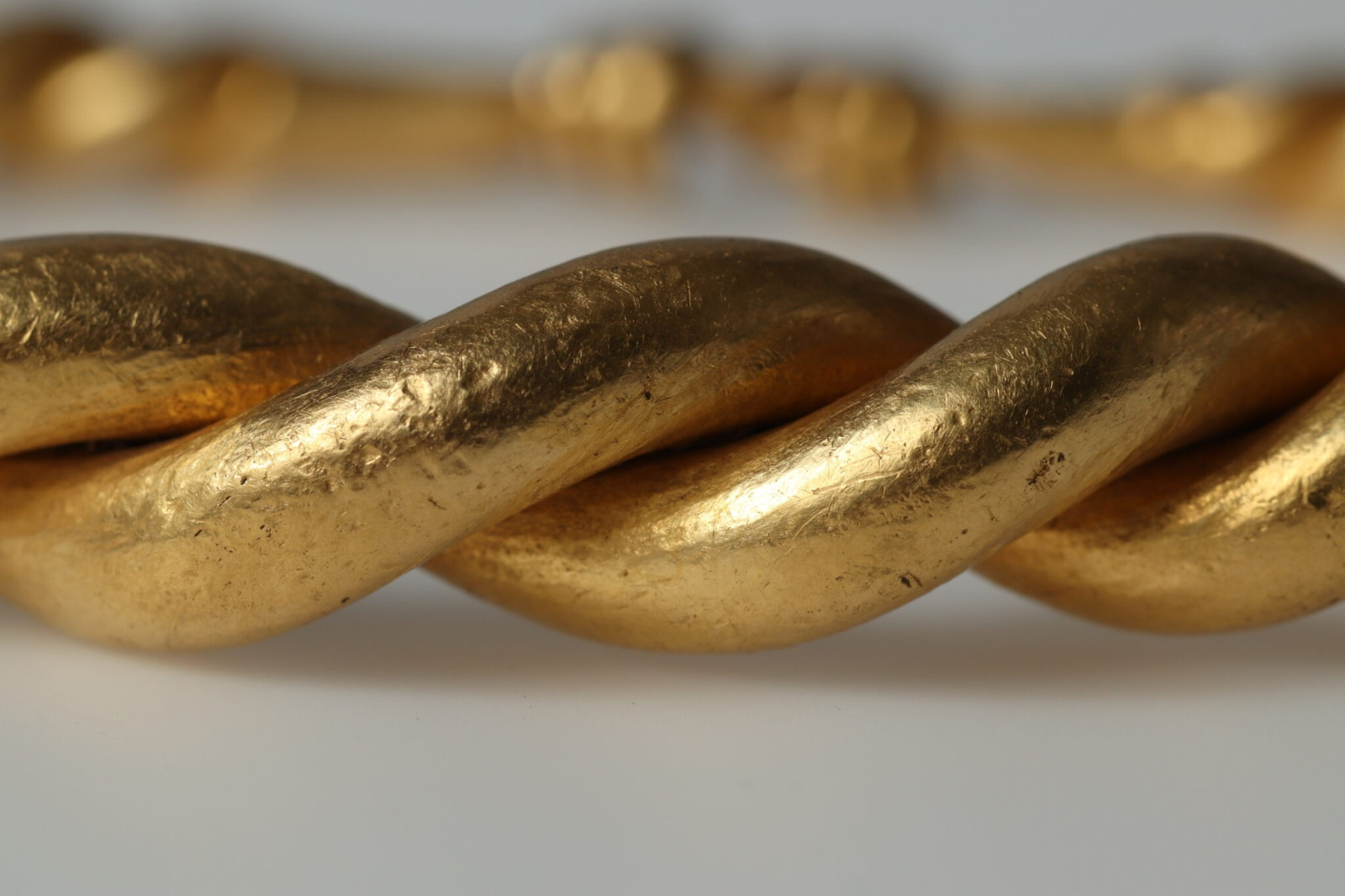
The exceptional preservation of these artifacts is notable. Unlike many Viking silver hoards, which often appear cut into smaller fragments—likely for use as currency—the gold bracelets remain intact.
This indicates the gold was not intended for trade or everyday monetary transactions; rather, it seems the treasure was purposefully buried as a whole set.
What Motivated the Burial of These Viking Gold Bracelets?
The North Jutland Museums explained in a statement that the exact reasoning behind the burial remains uncertain. Archaeologists speculate the treasure was deliberately hidden either to safeguard it during turbulent times or possibly as part of ritual activities.
““When such rings were laid down together, this was often interpreted as a deliberate deposit, either to secure valuables during troubled times or as part of rituals whose exact meaning is difficult to determine today,” Sarauw explained. The Rold Treasure rings therefore provide a rare glimpse into the world and social structure of the Vikings.”
The precise discovery location remains confidential. The site lies on private property, and both the finder and landowner have chosen to stay anonymous.
Excavations at the site have concluded, and the gold bracelets have been officially designated Danefæ, recognizing them as historically significant treasures belonging to the Danish state. The items will undergo further study before being transferred to the National Museum of Denmark for preservation and display.
- Categories:
- News











0 comments
Sign in to Comment