

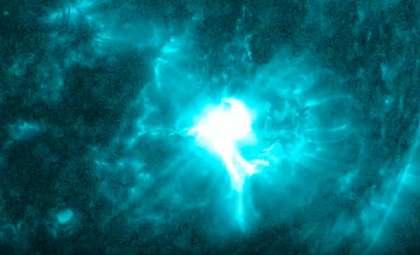
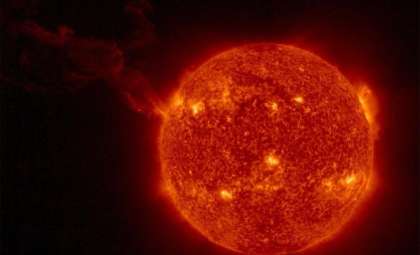
Solar flares represent rapid, intense releases of radiation from the sun’s outer layers. These energetic bursts stem from the sudden discharge of magnetic energy often linked to sunspots or solar prominences.
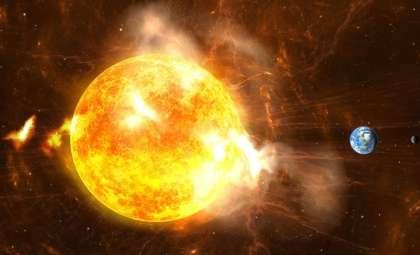
The strength and effects of solar flares differ widely, with the most powerful categorized as X-class events. When these flares erupt on the sun’s side facing Earth, they can produce considerable effects on our planet.
NOAA Warns of Possible X-Class Solar Flare
The National Oceanic and Atmospheric Administration (NOAA) has issued a warning about a likely X-class solar flare originating from sunspot AR3712, which is currently oriented towards Earth. This notably complex sunspot has attracted scientific focus because of its magnetic intricacies, raising the possibility of intense solar flare activity. SpaceWeather.com highlights that the sunspot’s mixed magnetic polarities increase the odds of magnetic reconnection events, a trigger for strong solar flares.

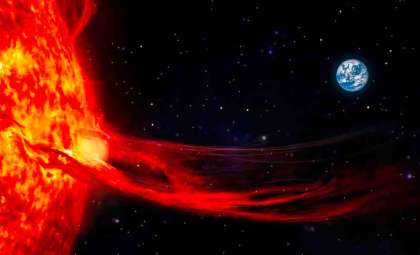
Solar flares are powerful surges of radiation caused by magnetic energy release on the sun’s surface, capable of impacting Earth significantly. When directed at Earth, such flares may produce geomagnetic storms that interfere with GPS, radio communication, and electricity networks. Due to AR3712’s current Earth-facing position, any major flare from this sunspot could promptly affect Earth. The NOAA Space Weather Prediction Center advises that sectors relying on satellite signals and navigation must prepare accordingly.
Recent Solar Behavior and Associated Hazards
Over the past day, sunspot AR3712 has been the key source of solar flares, including seven C-class events. Another region, AR3711, released an M1.4 flare that triggered a minor radio blackout over the Pacific Ocean near Mexico’s west coast. Currently, six active solar regions face Earth, alongside a sizeable coronal hole visible in the sun’s northeast quadrant, indicating potential rises in solar wind and geomagnetic activity.
NOAA’s forecast estimates a 10% likelihood of an X-class flare today. The chance of a powerful flare from AR3712 means satellite operators, aviation navigators, and power grid managers should revisit emergency plans to minimize geomagnetic storm impacts. Ongoing solar monitoring remains vital during this time.

Impacts of Approaching Solar Maximum
The sun is approaching its solar maximum, a peak phase in its 11-year cycle when sunspots, solar flares, and coronal mass ejections (CMEs) occur most frequently. During this intense activity period, the sun’s magnetic field reaches heightened turbulence and the emission of radiation intensifies. This surge in solar activity can disrupt Earth’s communication networks, GPS, and satellite functions. Furthermore, elevated solar radiation increases hazards for astronauts and high-altitude flights while satellites face greater risks from increased atmospheric drag and potential damage.
The solar maximum also enhances the appearance of vivid auroras at lower latitudes. Heightened solar wind and charged particles from the sun interact more dramatically with Earth’s magnetic field, amplifying auroral displays—commonly visible near the poles—to reach farther north or south during these periods.
Beyond their visual splendor, auroras serve as indicators of strong space weather conditions typical of solar maximums. The more frequent and intense geomagnetic storms characteristic of this cycle intensify these natural light phenomena, making night skies especially vibrant.
While there is a mild warming influence on global climate due to increased solar output, the primary concerns during solar maximum focus on technological and infrastructure vulnerabilities. Vigilant observation and protective efforts are essential to handle disruptions and fully benefit from the spectacular auroral displays.
Monitoring Efforts and Readiness
Data from the SOHO spacecraft’s LASCO instruments reveal significant coronal mass ejections from the sun’s far side, indicating that additional active sunspot regions may soon rotate into Earth’s view. The sun has emitted nine flares during the past 24 hours, including an M1.4 flare and eight C-class flares. Sunspot AR3712 remains the focal point given its potential for powerful flare production.
With the risk of geomagnetic storms, organizations dependent on satellite-based systems and navigation technologies should remain vigilant. Preparing by updating contingency strategies will help lessen the adverse effects brought by solar flares and related disturbances.
As solar activity builds to its peak, continuous surveillance and readiness are key to mitigating the risks posed by these natural solar events. Collaboration between researchers and space weather agencies is critical to delivering timely warnings and safeguarding both industries and the public from possible solar impacts.









0 comments
Sign in to Comment