
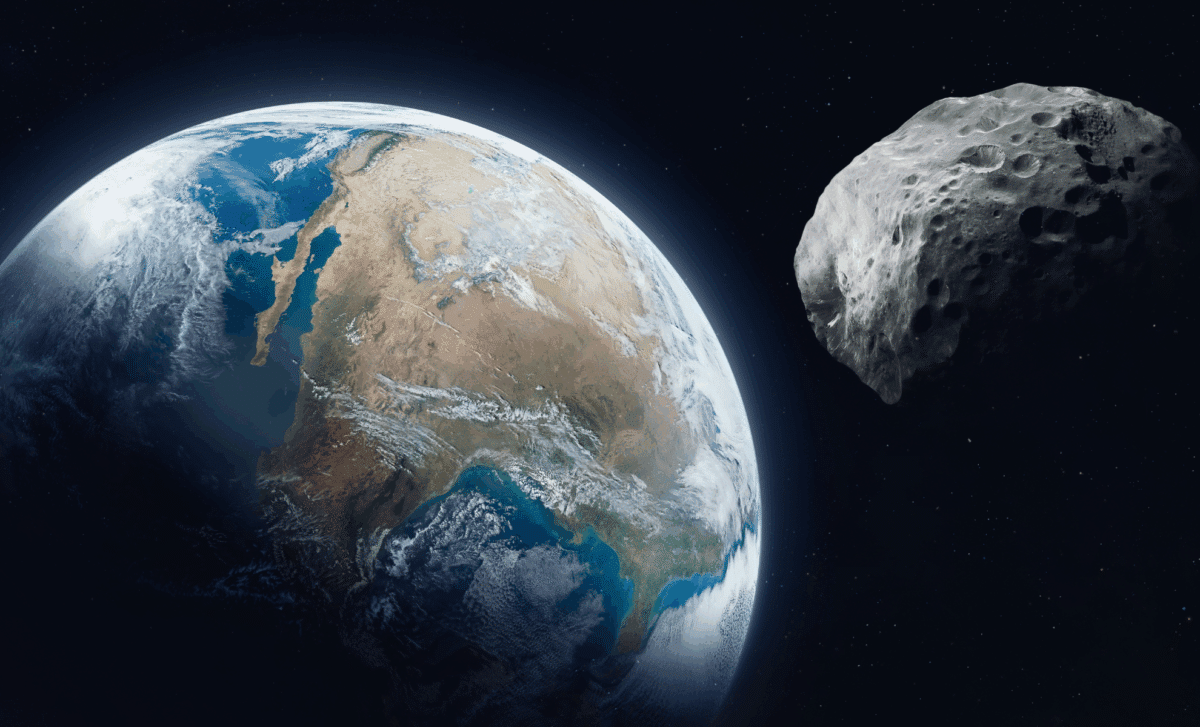
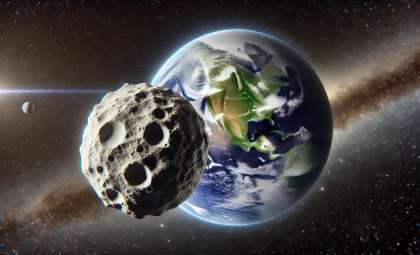
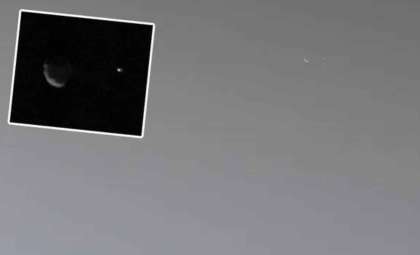
A recent astronomical finding has intrigued scientists: an elusive small space rock, quietly sharing Earth’s journey for over half a century, has been identified as a quasi-moon. Designated PN7, this enigmatic object has orbited alongside our planet since the 1960s. Its discovery, enabled by advanced telescopes, challenges conventional ideas about how many moons Earth actually possesses.
An Unusual Object in Earth’s Orbital Path
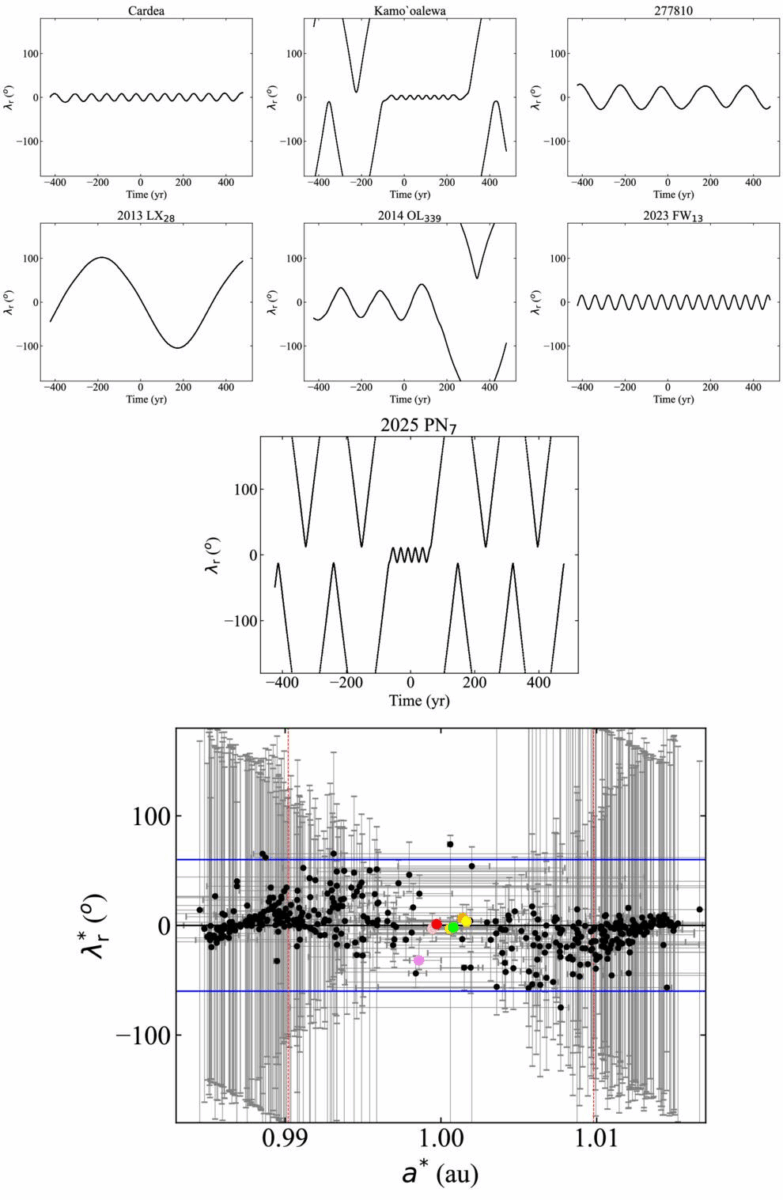
The identification of PN7 adds another member to the list of Earth’s ephemeral shadow satellites—cosmic travelers that follow Earth’s path around the Sun. Research Notes of the American Astronomical Society recently published a paper confirming PN7’s distinctive orbital pattern—a looping motion that alternately places it just ahead of or just behind Earth. Unlike our permanent Moon, these objects aren’t tightly held by Earth’s gravity; instead, they remain in a delicate gravitational equilibrium, co-orbiting with us as quiet companions throughout the Solar System.
When Ben Sharkey, an astronomer at the University of Maryland, first learned of PN7, his initial reaction was: “Oh cool, another one.” This response reflects a growing awareness among astronomers that Earth may host more temporary moons than previously realized. Observations from telescopes like Pan-STARRS in Hawaii, responsible for PN7’s initial detection, are unveiling the dynamic and crowded nature of Earth’s orbital environment. Some quasi-moons such as Kamoʻoalewa have remained stable for centuries, while others only briefly accompany Earth before drifting away, influenced by the subtle gravitational forces of the Sun and our planet.

The Phenomena of Mini-Moons and Cosmic Hitchhikers
While quasi-moons like PN7 share Earth’s orbit without being fully captured, mini-moons represent a more transient state—they become brief satellites, caught by Earth’s gravity before drifting away again into space. These small, fragile objects are notoriously elusive. According to Grigori Fedorets, an astronomer at the University of Turku in Finland, most mini-moons are “quite small, like boulders,” making them difficult to identify. Only a few mini-moons have been confirmed to date, each remaining in Earth's grip for less than a year before being released by gravitational forces.
The intrigue surrounding PN7 and similar objects lies not only in their existence but in what they reveal about Earth’s gravitational neighborhood. Researchers theorize that some quasi-moons could be asteroid fragments displaced by Jupiter’s powerful gravity, shards thrown off the lunar surface, or even relics dating back to the early Solar System’s tumultuous formation. With upcoming observatories such as the Vera C. Rubin Observatory, scientists anticipate an influx of new data that may transform our understanding of the space surrounding Earth.
Tracing Origins and Anticipating Future Explorations
The tale of PN7 ties into wider efforts to decode the source of these roaming space rocks. Some quasi-moons, like Kamoʻoalewa, share surface characteristics with our Moon, hinting they could be lunar fragments sent into orbit by ancient impacts. Others might be stray asteroids nudged into Earth’s path by planetary resonances.
Several upcoming missions, including a Chinese-led expedition, aim to retrieve samples from these quasi-moons to resolve a key planetary science question: are these objects remnants from Earth’s origin, or just temporary visitors passing by? Regardless of their provenance, these companions highlight the dynamic and ever-shifting nature of our cosmic environment. Each new find enriches the story of Earth’s hidden orbital neighbors—a narrative in which even modest-sized rocks challenge and expand our knowledge of how we journey around the Sun.
- Categories:
- Space




0 comments
Sign in to Comment