

Recently, Earth experienced a rare visit from a temporary second moon—the asteroid known as 2024 PT5. This fleeting celestial guest has provided scientists with remarkable clues about its origin, which appears intricately linked to our own Moon.
A Lunar Fragment as a Miniature Moon
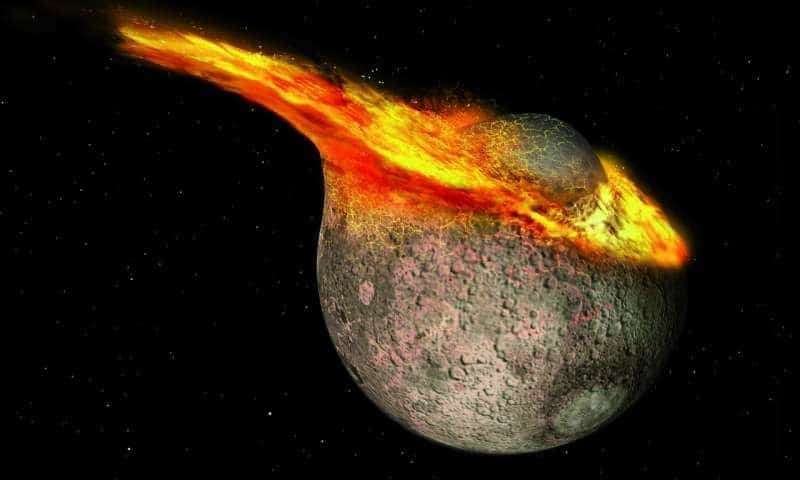
Unlike Earth’s permanent satellite, 2024 PT5 is a transient object with a short stay. Current observations propose that it could be a remnant from the Moon, possibly formed when large impacts on the lunar surface launched debris into space.
“The asteroid spins quite rapidly, completing a rotation in less than one hour,” stated Professor Carlos de la Fuente Marcos, who led the study detailing its discovery. This behavior suggests 2024 PT5 might be a hefty rock originating directly from the Moon’s crust or a fragment from a larger lunar body. Spectral data further backs this, showing similarities to samples gathered during the NASA Apollo and Soviet Luna programs.

The Asteroid’s Path Through Space
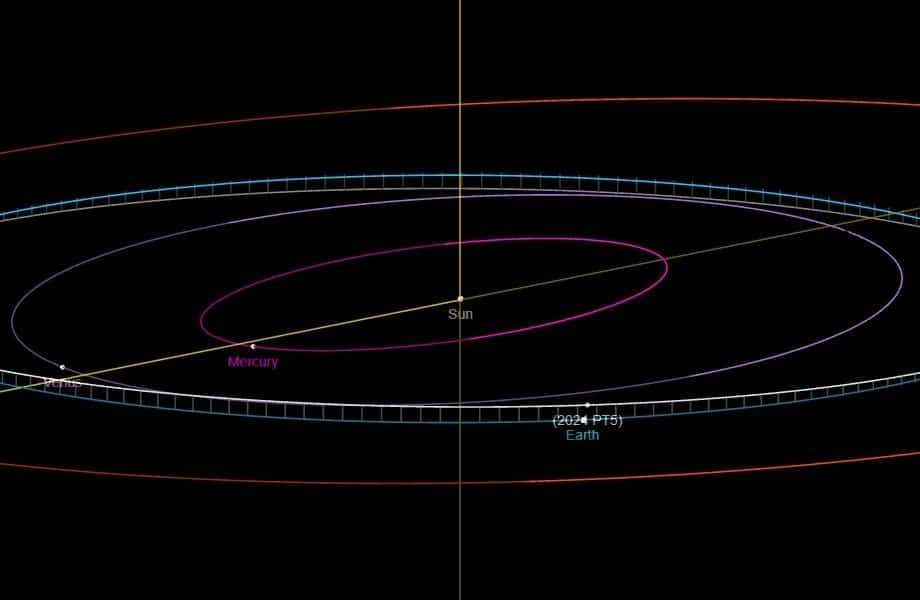
This mini-moon’s visit originated from the Arjuna asteroid belt, a zone filled with space rocks whose orbits closely match Earth’s own path around the Sun. While most mini-moons are captured for extended periods, often orbiting Earth multiple times, 2024 PT5 has merely been a short-term visitor. It entered Earth’s gravitational domain on September 29, 2024, from approximately 2.8 million miles (4.5 million kilometers) away, traveling at speeds slightly above 2,200 mph (3,540.55 km/h).
By November 25, 2024, gravitational forces from the Sun will steer the asteroid away, sending it back into the Arjuna belt. Professor Marcos compares these transient flybys to “window shoppers” who glance but never truly settle as permanent satellites.
Shedding Light on the Arjuna Belt’s Lunar Links
The presence of 2024 PT5 has unveiled new understanding about the composition of the Arjuna asteroid belt. Researchers now believe that the belt’s constituents may include substantial amounts of material blasted off the Moon during impact events.
This asteroid possibly originated from debris propelled into cislunar space by an ancient lunar collision. It then settled into a stable orbit within the Arjuna belt before briefly returning as a mini-moon near Earth.
“The discovery has highlighted that lunar ejecta likely forms a large part of the Arjuna belt’s makeup,” Marcos remarked.
The Brief Visit of 2024 PT5
Though short-lived, the visit of this asteroid has already produced valuable data. Observations collected by the Teide Observatory have allowed precise calculations of its orbit, enabling NASA to schedule additional investigations during its upcoming flyby on January 9, 2025. These future studies promise deeper insights into the enigmatic nature of this mini-moon.
Currently, 2024 PT5 is on course to depart Earth’s gravitational influence, returning to its home within the Arjuna Belt. Its brief presence is a vivid reminder of the ever-changing pathways that connect Earth, the Moon, and distant asteroids within our solar system.








0 comments
Sign in to Comment