

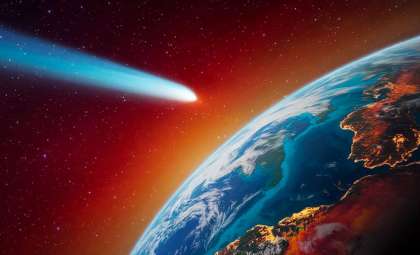
An asteroid about 19 meters across has been quietly tracing an orbit alongside Earth for over 60 years, undetected until recent observations confirmed its existence. Known as 2025 PN7, this small body is classified as a quasi-moon, traveling in near-perfect sync with our planet’s journey around the Sun.
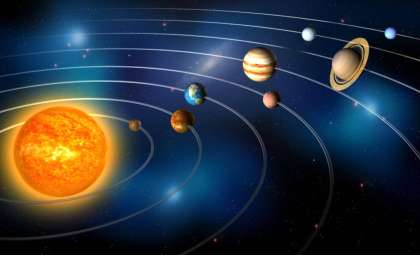
First spotted by the Pan-STARRS observatory located in Hawaii on August 2, 2025, the finding was detailed in the Research Notes of the American Astronomical Society. Unlike Earth’s actual Moon, 2025 PN7 doesn’t circle our planet directly but shares a remarkably similar path as a co-orbital companion around the Sun, a rare phenomenon in our celestial neighborhood.
A Small, Elusive Visitor in Earth’s Orbit
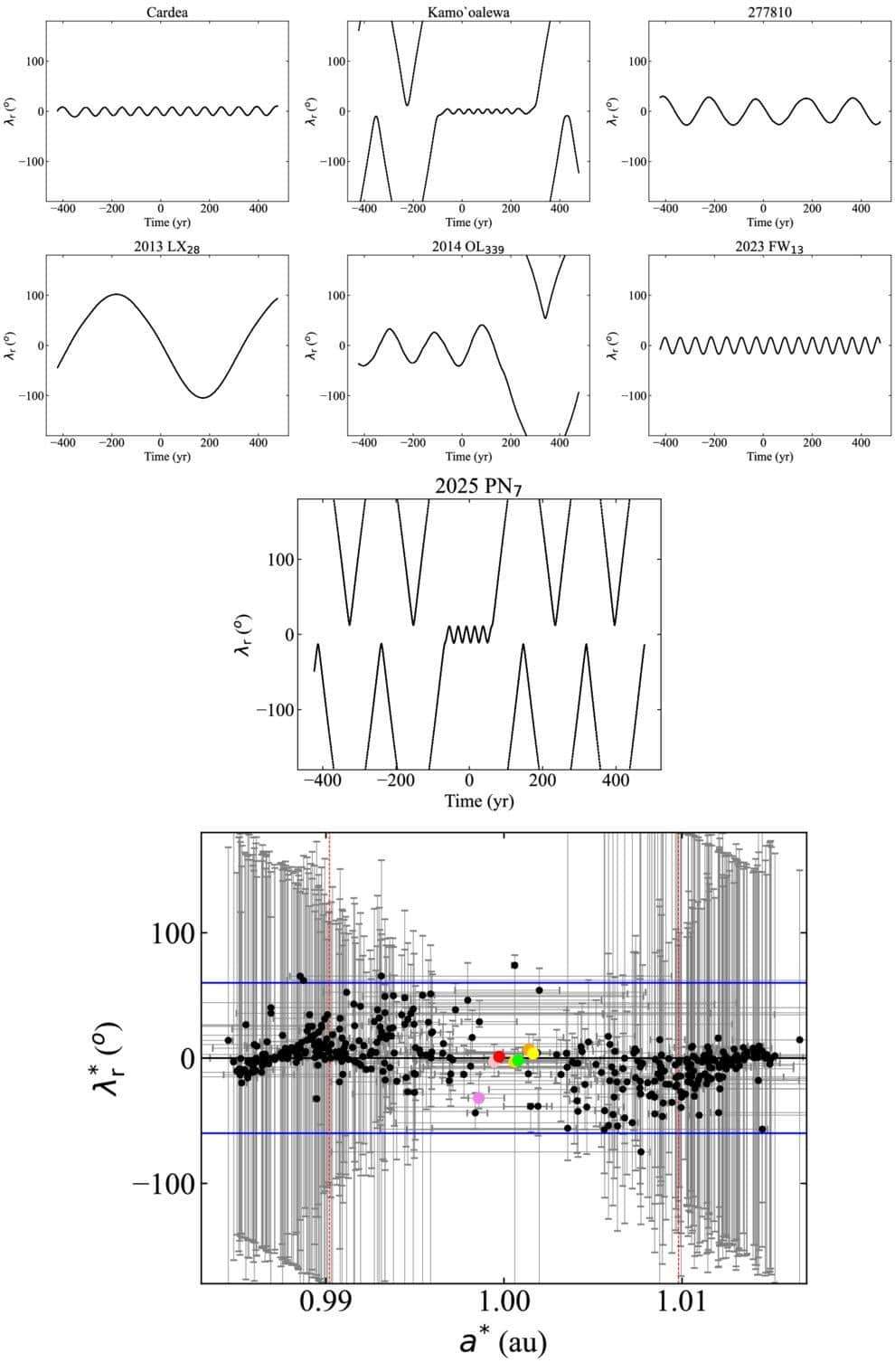
Measured at roughly 19 meters (62 feet) wide, 2025 PN7 was initially detected against the starry backdrop of the southern constellation Piscis Austrinus. Analysis revealed that this asteroid participates in a 1:1 orbital resonance with Earth, matching our orbital period while maintaining its own independent trajectory. It isn’t gravitationally tethered to Earth but instead orbits the Sun in such a way that it appears to accompany our planet.

Researchers examined archival observations dating back to 2014 and found that 2025 PN7’s motion indicates it has been a co-traveler since the 1960s. Its orbit is predicted to remain stable for another 60 years before gravitational influences gradually alter its course.
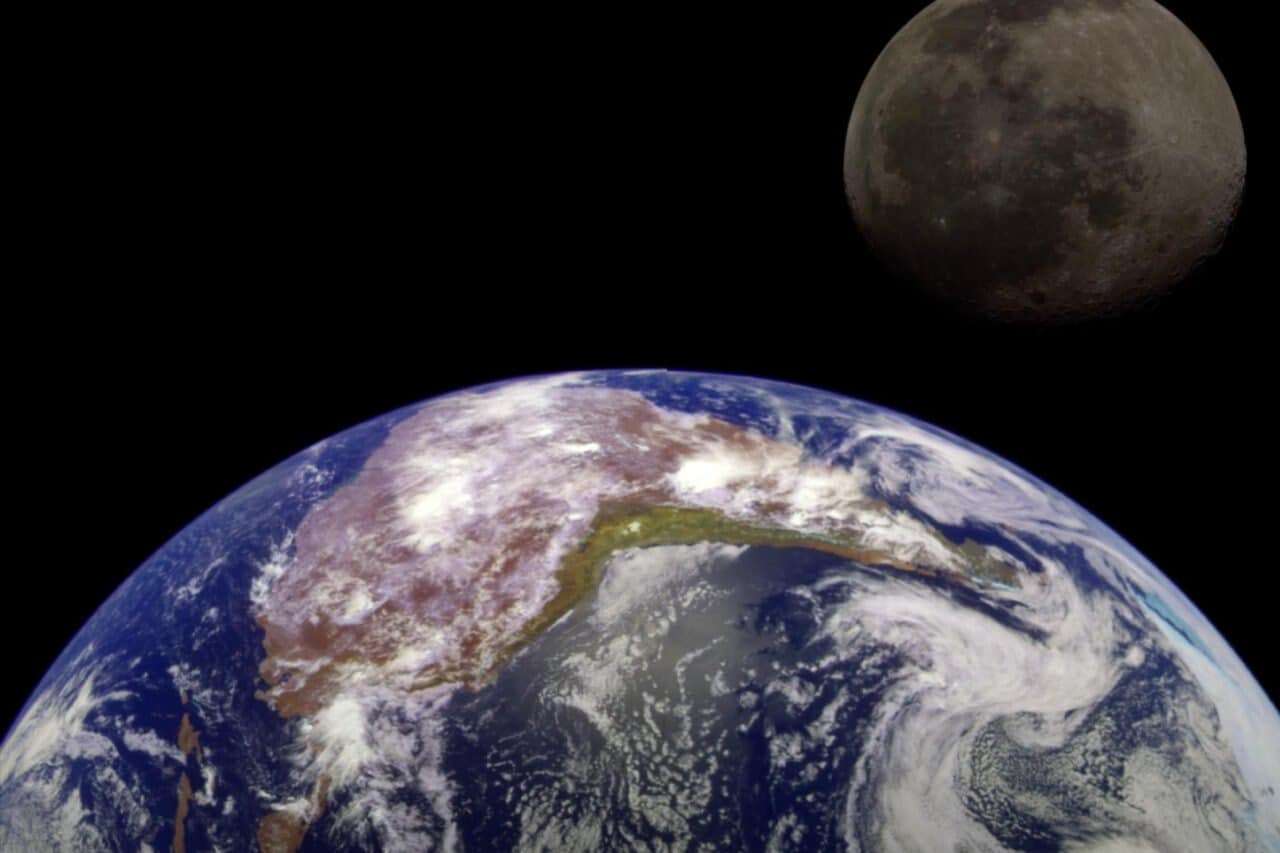
With distances ranging between approximately 4 million and 60 million kilometers from Earth, 2025 PN7 poses no danger. Its small size and considerable distance likely contributed to its prolonged invisibility to astronomers.
Understanding Quasi-Moons
Unlike our natural satellite—the Moon—a quasi-moon doesn’t orbit Earth directly. Instead, it shares Earth’s orbit around the Sun, maintaining a consistent relative position that can make it seem as if it’s journeying alongside us. This subtle difference distinguishes quasi-moons from other near-Earth objects.
It’s important to differentiate quasi-moons from mini-moons too. Mini-moons are small asteroids temporarily captured by Earth’s gravity, orbiting for short periods—weeks or months—before moving on. In contrast, quasi-moons like 2025 PN7 follow Earth’s orbit without ever becoming gravitationally bound, thus remaining long-term companions in our solar neighborhood.
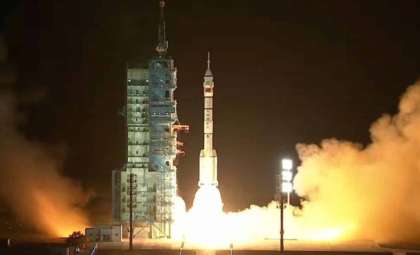
The most recognized quasi-moon, Kamoʻoalewa (2016 HO3), discovered in 2016 and about five times larger than PN7, is currently the focal point of China’s Tianwen-2 mission. This mission aims to collect samples and return them to Earth by 2027.
Despite their elusive nature, quasi-moons represent valuable targets for scientific study. Their Earth-like orbits make missions to them more feasible, and their composition may hold crucial information on the formation and evolution of the early Solar System.
The Potential for More Quasi-Moons
The revelation of 2025 PN7 underscores our incomplete knowledge of the near-Earth environment. “It’s astonishing that an object this stable and nearby remained undetected for so long,” remarks Carlos de la Fuente Marcos, co-author of the research. Alongside his brother Raúl, he conducted detailed orbital simulations confirming the asteroid’s long-term stable orbit.
2025 PN7 is categorized among the Arjuna asteroids, a group characterized by Earth-like orbits but difficult to spot due to their slow motion relative to Earth and proximity to the Sun’s glare.
Several quasi-moons have already been identified, and with advancements in observation technologies, astronomers are optimistic about discovering more of these subtle Earth companions hidden in existing datasets.
A Powerful Reminder of Unseen Neighbors in Our Cosmic Vicinity
While efforts in planetary defense predominantly target larger asteroids that could threaten Earth, findings like 2025 PN7 shine a light on smaller, benign objects sharing our orbital space. They remind us that even in Earth's immediate cosmic environment, unexpected discoveries are still possible.
As noted by NASA’s Center for Near Earth Object Studies, more than 32,000 near-Earth asteroids have been cataloged so far. However, the existence of small co-orbital asteroids like PN7 points to gaps in our surveillance, emphasizing the need for continued observation and exploration.
- Categories:
- Astronomy ,
- Space



0 comments
Sign in to Comment