
In Paris, at the International Earth Rotation and Reference Systems Service, experts routinely compare the world’s most precise atomic clocks with the true rotation speed of our planet. These measurements often reveal discrepancies — sometimes requiring the insertion of a leap second into global timekeeping to realign clocks with Earth's rotation.
This practice began in 1972, with 27 leap seconds added since. Historically, these adjustments were primarily due to the gravitational pull of the Moon on Earth’s oceans, gradually slowing the planet’s spin. Yet, recent observations reveal a less predictable pattern in Earth's rotational slowdown, attributed not to celestial forces but to the redistribution of water on Earth’s surface.
How Earth’s Spin Slows Similar to a Figuring Skater Unfolding Her Arms
Just like a figure skater slows her spin by extending her arms, Earth’s rotation decelerates when mass shifts outward. Melting polar ice flows into the oceans, increasing the water bulge around the equator, which enlarges Earth’s moment of inertia and causes its rotation to decelerate.

Mostafa Kiani Shahvandi from the University of Vienna explains this dramatic shift: “Between 2000 and 2020, Earth’s figurative ‘arms’ stretched wider and more rapidly than ever before, raising sea levels and slowing rotation.”
The effect is minuscule: days are lengthening by about 1.33 milliseconds per century owing solely to climate factors. Yet, even this subtle change accumulates over decades, disrupting the precision needed for today’s technological systems.
Fossil Evidence Highlights the Unmatched Speed of Today’s Slowdown
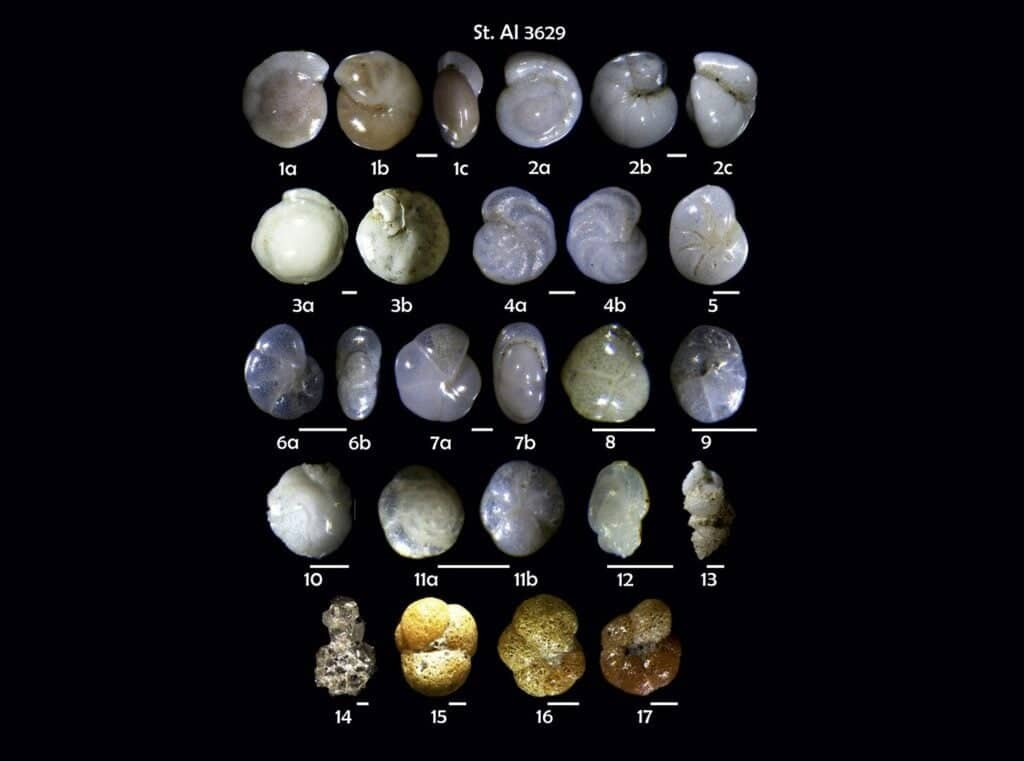
Scientists at ETH Zurich and University of Vienna traced Earth’s rotation back 3.6 million years using fossilized benthic foraminifera. These tiny marine organisms’ shells carry chemical clues about ancient sea levels, enabling reconstruction of how past changes influenced Earth’s rotation.
“By analyzing the chemical imprints on these fossils, we infer historical sea-level changes and translate them into shifts in day length,” Kiani Shahvandi explained.
The study, published in the Journal of Geophysical Research, revealed that current rates of rotational slowdown are unparalleled within the examined geological timeframe. According to ETH Zurich geodesist Benedikt Soja, this unprecedented trend strongly confirms the significant impact of modern climate change. “The rapid increase in day length signals a rate of climate-related change not seen since the late Pliocene, around 3.6 million years ago,” he stated.
Climate Impact Overtaking Lunar Influence on Earth's Rotation
Traditionally, Earth's spin has been slowed mainly by the Moon’s gravitational tides, extending our days by approximately 1.8 milliseconds per century. This tidal braking occurs slowly and predictably.
The current climate-driven deceleration, however, is intensifying unpredictably. Researchers anticipate that by the 2100s, melting ice alone could extend day length more than lunar tides do. Soja notes, “Though these changes are minuscule, they present challenges for precise space navigation systems that rely on accurate Earth rotation data.”
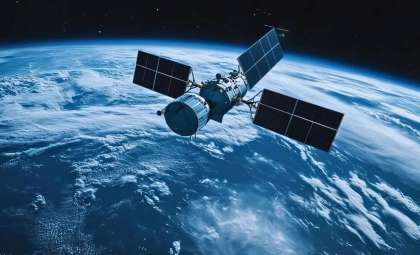
This growing irregularity complicates the synchronization of satellite navigation technologies like GPS, which depend on consistently timed atomic clocks. The shift in Earth’s rotation, driven by inconsistent ice melt, demands increasingly complex adjustments beyond traditional leap seconds.
Insights Gained From Microfossils and Machine Learning
The research combined paleoclimate data with advanced deep-learning models that handle uncertainties in ancient datasets. By studying the chemical makeup of foraminifera fossils, scientists linked historic sea-level changes to alterations in Earth's spin. Kiani Shahvandi highlights, “Our approach integrates physical sea-level changes while addressing inherent paleoclimate uncertainties.”
The timeline generated spans the Quaternary period, marked by repeated ice sheet expansions and retreats that historically modulated Earth’s rotation. Yet, none of these natural events matched the sharp slowdown seen between 2000 and 2020, save for an episode around two million years ago, which still trailed behind the current pace.
Ongoing Corrections and Future Challenges
Since 1972, leap seconds have been our primary tool for correcting discrepancies between atomic and rotational time. These were based on predictable slowing rates. However, as Earth’s spin becomes increasingly influenced by unpredictable climate factors, managing leap seconds grows more complex. Satellite operations, which need precise knowledge of Earth's rotation within tiny fractions of a millisecond, are facing new challenges.
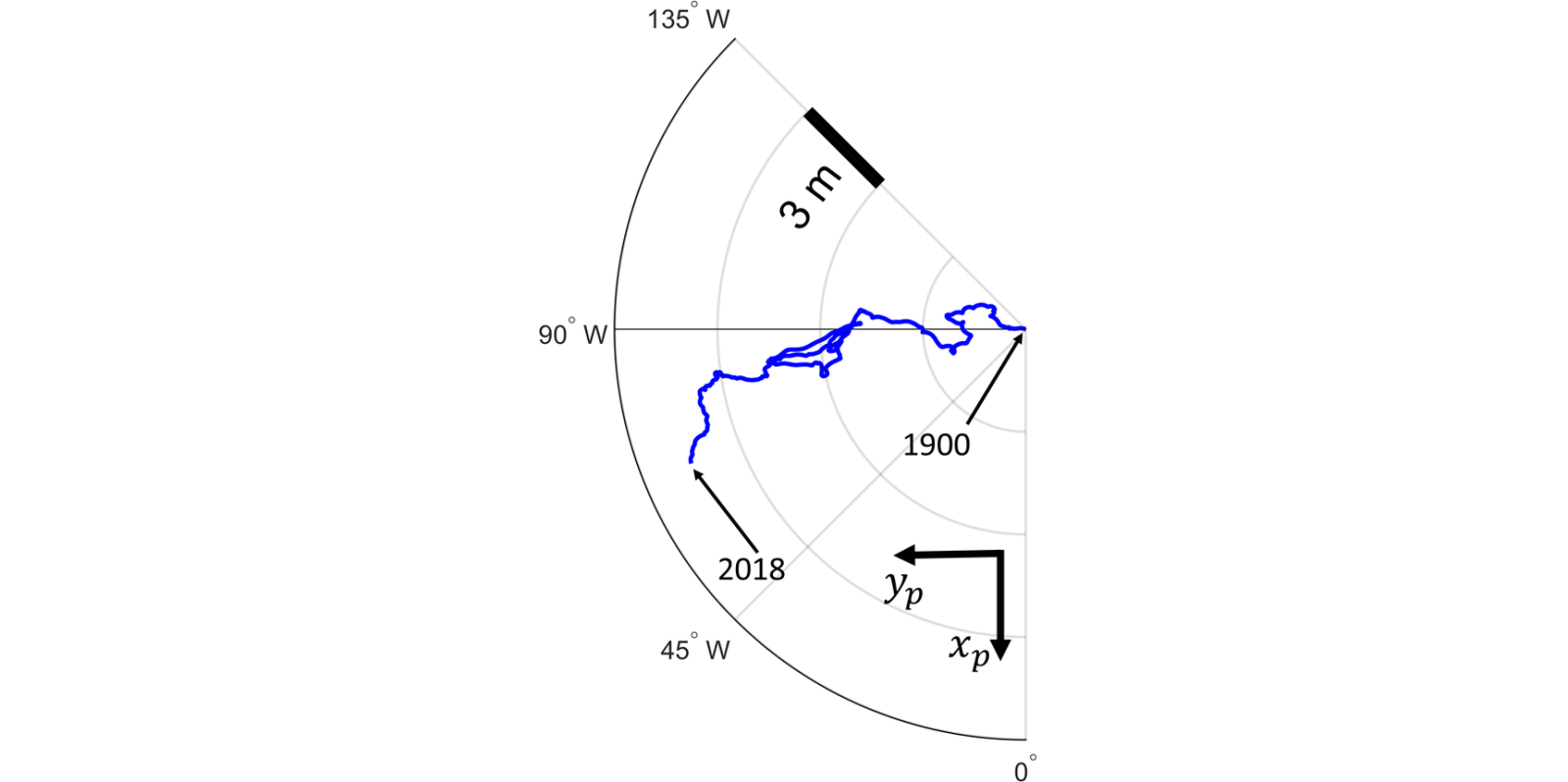
The team continues to monitor these trends, having demonstrated in a 2024 Nature Geoscience paper that climate change, especially ice melt and water distribution shifts, also drives long-term polar motion—the gradual wandering of Earth's rotational axis. Both effects share a common cause: mass redistribution.
Although these impacts are subtle—milliseconds per century—they signify a groundbreaking shift. For the first time in millions of years, human-driven water movement is influencing Earth's rotation more than natural forces or orbital mechanics.
Kiani Shahvandi M, Adhikari S, Dumberry M, Mishra S, Soja B: The increasingly dominant role of climate change on length of day variations. In: Proceedings of the National Academy of Sciences, PNAS 2024, Vol. 121, No. 30, e2406930121.
DOI: external pagehttps://doi.org/10.1073/pnas.2406930121
- Categories:
- Science





0 comments
Sign in to Comment