
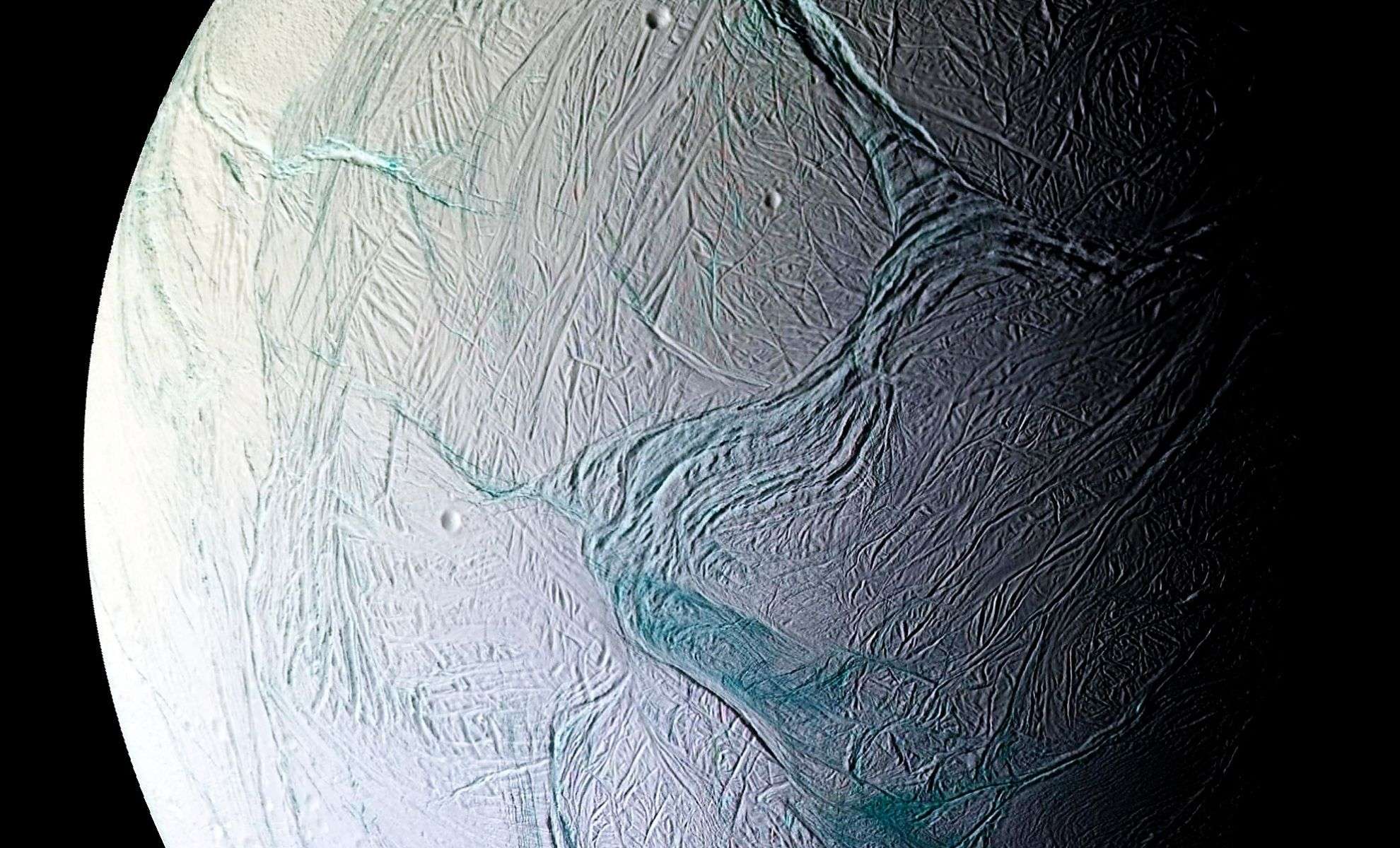
Researchers reexamining archival data from the Cassini mission have uncovered groundbreaking findings. During its 2008 encounter with Saturn’s moon Enceladus, the spacecraft passed directly through plumes ejecting ice and vapor from the surface. New analysis published in Nature Astronomy identifies previously undetected organic compounds within those particles.
This discovery is significant because these ice grains originate from Enceladus’ subsurface ocean, expelled through cryovolcanic vents near the moon’s south pole. Prior investigations mostly focused on particles dispersed within Saturn’s outer rings.
Geysers Reveal Intriguing Chemical Complexity
The material streaming from Enceladus is not just frozen water—it contains an array of salts, minerals, and now, organic molecules which may be precursors to life. These substances were collected from plumes propelled by the moon’s cryovolcanoes, which can launch jets reaching up to 10,000 kilometers into space, roughly the span from Mexico to Patagonia.

Lead author Nozair Khawaja, a planetary scientist based in Berlin, explained to Reuters that these newly discovered compounds serve as “intermediates” in creating more complex molecules, hinting at ongoing chemical interactions driven by heat and pressure beneath the icy crust. While this doesn’t confirm life’s presence, it indicates the moon has some of the essential ingredients.
Cassini’s Legacy Continues to Yield Surprises
Though NASA’s Cassini mission concluded in 2017, its extensive data archive remains a treasure trove. This finding derives from a rapid flyby maneuver capturing fresh plume material, rather than older particles mingling in Saturn’s E ring. This pristine sample offers a unique window into Enceladus’ internal ocean chemistry.
WIRED reports that confirming chemistry originates from within the moon, not space, strengthens the hypothesis of an active, habitable environment. Prior detections included elements like carbon, hydrogen, nitrogen, and oxygen, and these new organic compounds further reinforce Enceladus’ potential as a chemically rich ocean world.
Ticking Off Life’s Essential Ingredients
Combining all evidence, Enceladus emerges as a prime candidate in the quest to find extraterrestrial life. With its liquid water, internal heating from the moon’s rocky core, and now a wider range of organics, the fundamental elements necessary for life are nearly all accounted for. Scientists have identified five out of six critical elements, with phosphorus remaining the only missing piece.
To date, no direct indicators of living organisms or biosignatures have been observed, but the moon ranks highly among astrobiologists as a target for future exploration. Khawaja remarked to Reuters, “Enceladus is, and should be ranked, as the prime target to explore habitability.”
Each fresh analysis of Enceladus’ icy jets brings us closer to uncovering the secrets beneath its frozen crust. Though much remains uncertain, this intriguing world continues to captivate scientists eager to expand our understanding of life beyond Earth.
- Categories:
- News







0 comments
Sign in to Comment