
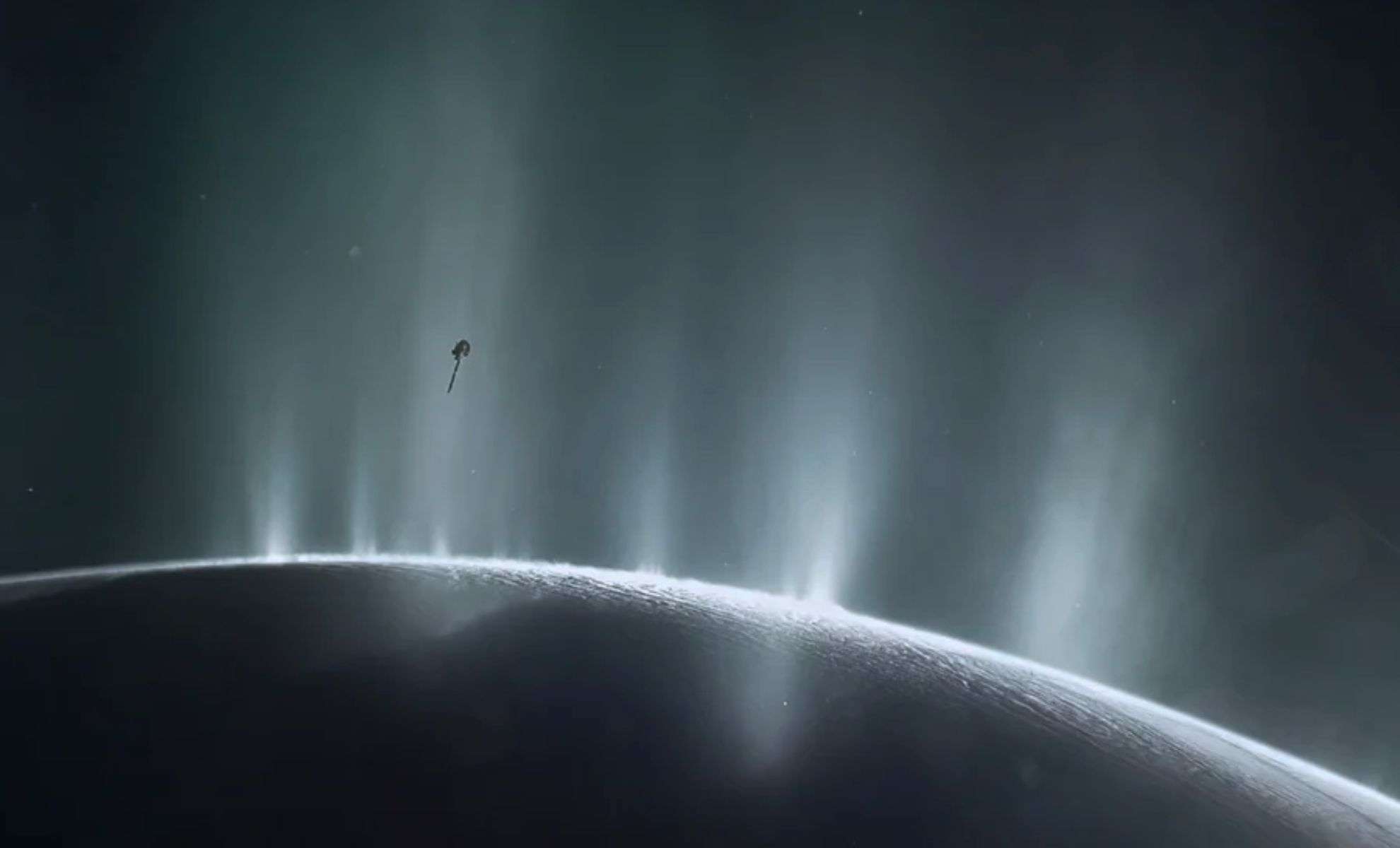
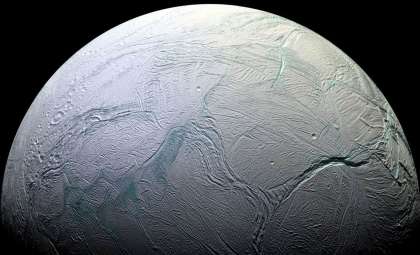
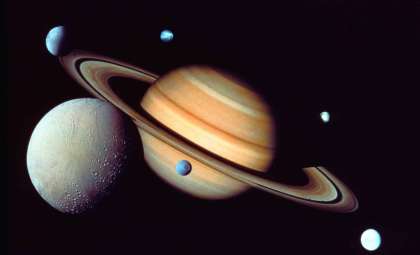
Researchers analyzing data from NASA’s Cassini mission have discovered new intricate organic molecules erupting from the icy exterior of Enceladus, one of Saturn’s moons. This discovery enhances Enceladus’ status as a prime candidate in the quest to find life beyond Earth. The research, led by astrobiologist Nozair Khawaja from the University of Stuttgart, was recently featured in Nature Astronomy.
A Rich Underwater Chemical Environment
This investigation represents the first thorough analysis of particles freshly emitted from Enceladus. Unlike previous studies that examined older, weathered grains in Saturn’s E ring, scientists focused on ice grains directly sampled from the moon’s active geysers.
By applying sophisticated data processing techniques combined with laboratory spectral comparisons, Khawaja's team identified a diverse array of organic compounds such as aromatics, aldehydes, esters, ethers, and alkenes. Several of these molecules had not been previously detected in this extraterrestrial context. Khawaja noted :

“there are many possible pathways from the organic molecules we found in the Cassini data to potentially biologically relevant compounds.” Though the processes appear to be abiotic, they echo the kind of chemistry associated with hydrothermal systems.
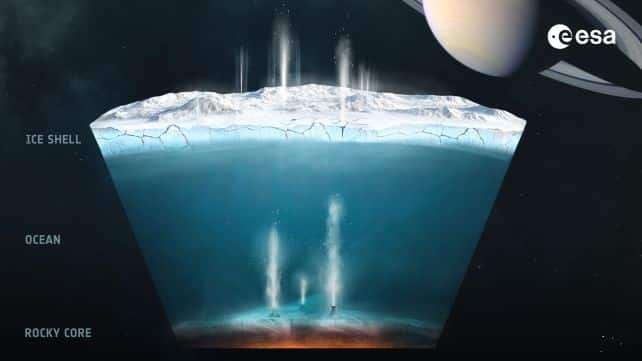
Could Hydrothermal Vents Exist on Enceladus?
On Earth, deep-sea hydrothermal vents sustain ecosystems independent of sunlight, relying on chemical energy from heated minerals. These environments are thought to have played a vital role in life’s origins. Evidence now suggests that Enceladus may host similar hydrothermal activity hidden under its frozen exterior.
The moon’s subsurface ocean remains liquid due to tidal heating caused by gravitational interactions with Saturn and neighboring moons. This internal friction may fuel hydrothermal processes at the seafloor, making Enceladus one of the rare locations in our solar system where life could potentially emerge.
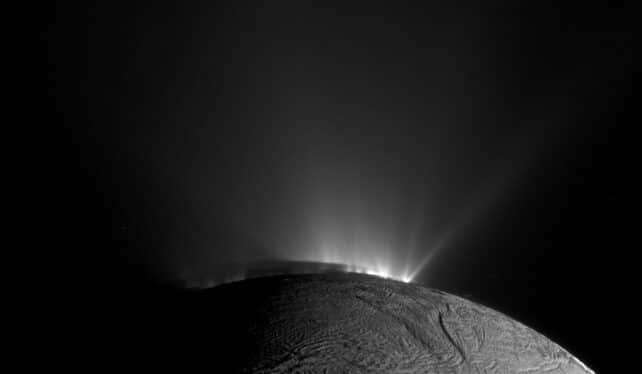
Key insights came from a crucial Cassini flyby in October 2008, when the spacecraft flew through a freshly erupted plume at an extraordinary speed of 17.7 kilometers per second. This rapid velocity fragmented water molecules and improved data clarity.
Decoding Cassini’s Chemical Treasure Trove
The breakthrough centered on data from Cassini’s Cosmic Dust Analyzer (CDA), a device initially designed to analyze dust and ice particles rather than search for signs of life. As ice grains from Enceladus collided with the detector, CDA recorded their chemical signatures. The challenge was interpreting these intricate signals due to the instrument’s age and the complexity of the data.
Through refined analytical methods, scientists compared impact spectra against laboratory experiment results and extensive chemical catalogs. This approach enabled them to uncover faint molecular signals that were previously hidden beneath clusters of fragmented water molecules.
“At lower impact speeds, the ice shatters, and the signal from clusters of water molecules can hide the signal from certain organic molecules,” Khawaja explained. “But when the ice grains hit CDA fast, water molecules don’t cluster, and we have a chance to see these previously hidden signals.”
The discoveries surpassed earlier identifications. Alongside known molecules such as amines, aromatics, and oxygen-containing compounds, the team identified benzene-like rings decorated with oxygen and nitrogen functional groups. These structures could serve as precursors in complex chemical reactions, potentially forming pyrimidines, key components of DNA bases, and lipids, essential for cell membrane construction.
Advancing the Search for Extraterrestrial Life
Scientists have now detected five of the six fundamental CHNOPS elements necessary for life, with sulfur yet to be confirmed. Although these molecules do not constitute direct evidence of life, they strongly suggest a complex chemical environment capable of supporting biological activity. Khawaja emphasized :
“We don’t have a clue about any actual biological relevance yet,” but the building blocks are undeniably there.
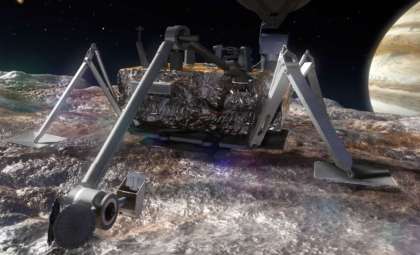
This growing chemical diversity makes a compelling case for future missions to Enceladus. Some experts advocate for surface landers, while others—such as NASA’s Kevin Hand—support additional plume flybys, pointing out that the moon already “provides free samples.”
- Categories:
- News








0 comments
Sign in to Comment