

China is setting its focus on one of the solar system’s most intriguing candidates for extraterrestrial life: Enceladus, Saturn’s frosty moon. Researchers from the Deep Space Exploration Laboratory (DSEL) and the Shanghai Institute of Satellite Engineering (SISE) have developed an elaborate mission design that, as covered by The Planetary Society on August 19, 2025, aims to deploy an orbiter, lander, and drilling robot to explore the subsurface ocean concealed beneath Enceladus’ icy exterior.
The Potential of Enceladus as a Haven for Life
The remarkable discovery made by NASA’s Cassini mission revealed towering jets of water vapor erupting from Enceladus’ south pole. These geysers, emerging from fissures known as tiger stripes, indicated the presence of a global ocean lurking beneath the frozen crust.
Underneath its surface lies a salty ocean, kept liquid by tidal heating forces. Significantly, the plumes have been found to contain organic compounds, hinting that the chemical precursors necessary for life might be present in this shielded aquatic environment. Compared to Europa, Enceladus’ thinner ice shell and higher tectonic activity make it one of the solar system’s most promising and accessible sites for studying habitability beyond Earth.

China’s Ambitious Triple-Component Mission Plan
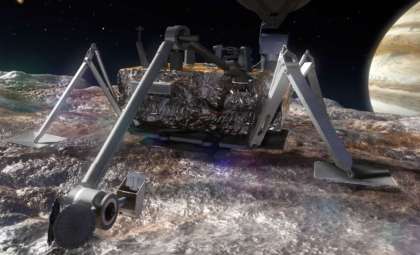
The Chinese mission concept centers on three key elements: a precision orbiter to conduct remote analysis and surface mapping, a lander tasked with on-site scientific investigations, and a specialized drilling robot engineered to penetrate up to five kilometers down to the interface between ice and ocean.
The orbiter will be equipped with instruments like a laser interferometer and an infrared spectrometer to create detailed maps, analyze magnetic environments, and select an optimal landing site. Upon deployment, the lander will perform verification experiments on location. The mission’s primary technological innovation is a hybrid laser-thermal drill powered by nuclear thermal energy. This approach melts the ice away instead of cutting mechanically, minimizing equipment wear and preventing debris contamination.
Throughout the drilling operation, techniques such as mass spectrometry and spectroscopic analysis will continuously detect the presence of six essential bioelements: carbon, hydrogen, oxygen, nitrogen, phosphorus, and sulfur. The drill will utilize navigation systems inspired by Germany’s Enceladus Explorer (EnEx) program, including inertial measurement units, LIDAR, and acoustic positioning to ensure an accurate and secure descent.
China is planning a mission to Enceladus. Here’s what we know ⬇️
— Planetary Society (@exploreplanets) August 19, 2025
Saturn's moon Enceladus is one of the most intriguing places in the Solar System, especially when it comes to the search for life. Not only does it have liquid water beneath its icy crust, but it may also contain… pic.twitter.com/FcRzvF5oW8
Advancing from Proven Deep-Space Experience
China’s foray into this mission builds on an impressive track record. The Tianwen-1 mission of 2020 successfully deployed an orbiter and rover on Mars, demonstrating China’s capability to manage complex interplanetary missions across vast distances.
Following this, Tianwen-2 was launched to collect samples from an asteroid and investigate a main-belt comet. Upcoming missions include the 2028 Tianwen-3, aiming to return Martian samples, and the 2029 Tianwen-4, which is planned to explore Jupiter and its moon Callisto.
These efforts form critical steps toward mastering deep-space technologies such as advanced communication, autonomous systems, and nuclear-powered instruments — crucial for missions in the Saturn system where signal delays prevent real-time control. China is also considering a Neptune orbiter with a Triton flyby, expanding the search for ocean-bearing worlds beyond the traditional targets.
- Categories:
- News










0 comments
Sign in to Comment