

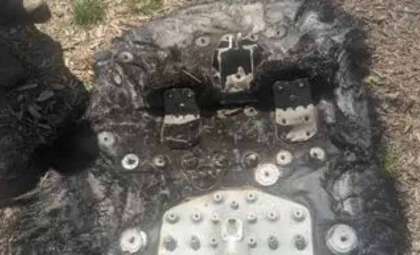
A remote village southeast of Nairobi, Kenya, found itself enveloped in a cosmic enigma on December 30, when a colossal metal ring unexpectedly plunged into a nearby field. The arrival of this enormous object unsettled the local residents and ignited serious discussions about the growing issue of space debris and its silent descent towards our planet.
A Massive Metal Hoop Descends from Orbit
The 8.2-foot diameter ring, weighing an incredible 1,102 pounds, landed abruptly without any prior alerts. Witnesses were initially perplexed, wondering if it was part of an aircraft, satellite fragment, or even something extraterrestrial. Remarkably, despite the heavy impact, no injuries occurred.
Officials promptly cordoned off the site, and the Kenya Space Agency (KSA) took charge of the investigation. Their findings identified the object as a separation ring from a spacecraft's launch system, typically designed to burn up during atmospheric re-entry or safely splash into the ocean. However, in this case, the process failed.

Tracing the Source of Kenya’s Space Debris
Although the KSA called this an “isolated incident,” concerns about the hazards posed by falling space fragments have intensified. Authorities are actively working to determine the origin of the launch vehicle responsible and understand why the ring survived re-entry to land solidly on Earth.
This event adds to Earth's unexpected encounters with space objects; space agencies like NASA and ESA constantly monitor more than 27,000 sizeable debris pieces orbiting Earth, many of which could threaten safety if they re-enter.

The Rising Threat of Orbital Waste
The Kenyan space debris event highlights the broader issue of space junk accumulation, growing steadily as more rockets and satellites are launched. While much of this detritus incinerates upon re-entry, some fragments survive and pose real dangers when they strike inhabited regions.
In a notable incident last year, a family in Florida sued NASA after debris, thought to be a discarded battery pallet from the International Space Station, crashed through their roof. No injuries resulted, but the episode underscored the risks of uncontrolled objects re-entering the atmosphere.
Efforts to Address Space Debris
Scientists and engineers worldwide are urgently developing strategies to tackle the space debris dilemma. Potential solutions include:
- Satellites equipped with capture nets to retrieve orbiting fragments
- Technologies to safely deorbit defunct satellites allowing them to burn up properly
- Advanced, resilient materials designed to minimize fragmenting during collisions
Still, these approaches face significant technical barriers and economic costs. Much of the existing debris originates from early space missions that lacked any disposal protocols, making orbital congestion a long-term hazard for humanity’s future in space.
- Categories:
- News











0 comments
Sign in to Comment