
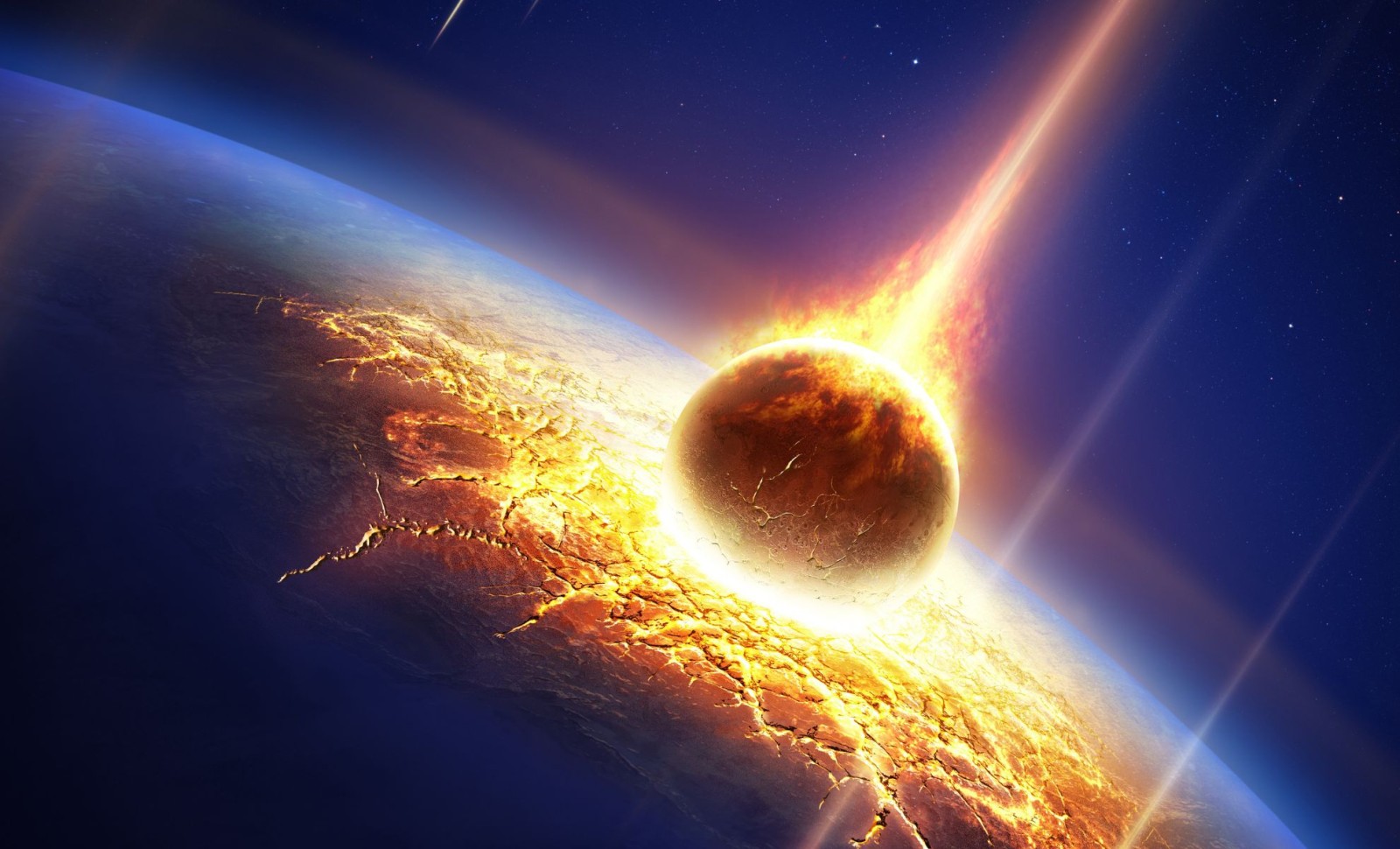
Recent findings suggest that Earth's equatorial regions could be more prone to collisions with interstellar objects (ISOs) than previously recognized. These enigmatic travelers, originating beyond our Solar System, may strike Earth more often in some geographic areas, particularly near the equator.
Interstellar visitors have intrigued astronomers ever since the discovery of ʻOumuamua in 2017, the first recognized ISO passing through our cosmic neighborhood. Its successor, the interstellar comet 2I/Borisov, further piqued scientific curiosity. Despite these well-documented cases, many ISOs likely passed unnoticed, raising questions about their past impacts on Earth and the potential hazards they pose now.
Origins of Interstellar Visitors
ISOs follow erratic, high-velocity trajectories that challenge prediction models. These objects originate from distant stellar systems, journeying freely through interstellar space until occasionally intersecting with our Solar System. According to research published on arXiv led by Darryl Seligman, an assistant professor at Michigan State University, most ISOs are likely ejected from M-dwarf stars, which are the galaxy's most common stellar type.

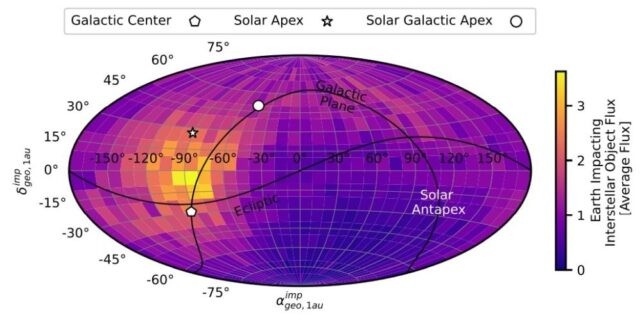
Using computational simulations, Seligman’s team analyzed the movement of these objects through space. Their findings indicate Earth faces the greatest chances of ISO encounters when objects approach from two principal directions: the solar apex—the Sun's trajectory relative to the galaxy—and the galactic plane—where stars are densely clustered within the Milky Way.
Why the Equator Is More Exposed
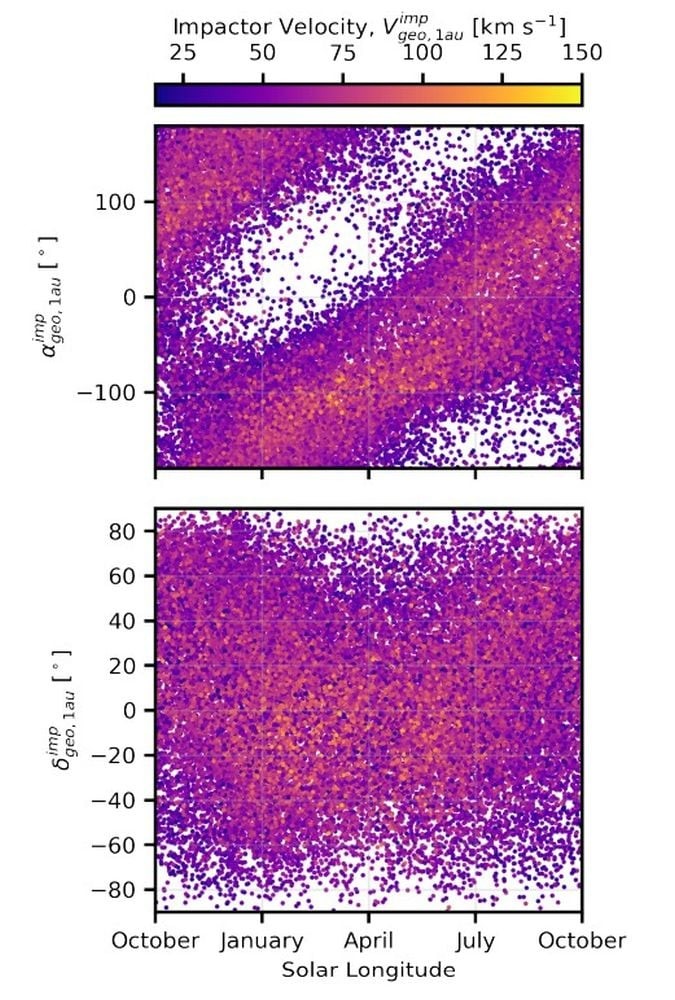
Simulations reveal that spring months bring an increased likelihood of faster ISOs striking Earth as the planet moves toward the solar apex. In contrast, winter presents a higher overall chance of impacts, because Earth's orientation then faces the solar antapex, the opposite direction of the Sun's galactic motion, offering a wider line of sight to incoming objects.
The researchers tracked ISO trajectories closely, confirming that Earth experiences elevated impact risk when these objects approach from two specific astronomical vectors.
“Interstellar objects tend to impact the Earth in the directions of the solar apex and the galactic plane,” the researchers write.
Advancing ISO Study and Knowledge Gaps Ahead
While this research does not specify exact impact frequencies, it provides a crucial framework for identifying when and where Earth is most susceptible to ISO encounters. This roadmap helps scientists direct observational efforts more effectively.
Darryl Seligman highlights upcoming initiatives such as the Vera Rubin Observatory and its Legacy Survey of Space and Time as pivotal in gathering comprehensive ISO data. These projects will enhance identification capabilities and may soon determine whether specific ISOs are headed toward Earth.
With refined observation techniques and focused monitoring, scientists anticipate gaining a clearer understanding of the frequency and geographical impact zones of these interstellar visitors, potentially uncovering their historical footprints on our planet.
- Categories:
- Science











0 comments
Sign in to Comment