
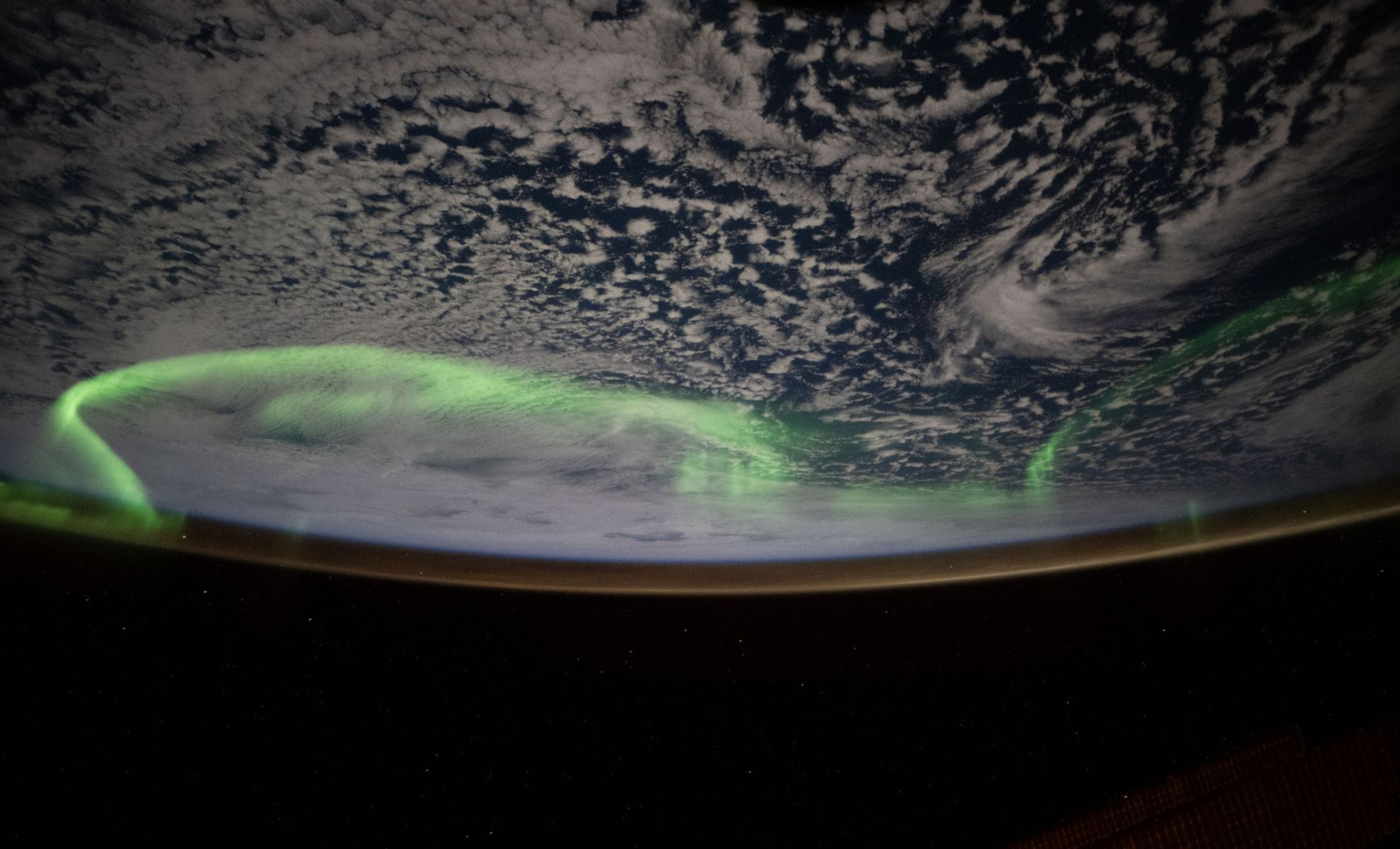
A mesmerizing image captured aboard the International Space Station reveals the aurora australis glowing in vibrant shades of green, purple, and red. Taken by European Space Agency astronaut Sophie Adenot during the εpsilon mission, this photo presents a breathtaking glimpse of a natural spectacle rarely seen from above Earth.
For many, witnessing an aurora from the ground is a cherished dream. These captivating light shows regularly draw visitors to polar regions, where dark skies serve as the perfect backdrop for shimmering auroral ribbons created by energetic particles in Earth’s upper atmosphere.
However, the perspective from space offers a dramatic difference. Astronauts look down on the luminous atmosphere, unveiling the immense scale of auroral activity extending along the planet’s horizon.

Auroras Spread Across an Immense Canvas
The photograph reveals expansive streams of vivid green light sweeping over Earth’s upper atmosphere, set against a backdrop of soft purple glows and encircled by a deep red halo. These vibrant colors stand out sharply against the blackness of space and the planet's gentle blue curve.
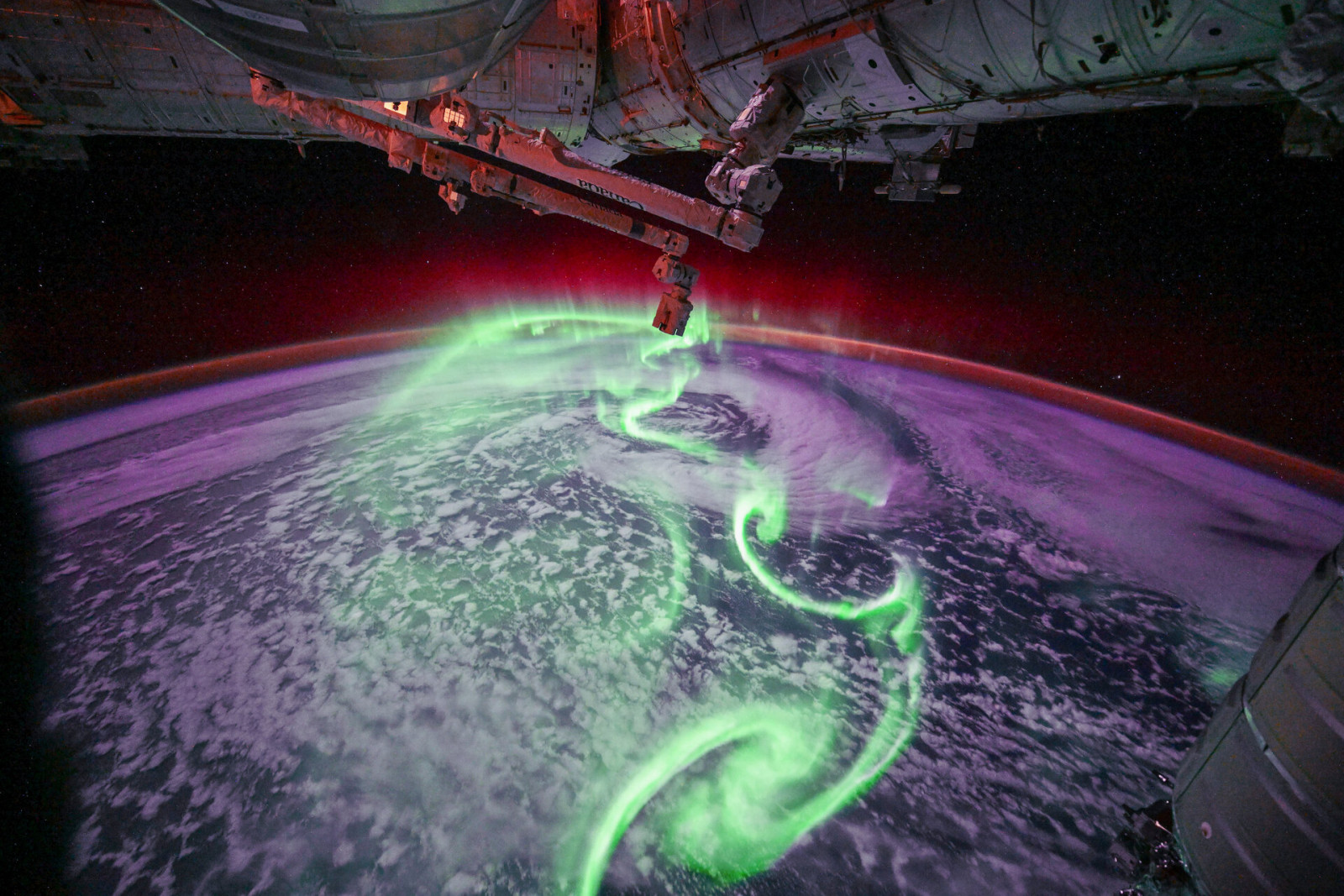
As reported by Space.com, the auroral display was so vivid that the reddish tint reflected off the exterior surfaces of the International Space Station. This image exemplifies how vast and awe-inspiring auroras appear when viewed from orbit, stretching beyond the horizon.
Sophie Adenot photographed the scene while aboard the orbital station, as part of the European Space Agency’s εpsilon mission.
How These Stunning Lights Are Formed
According to NASA, auroras occur when charged particles from the Sun’s solar wind collide with gases in Earth’s atmosphere. These interactions energize the atmospheric molecules, causing them to emit bright light displays in a variety of colors.
The photographed spectacle is known as the aurora australis, which occurs in the Southern Hemisphere. Its counterpart in the north is called the aurora borealis.
NASA further explains that auroras produce multiple colors depending on the type of gas and altitude. Here, green predominated, enhanced by purple atmospheric layers and a ruby-red glow encircling the planet, producing a vivid, captivating scene.
An Unforgettable Moment for the Astronaut
Alongside the striking photo, Adenot shared her thoughts on the event via social media, describing it as the most spectacular aurora she had observed since starting her mission.
“Day 127, orbit 1968 — That aurora was absolutely spectacular… shimmering and dancing beneath us, stretching as far as the eye could see, and so intense it lit up the Station in shades of green,” she said.
She added that the brightness of this aurora went beyond what she typically anticipated when capturing auroras on camera.
“We’ve seen several since the beginning of the mission, but this one was on a completely different level — far too bright for my usual aurora camera settings. Moments like these never get old up here; the whole crew suddenly find themselves vying for a good spot at a window!”
- Categories:
- Space







0 comments
Sign in to Comment