
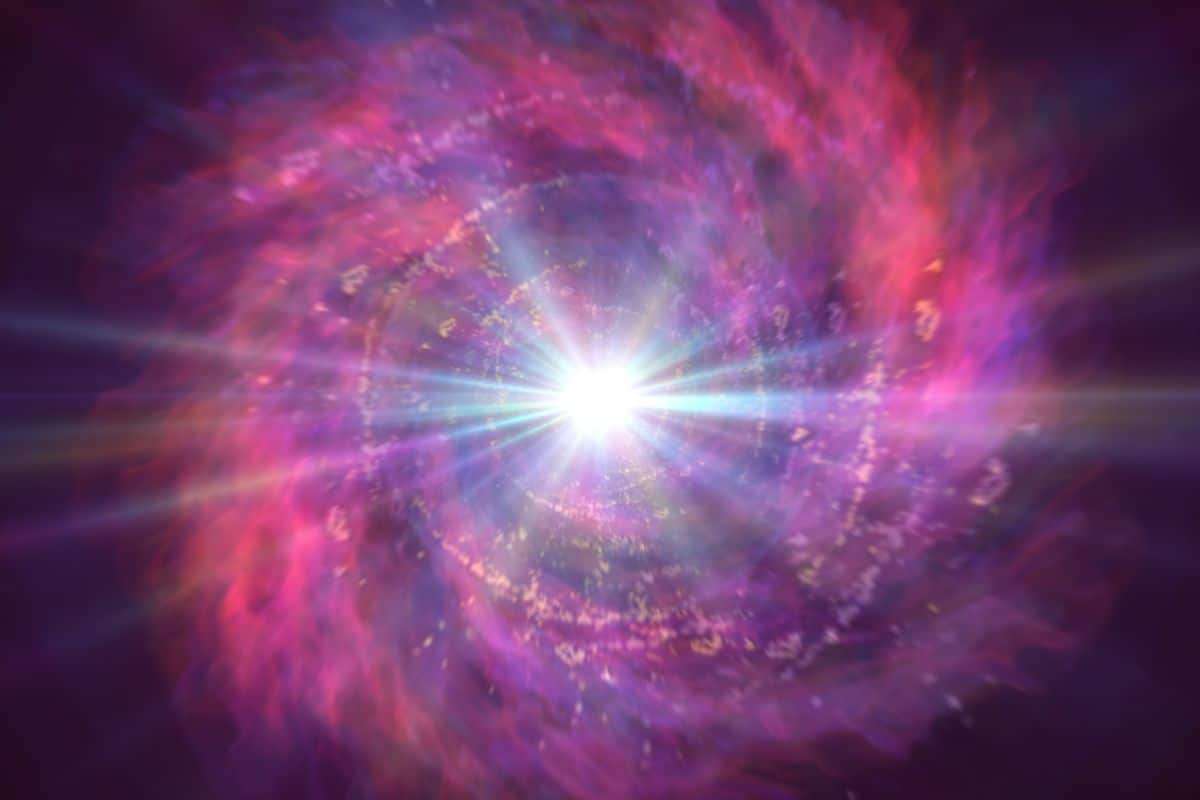
Scientists have obtained the inaugural high-resolution image showcasing the immense cosmic web, highlighting the delicate threads linking galaxies over millions of light-years. This landmark achievement validates longstanding hypotheses about galaxy formation and sustenance via gas inflow through these colossal cosmic filaments.
Charting the Vast Cosmic Network
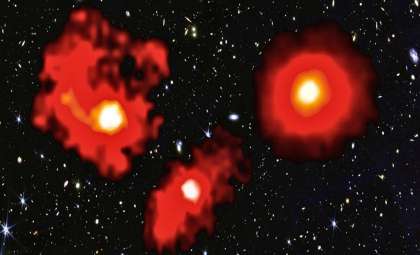
A global team led by Davide Tornotti, a doctoral candidate at the University of Milano-Bicocca, in partnership with the Max Planck Institute for Astrophysics (MPA), made this breakthrough. Their research, published in Nature Astronomy, examined a filament connecting two galaxies dating back to when the universe was approximately 2 billion years old.
Both galaxies contain an active supermassive black hole, providing a rich field for exploring the cosmic web. To detect this elusive filament, the researchers utilized the Multi-Unit Spectroscopic Explorer (MUSE) on the VLT, dedicating extensive observation time to a focused patch of the sky.

The team produced a detailed map of a 3 million light-year cosmic filament, unveiling the trickle of diffuse hydrogen gas nourishing galaxy growth along these threads.
Connecting the Dots in Galaxy Evolution
Astronomers have theorized that dark matter—the unseen substance accounting for roughly 85% of the universe's matter—forms the underlying structure of the cosmic web. Gaseous matter flows along these filaments, sustaining the galactic clusters at crossover points.
The team confirmed that the filament's gas is physically linked to the galaxies it joins, supplying the raw material for star formation. Tornotti stated: “By detecting the faint glow from the filament, whose light traveled almost 12 billion years to reach us, we were able to define its intricate structure precisely.”
“For the first time, direct measurements allowed us to delineate the boundary between galactic gas and the material residing within the cosmic web itself,” he added.
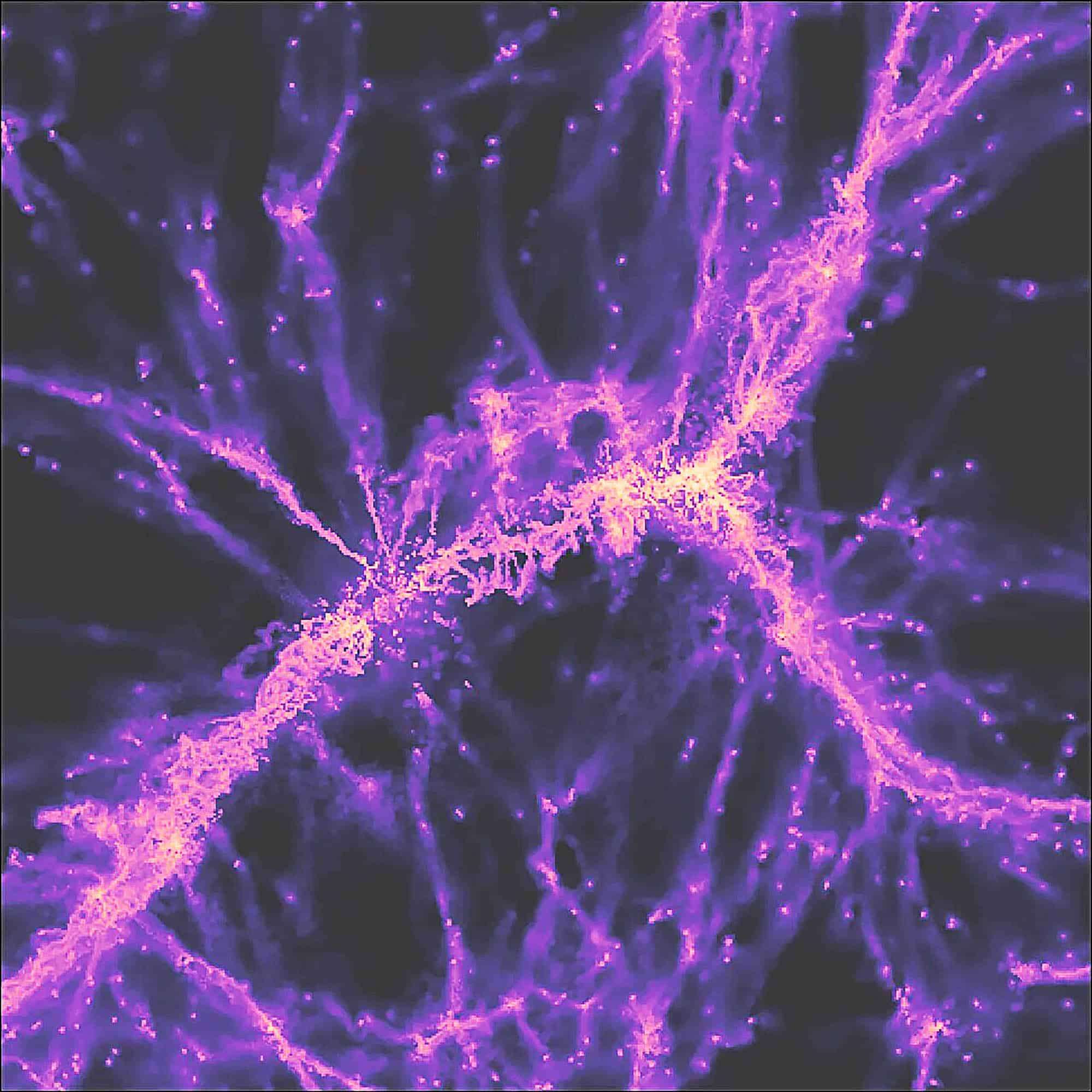
Revealing the Cosmic Web’s Framework
This discovery was enabled by the innovative capabilities of MUSE, which dissects incoming light into numerous wavelengths, facilitating detection of weak emissions typically overshadowed by brighter sources.
To ensure reliability, the observations were compared with state-of-the-art supercomputer models from MPA. The excellent agreement bolstered current ideas about dark matter's role in shaping galaxies and will steer upcoming cosmic studies.
Fabrizio Arrigoni Battaia, a scientist at MPA, stressed the value of continuing this research:
“We are thrilled by this direct, high-definition observation of a cosmic filament. But as people say in Bavaria: ‘Eine ist keine’ – one doesn’t count. We are gathering further data to uncover more such structures, with the ultimate goal of having a comprehensive vision of how gas is distributed and flows in the cosmic web.”
A New Frontier in Cosmic Discovery
Upcoming observatories like the Extremely Large Telescope (ELT) and James Webb Space Telescope (JWST) are set to provide unprecedented views into the universe’s large-scale structure.
This initial clear view of a cosmic filament marks a pivotal step. Each new finding enriches our understanding of how galaxies form, develop, and interconnect across cosmic time.
- Categories:
- Astronomy ,
- Space


0 comments
Sign in to Comment