
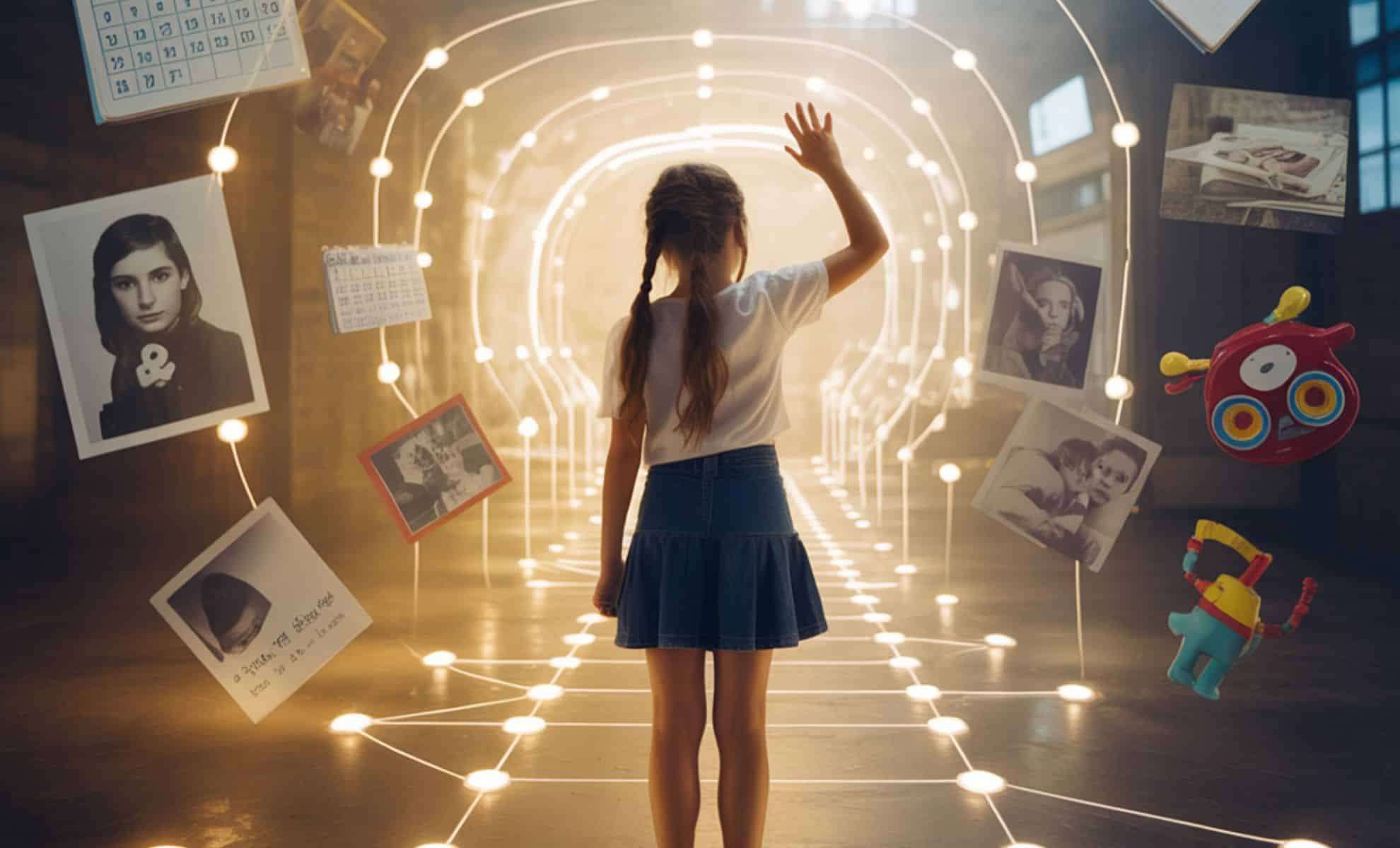
Researchers from the Institut du Cerveau in Paris have unveiled the fascinating mental abilities of TL, a 17-year-old student whose remarkable autobiographical memory challenges conventional neuroscience, as detailed in a recent Neurocase publication.
With a diagnosis of hyperthymesia, a rare neurological phenomenon affecting fewer than a hundred individuals globally, TL can vividly recall life events with extraordinary precision. More intriguingly, she demonstrates an exceptional capacity to mentally envision her future with sensory and emotional clarity akin to actual memories, a phenomenon described by the scientists as “mental time travel.”
“She doesn’t just imagine what might happen. She experiences it as if it’s already occurred,” says Dr Valentina La Corte, a cognitive neuroscientist and lead author of the study.
“It’s not fantasy. It’s fully immersive episodic projection.”Add Cosmo Herald as a Preferred Source

This unique case has captivated both clinical researchers and philosophers, prompting deeper inquiries into the nature of time itself, especially when the brain blurs the boundaries between recollection and imagination.
Understanding Hyperthymesia and Its Rarity
Known as Highly Superior Autobiographical Memory (HSAM), hyperthymesia was first rigorously documented in the early 21st century. Unlike photographic memory, which remains a matter of debate, HSAM involves the ability to recall almost every day of one’s life in vivid detail, primarily focusing on personal experiences rather than factual information.
Individuals with hyperthymesia frequently remember day-specific details such as weather conditions and their attire from years past. However, this ability can be burdensome, as many report being inundated by relentless, involuntary memories, including distressing ones they cannot dismiss.
TL’s case stands out because she appears to have consciously developed mental techniques to manage and compartmentalize her memories. During interviews and formal memory tests, she described using a mental construct she calls a “white room”, an internal organizational system where memories are sorted by theme and date into figurative drawers or cabinets.
Her mind arranges memories into groups such as family, friends, holidays, and even childhood toys. Some memories are stored as images, others as screenshots of texts or photographs. Particularly painful memories, like the loss of her grandfather, are metaphorically locked away for protection.
The researchers were impressed by her spontaneous use of memory palaces, a mnemonic strategy with ancient origins typically requiring practice to master. The complete study is accessible via Taylor & Francis Online.
Reexperiencing the Past and Foreseeing the Future
To confirm the depth and accuracy of TL’s memories, scientists employed two standardized assessments: the TEMPau (Episodic Memory of the Autobiographical Past) and the TEEAM (Temporal Extended Autobiographical Memory task). These evaluations gauge how precisely participants can recall or imagine specific past or future events, including sensory details, emotions, and spatial contexts.
TL consistently exceeded typical performance, recounting days from years earlier with remarkable clarity of sights, sounds, and emotions, alongside meaningful reflections about those experiences. Her memory encompassed more than chronology; it was enriched by emotional and situational context.
Her ability to mentally project future moments astonished the researchers most.
“She reported a ‘feeling of pre-experience’ — as if she had already lived through future events,” says Dr Laurent Cohen, neurologist and co-author of the study.
“It’s an ability we all have to some extent when we imagine the future. But in her case, it’s on a completely different scale.”
She envisioned upcoming milestones like graduations, conversations, and life events with sensory detail and emotional intensity identical to real memories. This led the team to propose that TL’s brain utilizes similar neural pathways to remember past episodes and to simulate future experiences, aligning with increasing scientific support for the link between episodic recall and foresight.
A comprehensive 2024 review in Neuropsychology Review reinforces this concept, suggesting our capacity to anticipate the future is grounded in the brain’s ability to simulate scenarios based on prior experiences.
An Exceptional Mind Within a Supportive Family
Interestingly, TL’s extraordinary traits may be part of a broader familial pattern. The study notes that several relatives display unique cognitive abilities including absolute pitch and synesthesia, where sensory perceptions overlap—such as hearing colors or tasting words.
Although TL herself does not exhibit synesthesia, the presence of multiple rare neurological features in her family implies a possible genetic underpinning. Brain imaging did not reveal structural anomalies, but the scientists speculate that enhanced connectivity between memory and sensory processing regions might contribute to her capabilities.
These findings echo prior research from the University of California, Irvine’s Center for the Neurobiology of Learning and Memory, where heightened activity was observed in the temporal and parietal lobes of individuals with HSAM, areas critical for memory retrieval.
Insights Into Identity and the Boundaries of Memory Science
TL’s case offers profound perspectives on self-awareness and personal identity. Beyond raw data, memory shapes how we construct our life stories. She exhibits a strong sense of autonoetic consciousness, the awareness of oneself across time.
Additionally, she reported shifting viewpoints within the same memory, revisiting past experiences from a more mature perspective. This introspective reflection, combined with vivid sensory recall, points to a level of mental complexity that remains only partially understood by science.
Though TL is an exceptional case, her experiences are inspiring fresh approaches in memory-based therapies, mental health treatments, and neurocognitive development. Her method of organizing memories into discrete mental compartments may offer novel strategies to help others manage trauma or enhance memory.
As Dr La Corte emphasizes:
“We are just scratching the surface. There’s so much more to learn—not just about rare cases like this, but about how memory shapes all of us, every day.”
- Categories:
- Science




0 comments
Sign in to Comment