
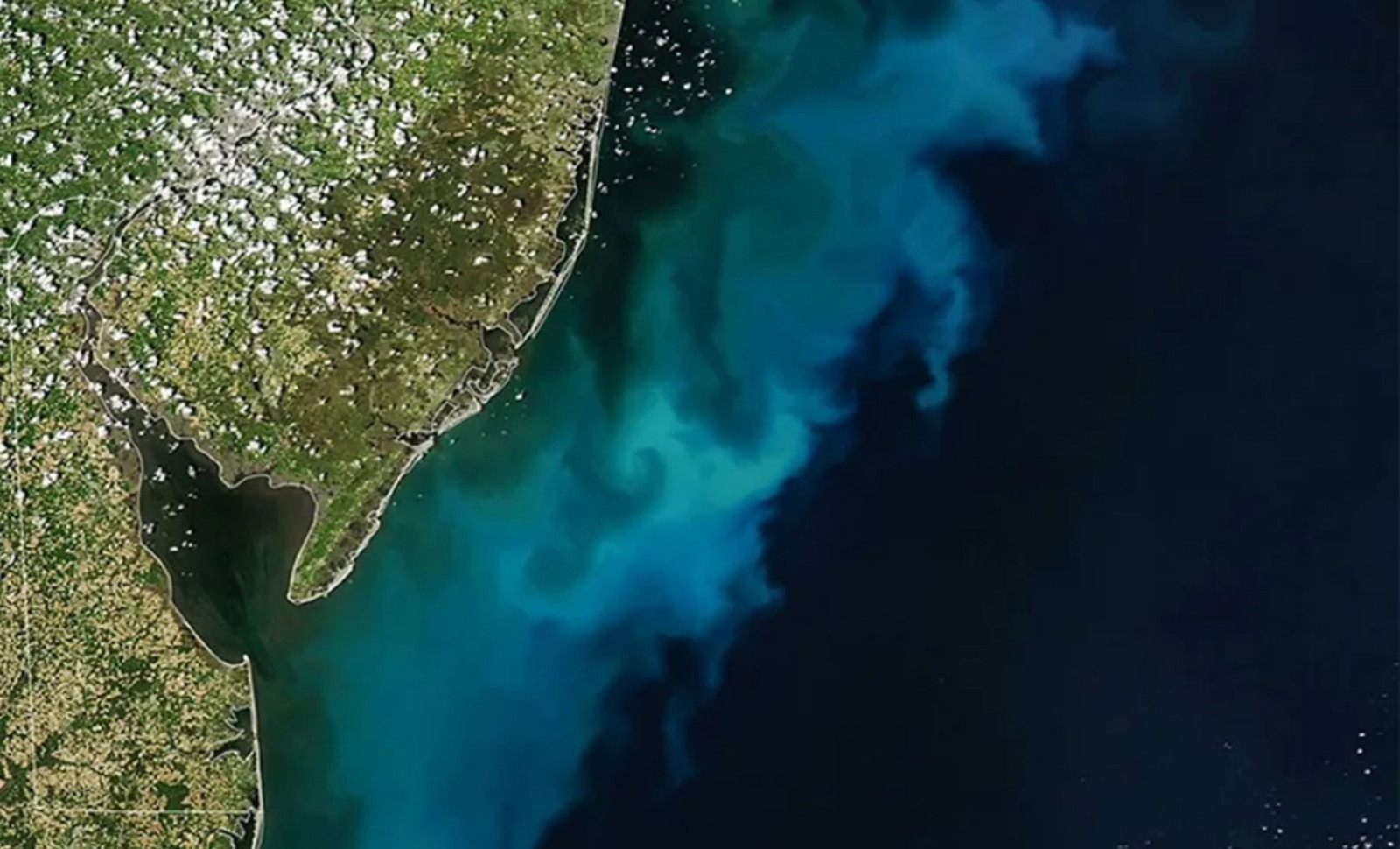
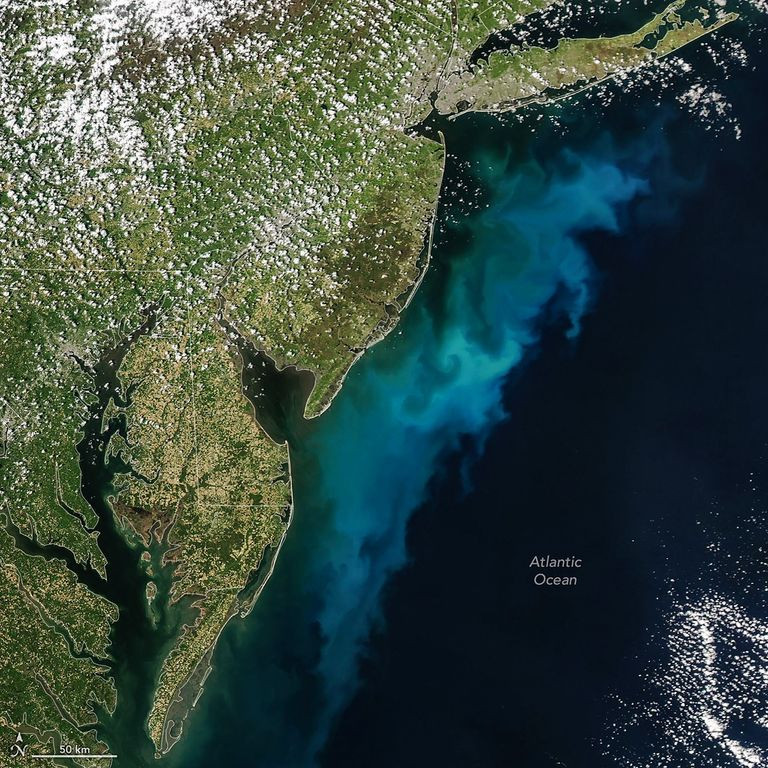
NASA's satellite observations have revealed an extensive blue-green phytoplankton bloom developing near the shallow coastal waters of New Jersey, Delaware, Maryland, and Virginia. First detected in mid-April, this expansive bloom has grown into large, swirling formations visible even from orbit.
This marine event showcases a blend of blue, green, and brown hues stretching for several hundred kilometers along the eastern U.S. coastline. NASA attributes the bloom’s formation to a combination of factors including river discharge, springtime weather disturbances, and abundant populations of microscopic marine life called phytoplankton.
Tracking these blooms is essential for assessing oceanic health since phytoplankton generate oxygen and form the foundational base of aquatic ecosystems. Advanced satellite sensors such as MODIS aboard the Aqua satellite and the recently launched PACE mission enable researchers to observe and analyze these blooms with exceptional precision by studying changes in ocean color to identify various species and their concentrations.

Mechanisms Behind Bloom Development and Dispersion
The distinctive swirling shapes that satellites capture result from the interaction between water currents and the biological growth patterns of the phytoplankton. Kyle Scotese, representing the International Society for Diatom Research, remarks:
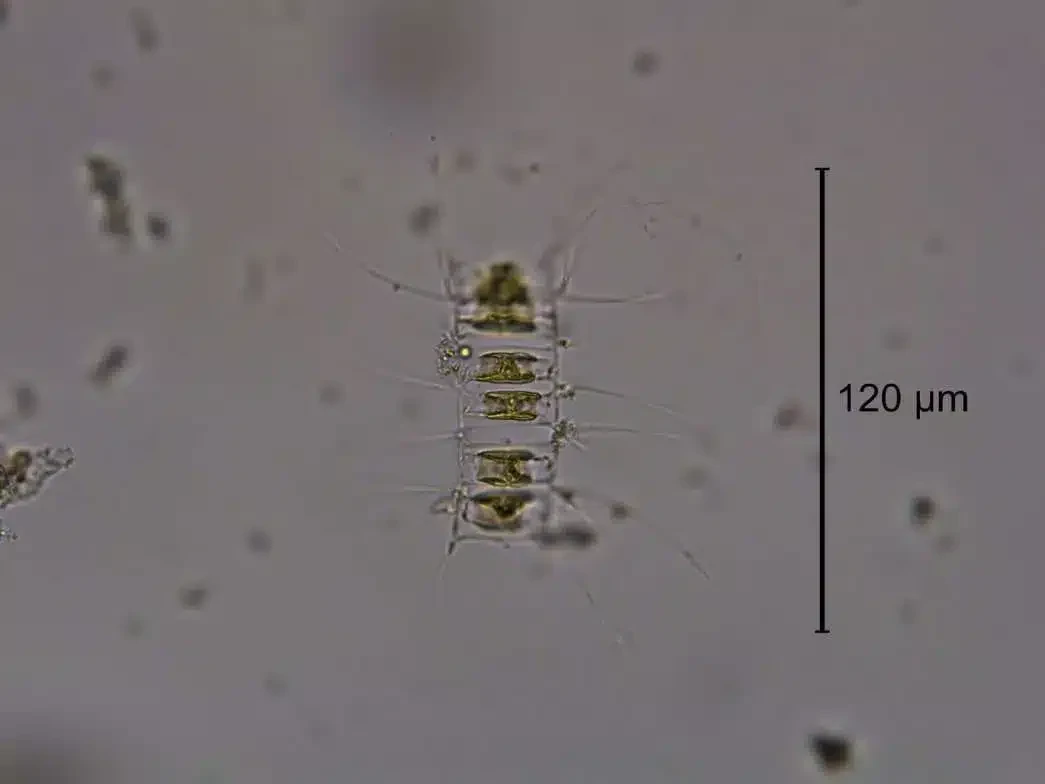
“Many types of algae, including cyanobacteria, dinoflagellates and diatoms, can generate massive populations with densities greater than 15,000,000 cells per liter, stretching for hundreds or even thousands of square kilometers in water bodies,” adding that: “these blooms can proliferate and dieback in a matter of days or return seasonally for decades.”
Additional factors such as influxes from rivers and spring storms stir up sediments and nourish coastal waters, fostering optimal conditions for these tiny organisms. According to the NASA Earth Observatory, these combined environmental influences are responsible for the eerie blue-green and brown shades apparent in satellite photos.
Determining Bloom Composition from Space
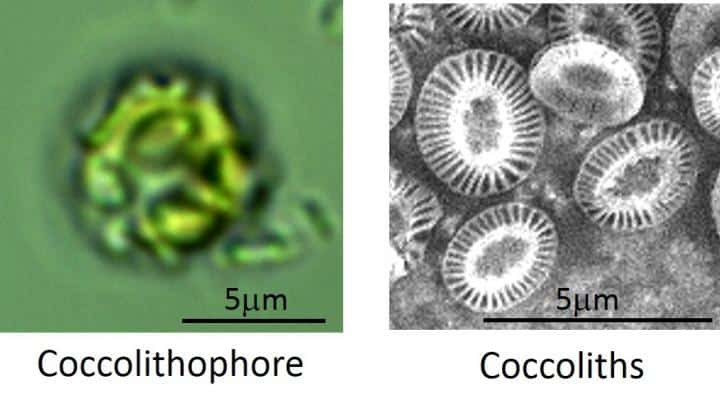
The PACE (Plankton, Aerosol, Cloud, Ocean Ecosystem) satellite has significantly enhanced the ability to remotely decode the makeup of phytoplankton blooms. By examining reflected light wavelengths, scientists can identify which species predominate. NASA notes that while diatoms generally lead early spring blooms, signs of coccolithophores—a group of phytoplankton producing a chalky turquoise tint—are also detected.
Ocean color arises from sunlight interacting with components like chlorophyll in seawater, revealing these dynamic bloom patterns. Anna Windle, a NASA Goddard Space Flight Center researcher, explains how such data enable comprehensive monitoring of phytoplankton worldwide and deeper understanding of their ecological roles.
Ecological Effects of Phytoplankton Blooms
Phytoplankton contribute between 20 to 40 percent of Earth's oxygen production and underpin marine food webs. Coccolithophore blooms, which often appear milky or turquoise, provide additional insights into ocean chemistry due to their calcium carbonate plates called coccoliths.
Although these blooms are natural and temporary, ongoing observation is vital to monitor ocean health and detect potentially harmful conditions. At present, the extensive bloom along the U.S. eastern shore shows no toxic characteristics. As Rutgers University oceanographer Oscar Schofield notes:
“Unless big river outflows or storms replenish the nutrients, we’ll likely see this bloom start to decline in the coming weeks.”
- Categories:
- Nasa












0 comments
Sign in to Comment