
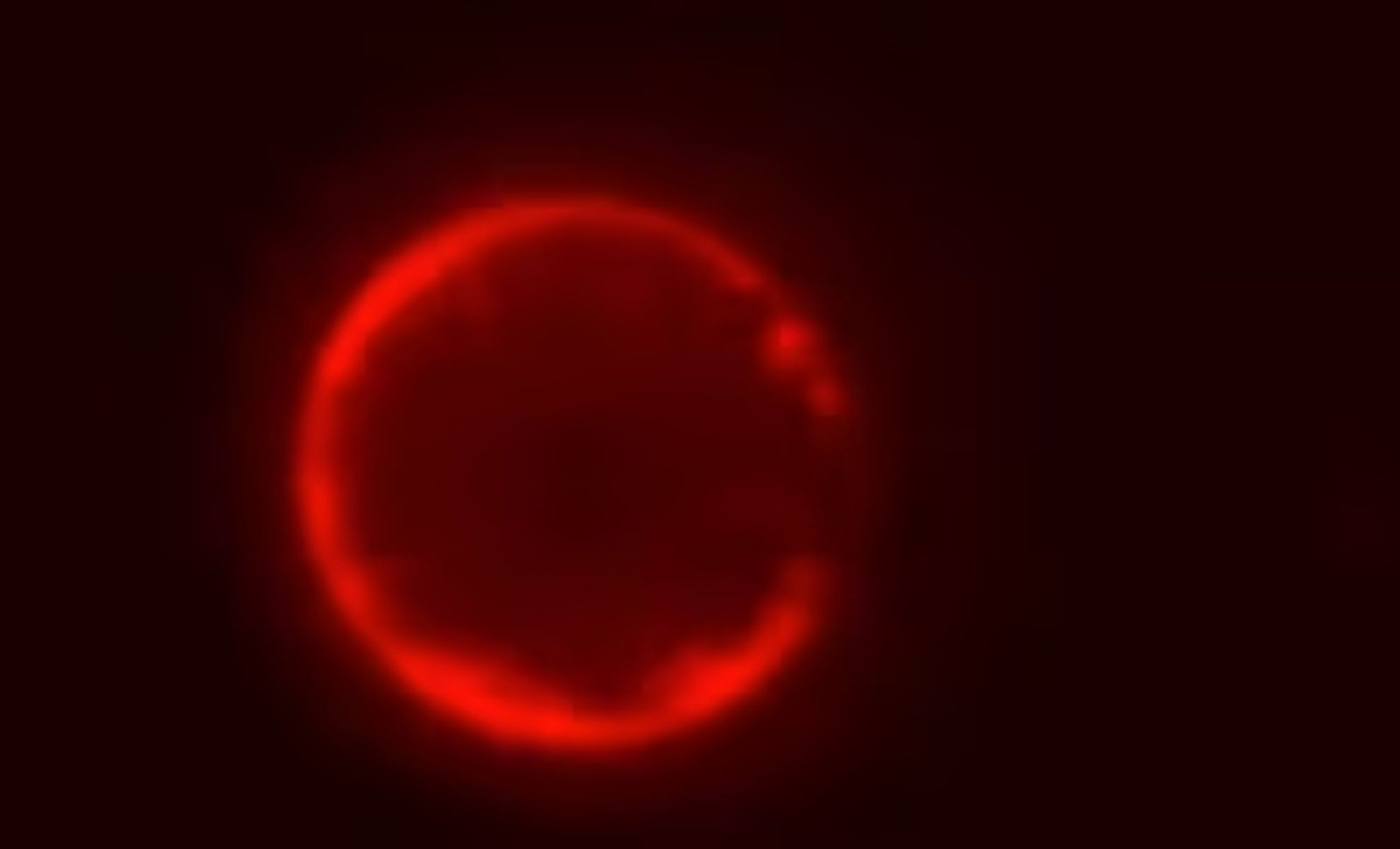
A team from the University of Minnesota has engineered the first synthetic cell constructed solely from non-living chemical compounds that is capable of growth, DNA replication, and division. Named SpudCell, this advancement marks a pivotal milestone in synthetic biology, although it is not yet classified as a living entity.
Leading the research, synthetic biologist Kate Adamala and her collaborators aimed to replicate fundamental cellular processes using meticulously combined chemical elements.
The findings have been shared as a preprint on Biotic, a nonprofit co-founded by Adamala, and await peer review. The researchers view this effort not as a final product, but as a foundational platform designed for future enhancement by the scientific community.

Constructing a Cell From Basic Parts
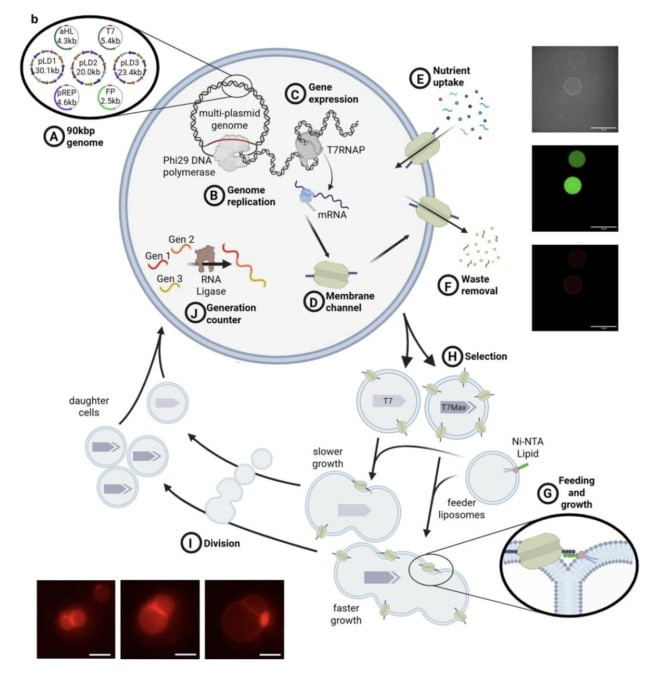
Rather than modifying an existing microbe, SpudCell was assembled entirely from inorganic components. Its structure consists of a liposome—a microscopic fat-based sphere that mimics a cellular membrane—and encloses seven plasmids that carry its genetic blueprint.
According to details on the Biotic website, the combined plasmids form a genome totaling 90 kilobase pairs (kbp). The team incorporated a protein expression system enabling the synthetic cell to interpret its DNA and synthesize proteins essential for its growth and division.
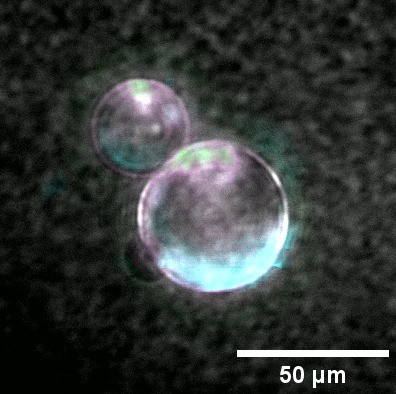
According to the research group, selection, genome replication, growth, nutrient uptake, and genetically driven division are all functions this cell can carry out. Images released demonstrate the artificial cell undergoing division after producing necessary proteins.
Kate Adamala confessed that initially, the results felt almost unbelievable. Speaking to ScienceAlert, she stated:
“I was very happy, relieved, and a bit suspicious because I’m always double- and triple-checking results.”
A Genome Smaller Than Anticipated
One notable surprise was the relatively compact genetic material in the synthetic cell. Measuring 90 kilobase pairs, it defies previous expectations that at least 113 kilobase pairs would be necessary for fundamental cellular functionality. By comparison, the human genome spans roughly 3 million kilobase pairs. This innovation suggests that fewer genes than previously thought can support basic cell operations.
Still, the team carefully refrains from labeling SpudCell as truly alive. It lacks the capability for indefinite reproduction across generations and thus cannot evolve. Additionally, the research has sparked debate during the review process. As covered by Science, at least one reviewer contested that the study represented “not real biology.”
Demonstration of Concept With Key Constraints
The scientists acknowledge significant challenges remain. The system cannot autonomously produce a complete protein expression apparatus, regulate its metabolic pathways, or survive independently without externally supplied nutrients and molecules.
Moreover, it is missing a cytoskeleton, the internal framework that supports shape and intracellular organization in natural cells. Without this structure, the synthetic cells remain relatively primitive and only survive across a limited number of generations. Adamala explained:
“Our goal is to have full operational ability to engineer biology. To do that, we need to know where every building block goes, we need a full blueprint. That is what SpudCell gives, and no other currently known cell. We have complete schematics of it, so we can engineer on that chassis.”
She also expressed hope that the research community will build upon this design by integrating features like a cytoskeleton and enhanced metabolic controls.
- Categories:
- Science






0 comments
Sign in to Comment