

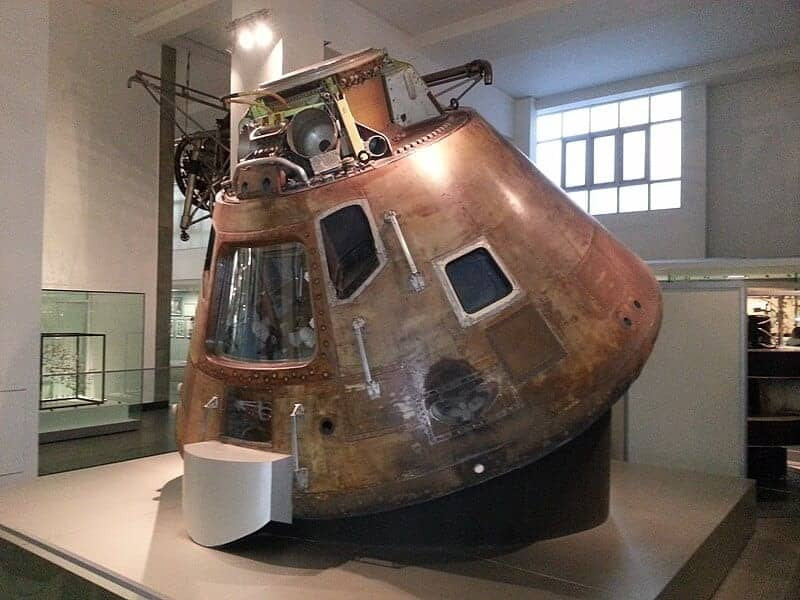
On May 26, 1969, the Apollo 10 command module re-entered Earth's atmosphere traveling at an astonishing velocity of 36,397 feet per second (39,937.7 kilometers per hour). According to Guinness World Records, this remains the fastest speed ever recorded by a human being, a feat unbroken for over five decades. Astronauts Thomas Stafford, John Young, and Eugene Cernan were inside the capsule, concluding a mission that brought them to within roughly 14.4 kilometers of the Moon’s surface without actually landing.
Despite the mind-boggling speed, the astronauts did not physically perceive it; in the vacuum of space, speed has no sensation, only the focus on instruments, checklists, and trajectory control. This record-setting velocity wasn’t directly observed during flight but was instead derived from telemetry and radar data analyzed after the mission’s completion.
Apollo 10 Was a Critical Dress Rehearsal for Moon Landing
Launching from Kennedy Space Center on May 18, 1969, Apollo 10 was the fourth crewed Apollo mission and functioned as a comprehensive test of the equipment and procedures essential for a lunar landing—without actually touching down. Two of the crew, both military officers, Stafford and Cernan, took charge of the lunar module operations.

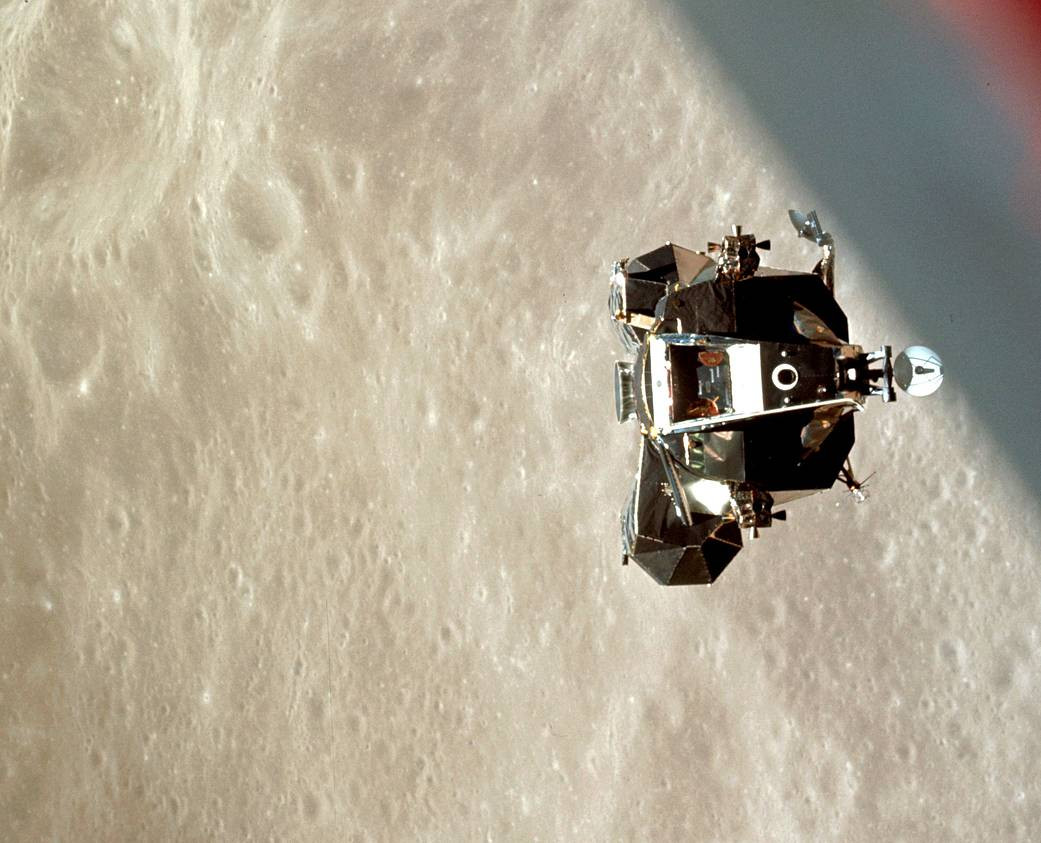
On May 22, Stafford and Cernan boarded the lunar module, dubbed Snoopy, an homage to the iconic Peanuts character. After undocking from the command module, known as Charlie Brown, which remained in orbit with Young aboard, the descent engine fired for 27 seconds, lowering the lunar module to approximately 47,400 feet (14.4 kilometers) above the Moon’s surface.
From this vantage point, Stafford and Cernan took photographs and conducted detailed surveys of the Sea of Tranquility, the site targeted for Apollo 11’s historic landing. They evaluated navigation systems crucial for future powered descents. A brief, unexpected tumbling occurred due to a malfunctioning switch, as noted in NASA’s records. After firing the ascent engine, the lunar module reunited with Young in orbit before being jettisoned.
Following separation from the lunar module, the spacecraft’s trajectory exploited the Moon’s gravitational pull to accelerate toward Earth, reaching incredible speeds when entering the atmosphere. Cernan recalled re-entry feeling like being engulfed inside a glowing “ball of white and violet flame.” The capsule’s parachutes deployed successfully, and it splashed down in the Pacific Ocean on May 26, with the USS Princeton retrieving the crew.
Details of the Speed Record
Guinness World Records attributes the peak speed to the moment the spacecraft crossed the 121.9-kilometer atmospheric interface on its return journey, reaching 36,397 feet per second (11,093.8 meters per second). This occurred on May 26, 1969, marking the precise point where Earth’s atmosphere begins.
Translating to 39,937.7 kilometers per hour (24,816.1 miles per hour), this speed measures the craft’s velocity relative to Earth at atmospheric entry, which serves as the standard for such records.
NASA’s archives report a slightly lower speed of about 24,791 miles per hour (around 39,897 kilometers per hour), with discrepancies arising from rounding and unit conversions rather than conflicting data.
The spacecraft’s onboard systems and ground radar both tracked the descent. NASA’s image archives retain video and telemetry from Apollo 10, including the iconic Earthrise views captured during lunar orbit.
Why This Speed Record Remains Untouched
The extraordinary velocity results from the gravitational dynamics experienced when returning from lunar distances. Spacecraft re-entering Earth’s atmosphere from the Moon benefit from acceleration by both Earth’s and the Moon’s gravity wells, reaching speeds between 39,000 and 40,000 kilometers per hour. Each Apollo mission back from the Moon followed a similar speed profile.
No crewed mission since Apollo 17 in 1972 has ventured beyond low Earth orbit, where spacecraft typically orbit at about 28,000 kilometers per hour—significantly slower than lunar return speeds.
The International Space Station orbits Earth at approximately 27,600 kilometers per hour, the typical velocity for crewed missions since the early 1970s regardless of mission length.
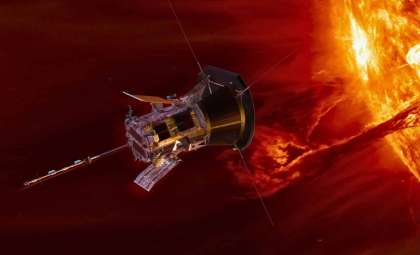
It’s important to distinguish this from the fastest human-made object overall; NASA’s uncrewed Parker Solar Probe reached a top speed near 692,000 kilometers per hour relative to the Sun in December 2024, but because it carried no astronauts, it does not count toward the human speed record. Apollo 10’s number remains exclusive to piloted spacecraft.
Artemis Missions Are Poised to Match Apollo 10’s Velocity
NASA’s Artemis program aims to bring astronauts back to the Moon, with the Orion spacecraft engineered for rapid re-entry from deep space. Returning at high speeds remains a major technical hurdle the program must overcome.
During Artemis I’s 2022 uncrewed flight, Orion re-entered Earth’s atmosphere at roughly 39,400 kilometers per hour—close to but still below Apollo 10’s record. This difference stems from Artemis I’s unique trajectory rather than any limitation of the capsule.
Upcoming crewed Artemis missions are expected to meet or exceed Apollo-era re-entry speeds, contingent on their respective return routes. Artemis III, which targets a landing near the lunar south pole no earlier than 2026, will experience re-entry velocities similar to those during Apollo 10’s mission.
All three Apollo 10 astronauts have now passed away: Eugene Cernan in 2017, John Young in 2018, and Thomas Stafford in 2024 at the age of 93. Stafford’s distinguished career also included flights on Gemini 6, Gemini 9, and the Apollo-Soyuz mission.
- Categories:
- Science










0 comments
Sign in to Comment