

Researchers in China have engineered a coal-based fuel cell that generates electricity without releasing carbon dioxide emissions. This innovative system also transforms the captured CO₂ into valuable chemicals, offering a cleaner approach to utilizing coal.
Historically, coal has been linked to significant pollution and greenhouse gases. Leading the project, Xie Heping from Shenzhen University alongside the Chinese Academy of Sciences developed a method that produces power from coal without combustion, potentially redefining coal's environmental impact.
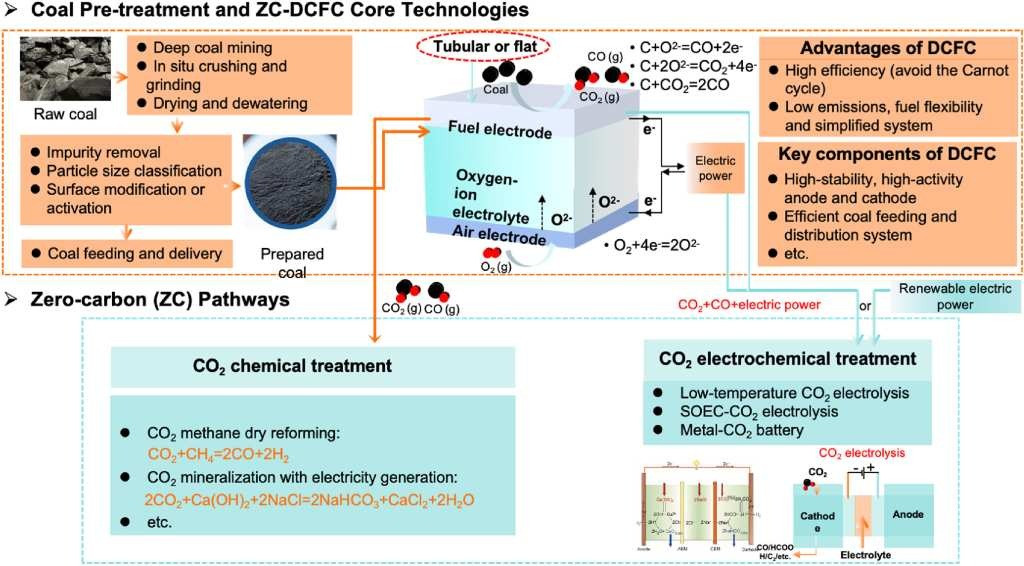
Unlike conventional coal burning, the technology employs an electrochemical mechanism. Coal undergoes processing steps—grinding, drying, and purification—before entering the anode compartment. Simultaneously, oxygen is introduced into the cathode, where interactions across an oxide membrane create electricity directly, bypassing combustion or the need for steam turbines.

Generating Power Without Combustion
The key advancement with the zero-carbon-emission direct coal fuel cell (ZC-DCFC) lies in its ability to deliver electricity without burning coal. According to Xie Heping, the prepared coal reacts efficiently at the anode, producing energy while sidestepping the substantial CO₂ emissions typical of traditional coal plants.
Proper coal preparation is crucial. It must be pulverized, dried, purified, and conditioned to ensure steady, reliable reactions and consistent electricity output, which contrasts with the variable quality and operational challenges of standard coal combustion.
Capturing and Repurposing Carbon Dioxide
A standout aspect of this technology is the management of carbon dioxide. The process emits high-purity CO₂, captured directly within the cell. This gas can then be converted into chemical building blocks such as synthesis gas or transformed into sodium bicarbonate through mineralization.
A report by The South China Morning Post explains that this system not only prevents CO₂ release but also generates valuable byproducts. The research highlights that onsite CO₂ capture and conversion is a crucial benefit of the ZC-DCFC, integrating emissions control with electricity production.
Implications for the Future of Energy
The ZC-DCFC proves that coal can serve as an energy source with drastically reduced emissions. Xie Heping and his team suggest this technology challenges the entrenched view that coal and environmental sustainability cannot align. By directly generating power and efficiently managing CO₂, it may offer a cleaner alternative for areas reliant on fossil fuels.
While still in development, the researchers emphasize its potential scalability for industrial applications. They describe this as an initial breakthrough toward rethinking coal's role with improved efficiency, lower pollution, and valuable waste conversion. This advancement highlights how existing fuels can be modernized to meet today's ecological demands.
- Categories:
- Science













0 comments
Sign in to Comment