

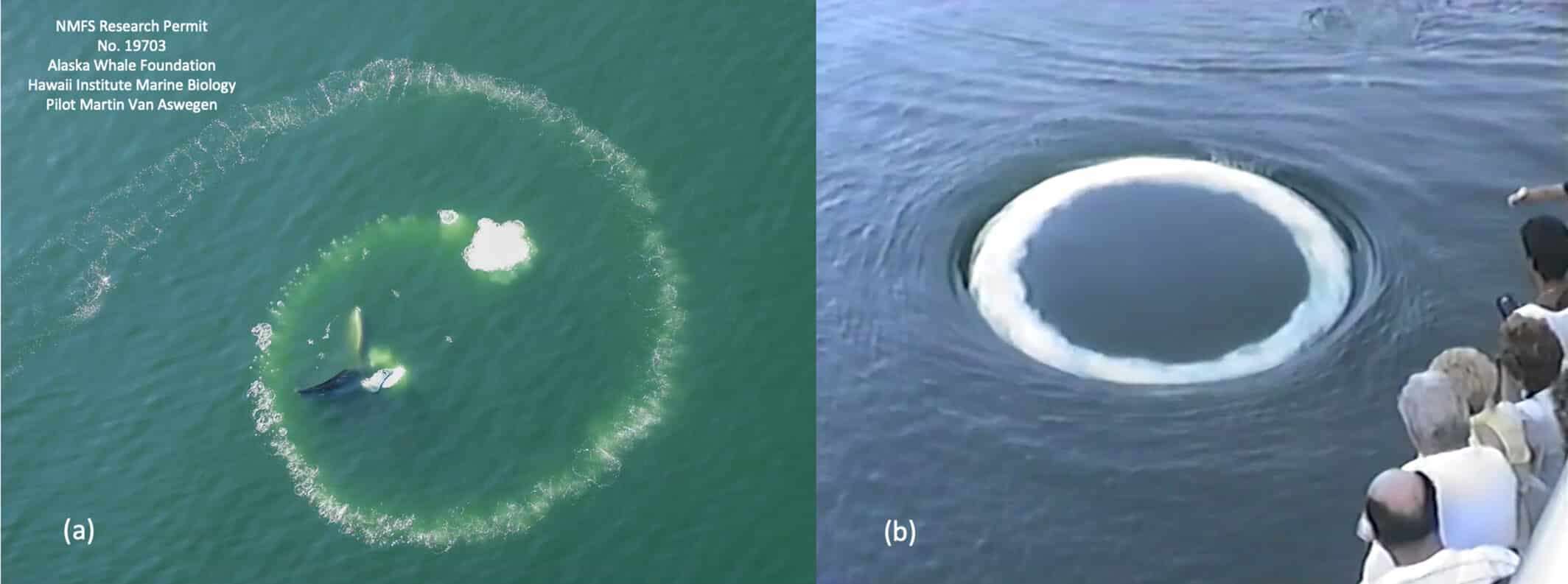
During a calm moment at sea, a humpback whale suddenly emerged near a vessel and skillfully released a perfect bubble ring into the air. The whale lingered briefly, observing the reaction. While this behavior might seem playful, researchers suggest it could have implications extending well past marine biology, possibly touching on the search for alien communication.
Published on May 15 in Marine Mammal Science, a team from the SETI Institute and the University of California, Davis, explored this bubble-ring behavior and its potential significance. Their findings propose that these formations represent deliberate, communicative acts rather than mere play or feeding tactics, potentially aimed at engaging with humans.
Examining Ocean Behaviors Through the Lens of Interstellar Communication
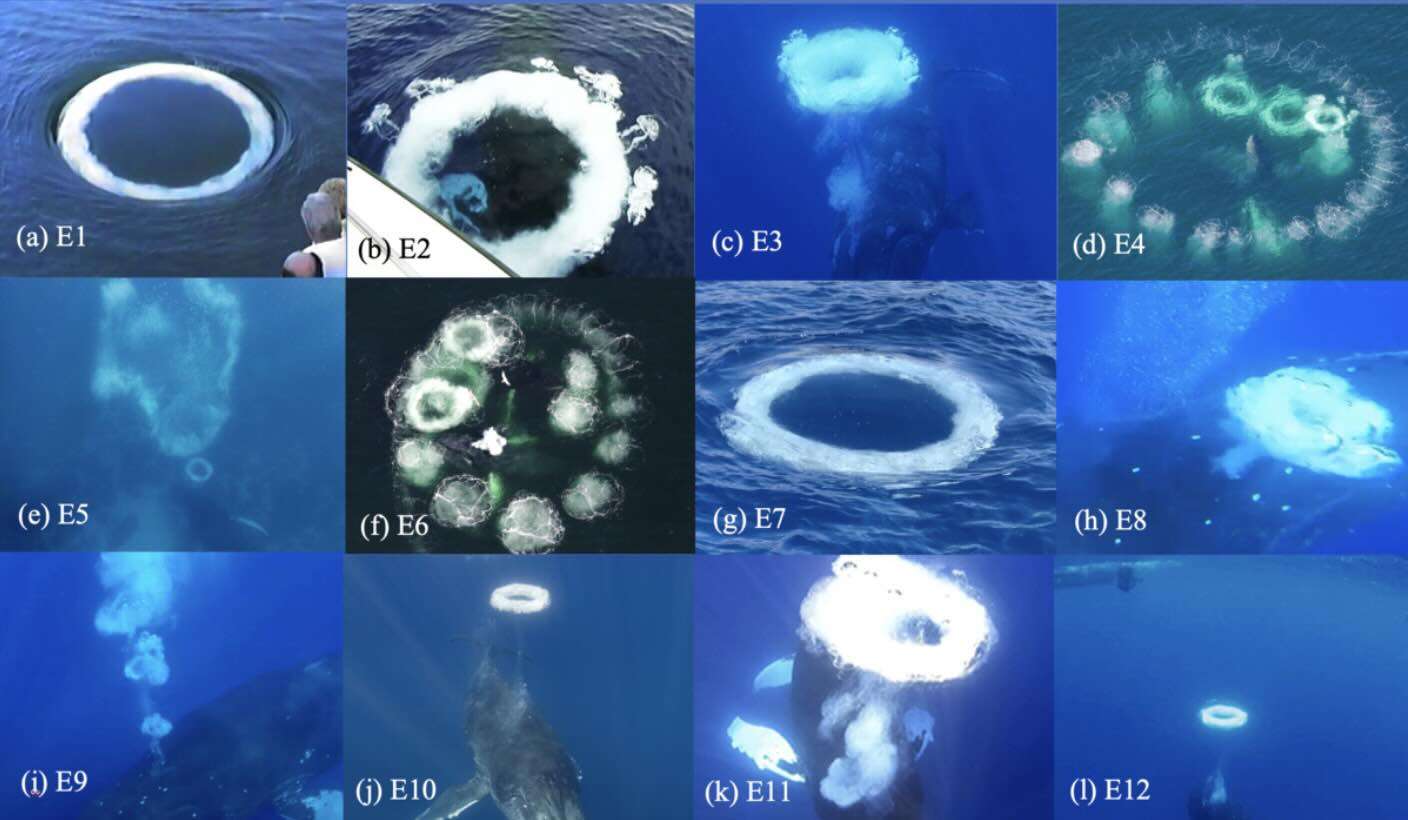
The research collective, known as WhaleSETI, recorded twelve humpback whales creating around forty bubble rings during interactions with people at multiple global sites. Unlike typical bubble use documented during feeding or mating, these rings appeared when whales voluntarily approached boats and swimmers, indicating a different context for the behavior.

Dr. Laurance Doyle, senior scientist and co-author at the SETI Institute, explained their goal: to “expand our understanding of how communicative intelligence might develop in extraterrestrial life forms.” Observing intelligent life on Earth, such as humpback whales, could provide essential clues for detecting communication beyond our planet.
Earth’s Oceans Offer Insights for Cosmic Communication
The team’s research intersects with the Drake Equation, a framework estimating how many communicative civilizations could exist in our galaxy. One understudied component, Fi—the fraction of life-bearing planets that develop intelligence—is being revisited in light of these marine mammal behaviors. The complexity and inventiveness observed in humpbacks may enrich this calculation.
Fred Sharpe, co-lead author and UC Davis affiliate, highlighted that humpback whales display attributes valuable for studying intelligence. Besides their bubble tools, their broad vocal abilities, cooperative actions, and protective responses toward others showcase traits typical of advanced communicators.
Whales as a Window into Extraterrestrial Minds
Sharpe remarked, “Much like a candidate signal, these whales create bubble rings seemingly directed toward us to playfully engage, seek our reaction, or initiate communication.” This parallel to SETI’s search for extraterrestrial signals suggests that non-human intelligence signs might be found closer to home.
In earlier research from Alaska, the WhaleSETI team studied a female humpback named Twain. When presented with playback of whale sounds, Twain responded with matching calls, suggesting a potential for two-way communication. Though not conclusive, this behavior encourages further investigation.
Deciphering a New Language Beneath the Waves
Marine wildlife photographer and co-author Jodi Frediani, also affiliated with UC Davis, played a vital role by recording many bubble ring events. She noted the whales consistently appeared intently focused on humans during these interactions.
By using Earth’s marine environment as a model for understanding intelligence, WhaleSETI complements other scientific work studying Earth’s extreme habitats, such as Antarctic regions, to draw comparisons with unexplored extraterrestrial locations like Mars. This approach raises an exciting possibility: the existence of another form of intelligence not in distant stars, but hiding just beneath the ocean surface.
- Categories:
- Science












0 comments
Sign in to Comment