

Prominent Harvard astrophysicist Abraham Loeb has ignited fresh debates within the scientific world with his intriguing proposal: our universe could be the result of a cosmic chemistry experiment engineered by a highly advanced civilization.
Key points include:
- Loeb’s proposition: The cosmos may have been intentionally crafted through an elaborate chemistry experiment carried out by an advanced civilization.
- Earlier hypotheses: Previously, Loeb speculated that the interstellar visitor ‘Oumuamua might be an alien probe.
- The baby universe concept: Our universe could be a “baby universe” birthed by an advanced society using the principles of quantum mechanics and general relativity.
- Implications for humans: Loeb’s concept implies that while some civilizations may produce new universes, humanity currently ranks as only a class C or D civilization, far from this capability.
- Future investigations: Upcoming telescopes, many destined for Chile, will deepen our cosmic knowledge and assist in identifying signs from advanced civilizations.
A track record of bold ideas
Loeb has long been known for challenging mainstream views. Notably, he drew significant attention when he proposed that the mysterious interstellar object ‘Oumuamua might be an artificial device created by extraterrestrial beings. This hypothesis, documented in the Astrophysical Journal Letters, stirred the astronomical community and showcased Loeb’s readiness to entertain unconventional theories.

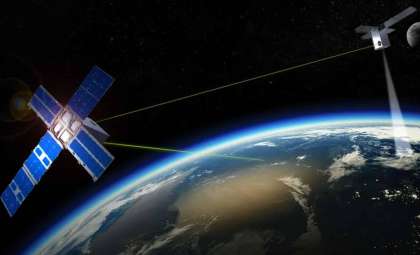
In earlier studies, Loeb emphasized that ‘Oumuamua’s unusual path and acceleration defied conventional astrophysical explanations, suggesting it could be a light sail sent from another star system. Although controversial and not broadly accepted, this theory fueled discussions about detecting technology from other worlds.

The concept of a baby universe
Recently, Loeb shared in an opinion piece for Scientific American (source) that our universe might be a “baby universe” deliberately generated inside a laboratory by a civilization far more advanced than ours. He explains that if the universe has a flat geometry and zero net energy, it may be feasible for such a civilization to create a new universe from nothing through quantum tunneling.
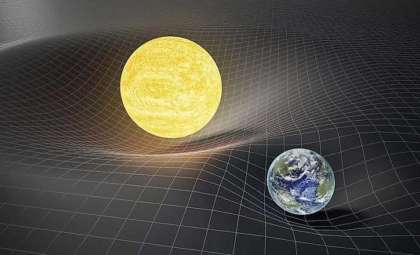
This theory relies on the foundations of quantum mechanics and general relativity. Quantum tunneling enables particles to pass through barriers that would be impossible according to classical physics. Loeb posits that a sufficiently evolved civilization could harness this mechanism to engineer a universe.
Reconsidering the origin of the cosmos
This proposal challenges conventional views on how the universe began. While models like the cyclical universe and multiverse hypotheses offer explanations for what preceded the big bang, Loeb’s notion introduces the idea that our universe might be a purposeful creation from advanced beings.
The cyclical universe theory suggests infinite sequences of expansion and collapse cycles, whereas the multiverse hypothesis envisions countless universes within a grander cosmic structure. In contrast, Loeb’s concept involves a deliberate scientific endeavor by a class A civilization, which he defines as one capable of producing baby universes.
Significance for our species
Loeb’s idea also involves a notion akin to cosmic Darwinism, where advanced civilizations spawn new universes, each potentially having different physical laws. This could provide an explanation for why our universe seems finely attuned for life. The fine-tuning argument highlights how particular constants in physics appear precisely set to support life’s existence.
Currently, humanity ranks as a class C or D civilization per Loeb’s framework, which means we lack the capability to generate universes. According to his classification, a class C civilization can utilize its planet’s energy, and a class D civilization manages resources at the solar system level. A class A civilization, however, wields power to manipulate cosmic frameworks and create universes.
Looking to the future
Though the idea that our universe is a chemistry project may sound speculative, it broadens the horizon for both scientific investigation and philosophical reflection. As technological advances bring more capable telescopes online and deepen our grasp of the cosmos, we may unlock new astonishing possibilities.
Next-generation telescopes, many set to be built in Chile, will play a crucial role in resolving deep questions about our origins. These instruments are designed to spot bio-signatures in exoplanet atmospheres, probe ancient galaxies, and track down technosignatures that could indicate intelligent extraterrestrial life.
Loeb’s adventurous perspective reminds us that our cosmic comprehension is still unfolding. The chance that one day humans might influence the cosmos’ fabric or uncover that our own universe was artificially created fuels ongoing scientific curiosity and exploration.
His hypothesis also invites us to consider humanity’s developmental path. If we continue to progress in technology and ethics, we might eventually reach the threshold of altering reality itself, joining the cosmic experiments Loeb envisions.
- Categories:
- Space








0 comments
Sign in to Comment