

During the late 1960s, a group of graduate students at MIT embarked on an ambitious project: designing a method to prevent a devastating asteroid impact on Earth. This effort, known as Project Icarus, outlined a practical approach involving hydrogen bombs, Saturn V rockets, and complex calculations. Under the guidance of professor Paul Sandorff, students tackled a dire hypothetical: the asteroid Icarus was projected to collide with Earth in just over a year. What solutions could stop it?
A Tangible Hazard With a Countdown
The asteroid central to this challenge was no imagined threat. Discovered in 1949 by astronomer Walter Baade, Icarus followed a trajectory perilously close to both the Sun and Earth. By the 1960s, scientists like Robert Richardson had determined that a slight alteration in its orbit could result in a collision with Earth in 1968.
Physicist Stuart Thomas Butler emphasized the gravity of the situation, warning that Icarus “could flatten any major global city instantly.” In an era shadowed by concerns of nuclear conflict, the idea of planetary-scale destruction was frighteningly credible.

The New York Times reported increased “urgent calls” from the public anxious about a potential asteroid catastrophe. Even though astronomers assured that the 1968 encounter posed no risk, a pressing issue remained: there was no existing plan for an actual imminent impact.
MIT Students Rise to the Cosmic Challenge
In January 1967, with barely 70 weeks before Icarus’s closest pass, Paul Sandorff tasked his students to create a credible strategy to halt the asteroid’s advance using only current technology.
Initially, some students were skeptical, joking about improbable ideas like giant trampolines. However, as they engaged with the calculations and physics involved, their outlook quickly changed. Sandorff specified that Icarus would impact the mid-Atlantic Ocean on June 19, 1968, unleashing an explosion with the force of 500 billion tons of TNT—triggering a tsunami that would cause massive loss of life.
Driven by this alarming scenario, the students divided into teams focusing on key components—propulsion, payload, guidance, among others. They soon discovered the immense interdependence of these systems, offering a rigorous hands-on lesson in integrated engineering.
The Nuclear Deterrent Strategy
One of their initial insights was that early asteroid detection, especially when it’s far from the Sun, simplifies deflection—the earlier the intervention, the smaller the force required. However, Icarus was already approaching too swiftly, clocking over 100,000 km/h.
The team explored the option of breaking up the asteroid with a hydrogen bomb but feared the resultant debris could still threaten Earth.
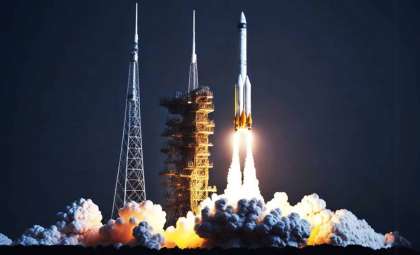
Instead, they designed a plan involving six Saturn V rockets, each armed with a 100-megaton hydrogen bomb. The first explosion would occur mere 100 feet from the asteroid, vaporizing part of its surface to alter its path, while the remaining devices would serve as backups or to target any fragments. Their calculations suggested a 71% probability of success at a price less than 1% of the United States’ GDP.
From Classroom Proposal to National Policy
It wasn’t until 1989, after an unnoticed asteroid passed perilously close to Earth, that governments renewed focus on planetary defense. Then in 1994, the Shoemaker-Levy 9 comet smashed into Jupiter, leaving dramatic impact scars visible from Earth, underscoring the threat’s reality.
By the late 1990s, NASA had made planetary defense a key mission component, bringing to life ideas first conceptualized by MIT students during their 1967 assignment. This groundbreaking work has since appeared in outlets including National Geographic and is preserved in MIT’s archives. Today, more than a million asteroids are tracked reliably, with no known impact threats on the horizon.
- Categories:
- Space












0 comments
Sign in to Comment