
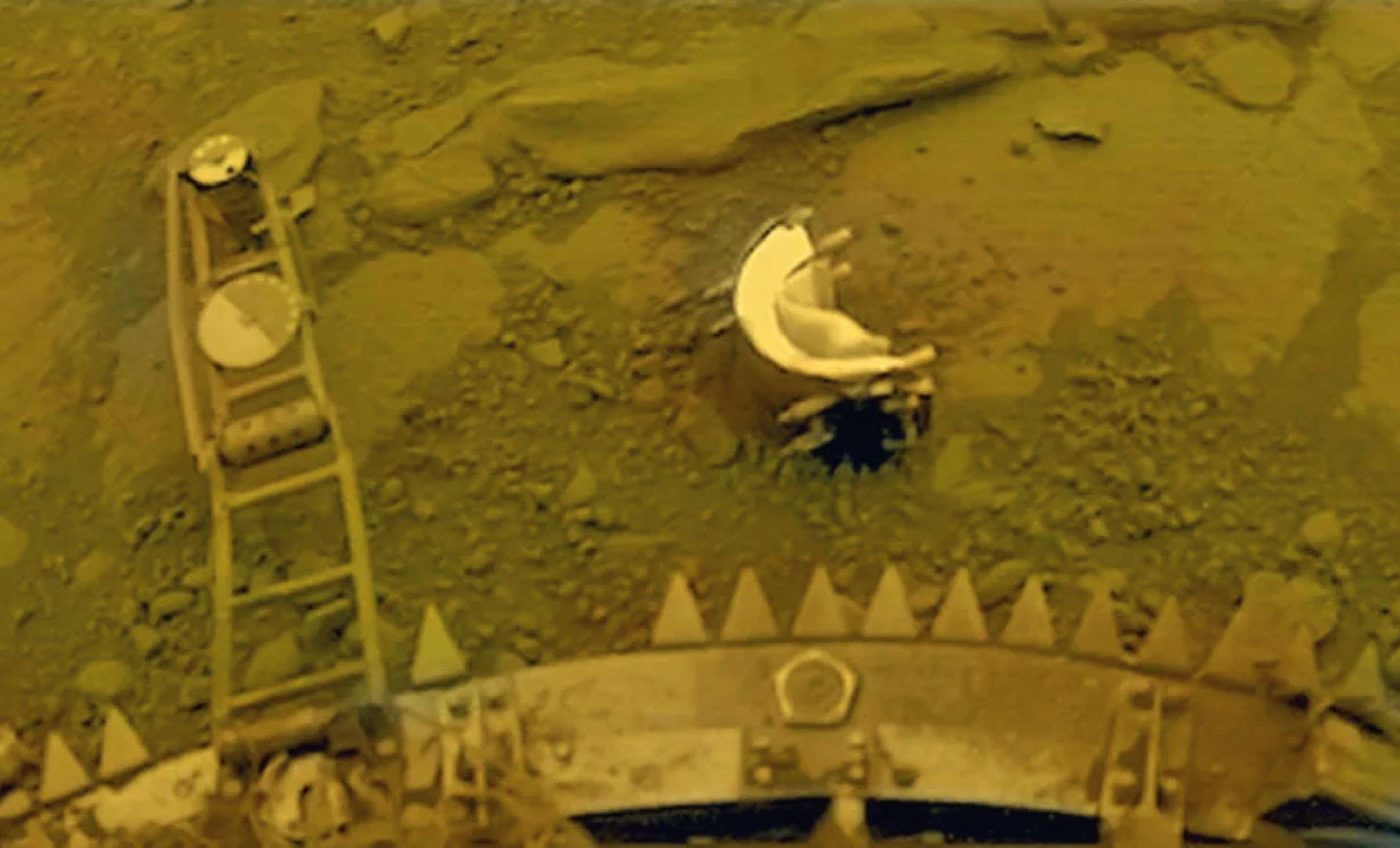
In 1975, the Venera 9 lander from the Soviet Union earned the distinction of being the first spacecraft to capture and transmit images from Venus's surface. Although it operated for only 53 minutes before the planet’s extreme environment overwhelmed it, the mission provided an unprecedented view of a world long hidden from direct observation. Sources like The Planetary Society and NASA’s Venus exploration archive highlight how these early photographs opened a new chapter in planetary science by revealing one of the solar system’s most unforgiving landscapes.
Venus: A Fiery Earth Lookalike
Venus is often dubbed Earth’s twin due to its similar size and composition, yet it harbors a vastly different climate. Its thick carbon dioxide atmosphere drives a severe greenhouse effect, elevating surface temperatures to nearly 900°F (475°C), hot enough to melt lead. The atmospheric pressure on Venus surpasses Earth's by over 90 times, comparable to being almost a mile underwater on our planet. Adding to the challenge, clouds of corrosive sulfuric acid enshroud the sky. For many years, capturing clear images of Venus's surface seemed impossible, but the Soviet space engineers were determined to conquer these obstacles.
Early Venera Missions: Setting the Stage
The Venera program launched in 1961, embarking on a series of missions that tested Soviet space technology. The inaugural Venera 1 mission lost contact before reaching Venus, while Venera 3 in 1966 was the first human-made object to reach another planet but failed to send data. Significant progress was achieved with Venera 4 in 1967, which returned valuable atmospheric information. By 1970, Venera 7 achieved the first soft landing on another planet, delivering 23 minutes of surface data. Venera 8 followed in 1972, analyzing rocky terrain and identifying granite-like materials, paving the way for the major accomplishments of Venera 9 and 10.

Venera 9's Historic Surface Photos
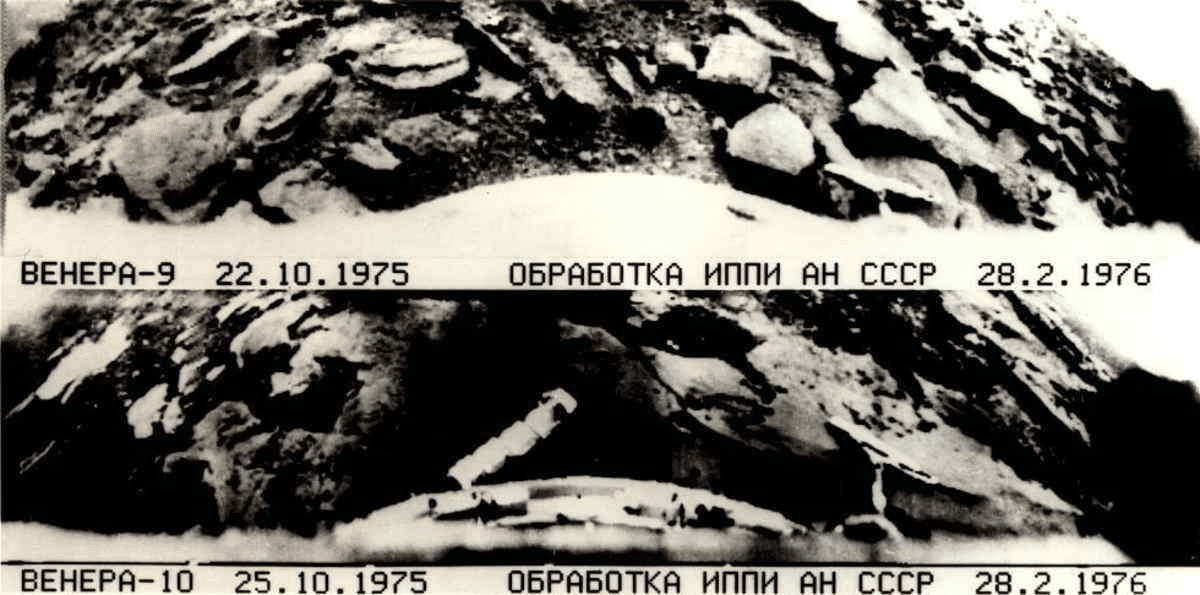
Launched in 1975, Venera 9 represented a major achievement in space exploration. Built with heavy-duty insulation, an advanced cooling system, and instruments sealed inside a pressure-resistant capsule, it was designed to endure Venus’s hostile environment just long enough to collect data. Upon landing, the probe deployed a telephotometer designed to capture images indirectly: surface light entered a small window, was reflected by a periscope, and recorded by an internal camera. This innovative setup produced the first-ever black-and-white panoramic images from Venus's surface, revealing rugged, fractured rocks reminiscent of lava flows. Contrary to expectations, the atmosphere allowed surprisingly clear views. Venera 9 maintained communication for only 53 minutes before the intense heat and pressure caused its systems to fail.
Continuing the Mission: Venera 10 and Surface Discoveries
Days after its counterpart, Venera 10 landed and mirrored the success of Venera 9 by sending back detailed black-and-white panoramas of Venus’s surface. These images depicted a bleak scene covered in jagged rocks and demonstrated that illumination at the surface was comparable to an overcast day on Earth. Through these missions, scientists confirmed that direct visual exploration of Venus was achievable and gained vital insights into the planet’s climatic and geological conditions. In addition to imagery, the missions gathered key data on temperature, pressure, and soil composition, deepening our grasp of the extreme Venusian environment.
Advances with Color and Radar Mapping on Venus
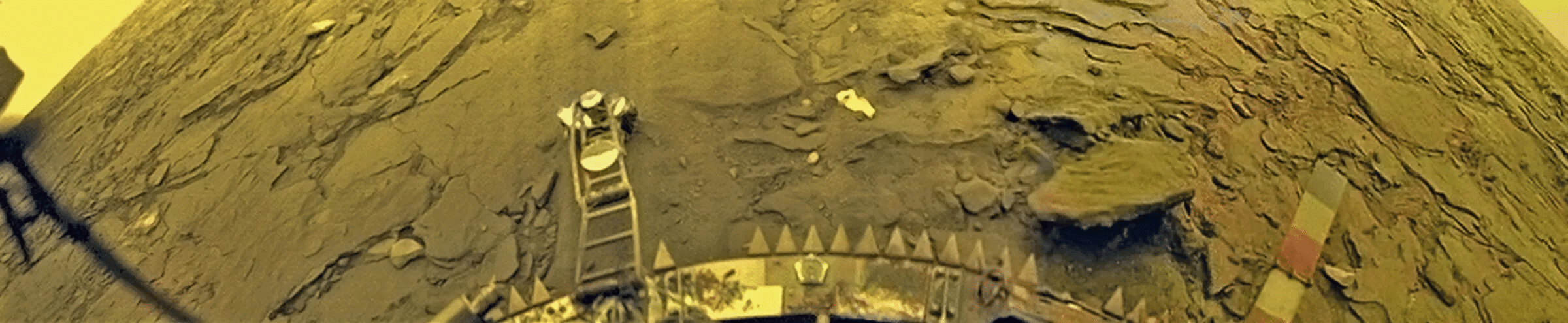
Following the achievements of 1975, Soviet efforts continued with Venera 13 and 14 in 1981, which captured the first color panoramas on the Venusian surface. Bathed in a distinct orange tint, these pictures showed cracked terrains similar to basalt formations on Earth. In 1983, Venera 15 and 16 expanded exploration further by mapping Venus’s northern hemisphere using high-resolution radar, penetrating the thick clouds. The program culminated with the 1984 Vega missions, which deployed balloons into Venus’s atmosphere before continuing towards Halley’s Comet. To date, only four spacecraft have ever photographed Venus from the ground — all Soviet missions.
Modern Efforts to Enhance Venus Imagery
Many years later, researchers and hobbyists have revisited the original Venera data to produce clearer and more detailed images of Venus’s terrain. Notably, Ted Stryk, a philosophy professor at Roane State Community College, has reconstructed panoramas from Soviet archives, sharpening public views of these historic photos. Along with American researcher Don P. Mitchell, their work emphasizes how rare and valuable these surface images are. According to NASA’s archives, the Venera missions stand as unique examples of direct human observation on a planet that continues to challenge exploration efforts.
- Categories:
- Space









0 comments
Sign in to Comment