
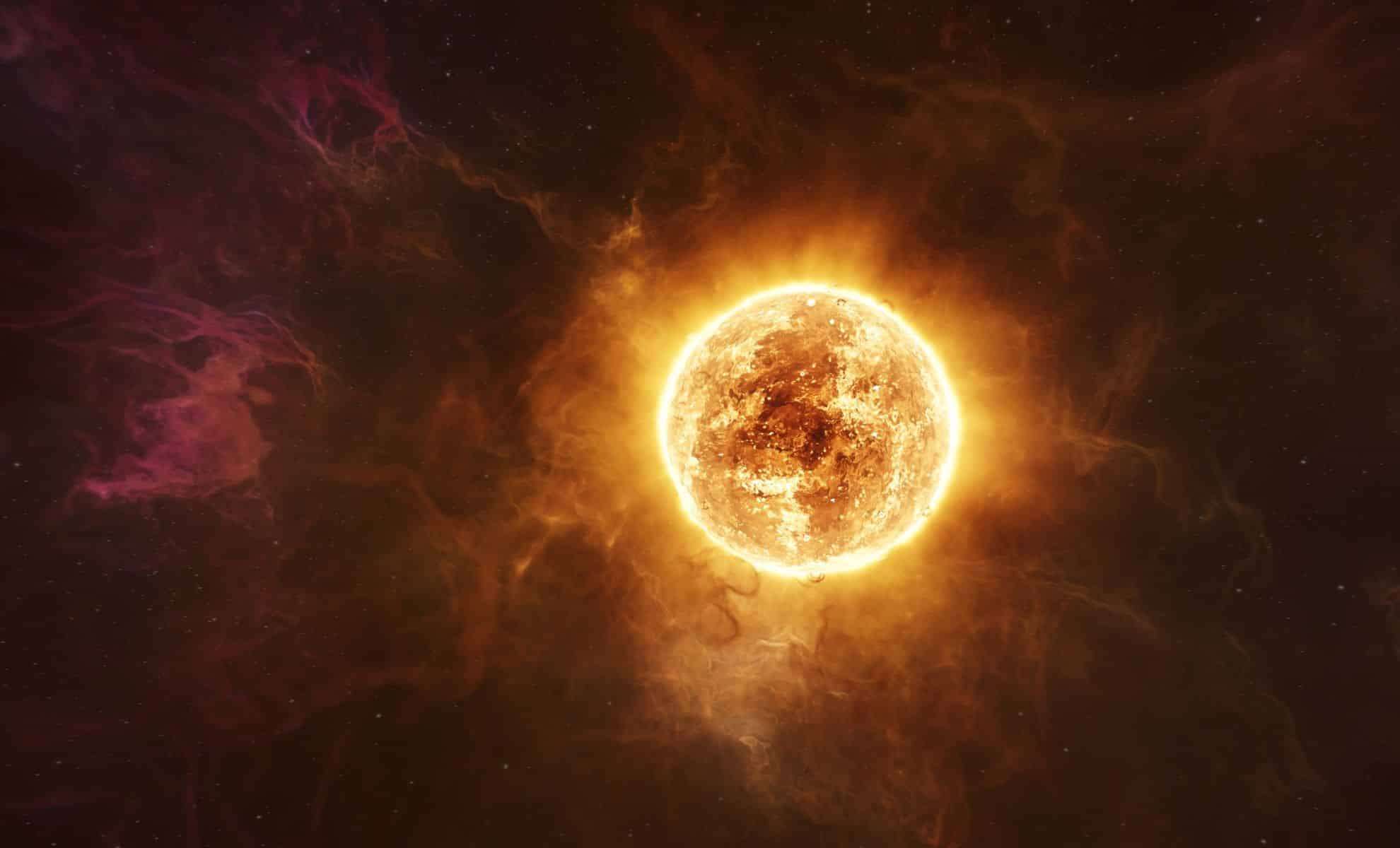
Far from being tranquil, stars frequently unleash intense bursts of energy known as stellar flares, which can swiftly influence the environments of orbiting planets. Recent studies show that these cosmic explosions can change planetary atmospheres within just a matter of days.
The Potency Behind Stellar Flares
Stellar flares are fierce eruptions on a star’s surface caused by the sudden discharge of magnetic energy. These powerful surges emit a range of high-energy radiation such as X-rays, ultraviolet light, and occasionally radio waves, spreading across vast stretches of space. Their impact is particularly significant for magnetically active stars, including young stars and red dwarfs. Stars like these can produce far stronger and more frequent flares compared to our Sun.
Red dwarfs, which are smaller and cooler than the Sun, possess turbulent and intense magnetic fields, making flares a common occurrence. Such bursts of energy can erode the atmospheres of exoplanets nearby or bombard their surfaces with harmful radiation.

Examining Solar Flares' Influence on Other Worlds
The research utilized simulations to explore the effects on a tidally locked exoplanet, TRAPPIST-1e, which orbits a red dwarf. This planet continually faces one side toward its star while the opposite side remains in darkness. Using a 3D global circulation model, scientists tracked the atmospheric shifts caused by stellar flares, monitoring temperature, chemical reactions, and wind patterns as flare events unfolded.
Following a flare, nitrogen oxides in the upper atmosphere began radiating heat away, causing the thermosphere’s temperature to drop by up to 180 °F. Conversely, water vapor and nitrous oxide trapped heat in the lower atmosphere, warming the mesosphere by around 50 °F. Winds on the planet’s night side accelerated dramatically, exceeding 90 mph, whereas previously conditions had been relatively calm.
Atmospheric Ripple Effects Across Planets
The sequence triggered by a stellar flare originates in a planet’s upper atmosphere. Incoming protons interact with molecular nitrogen, generating nitrogen compounds that deplete ozone layers. The reduction in ozone allows more ultraviolet radiation to penetrate lower into the atmosphere, altering heating dynamics and atmospheric pressures. Under the most intense flare conditions simulated, the study found up to 80 percent of stratospheric ozone could vanish within just eight years, exposing the surface to increased radiation hazards.
Earth experiences less severe consequences because of its strong magnetic shield and dense ozone layer. However, solar flare activity still leaves measurable effects. For example, during the 2003 Halloween solar proton event, the polar mesosphere warmed by as much as 18 °F due to nitric oxide brought into the atmosphere. While less extreme than on exoplanets, these events underscore the sensitivity of planetary climates to stellar activity.
The Challenge to Habitability
The study highlights that repeated and intense stellar flaring can threaten planetary habitability. Even within the “habitable zone,” where liquid water could exist, frequent flares might push a planet towards a moist greenhouse stage, characterized by elevated stratospheric water vapor levels over 0.1 percent. This condition accelerates hydrogen loss and can eventually desiccate the planet, potentially rendering it lifeless within hundreds of millions of years.
Despite the risks, stellar flares don’t always spell doom for exoplanets. The high-energy particles from these flares might facilitate the conversion of atmospheric nitrogen into nitrates, which could support prebiotic chemical pathways crucial for life’s origin. Thus, stellar flares may also contribute positively to the development of life on young planets.
- Categories:
- News









0 comments
Sign in to Comment