
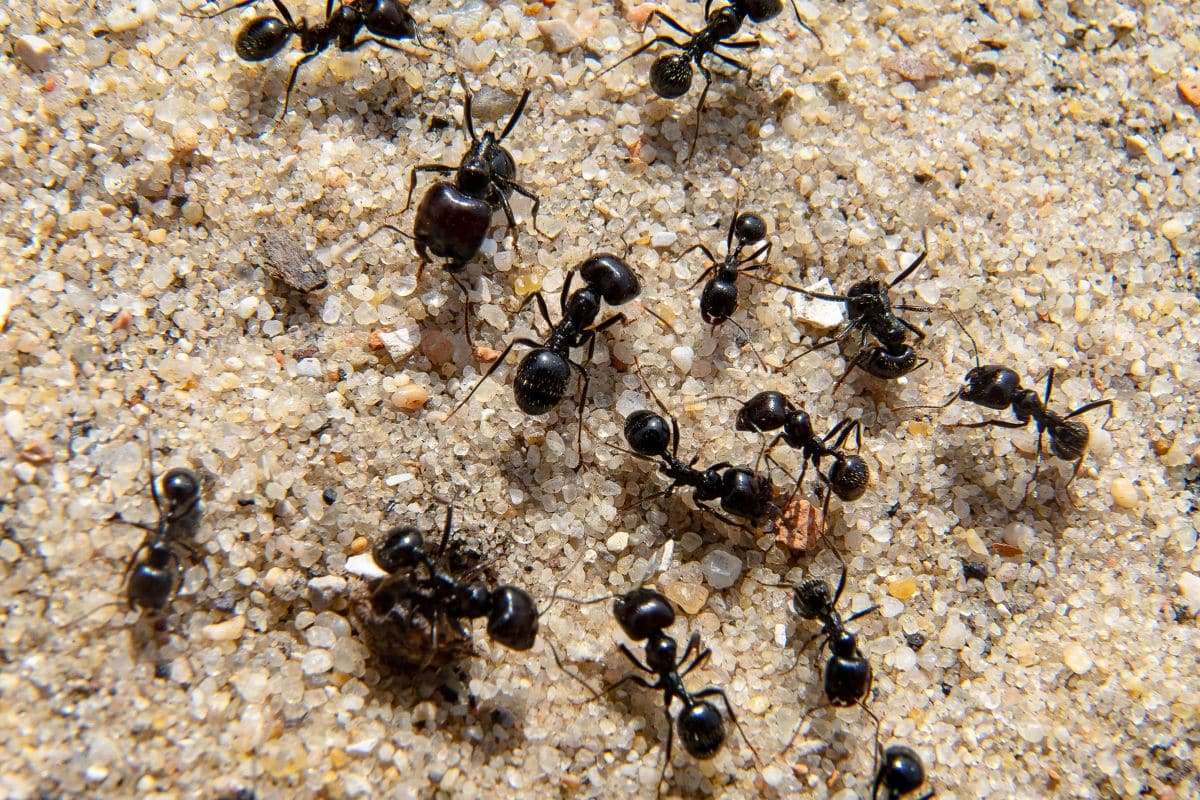
What began as a simple backyard observation by an 8-year-old has revolutionized how we perceive the intricate connections among ants, wasps, and oak trees. Initially seen as ants transporting seeds, this discovery unveiled a fascinating tale of chemical deception, evolutionary tactics, and ecological cooperation. Combining the curiosity of Hugo Deans with the expertise of his father, a Penn State entomology professor, researchers uncovered how wasps cleverly manipulate ants to guard their offspring.
Examining the Breakthrough
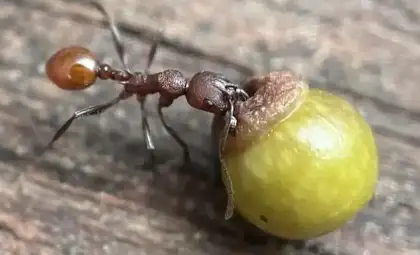
At just eight years old, Hugo Deans noticed what he first believed were seeds near an ant colony. While most kids might overlook such a sight, Hugo shared his findings with his father, Andrew Deans, an entomologist. Recognizing these “seeds” as wasp galls, Andrew launched a study to understand their role.
Wasp galls are abnormal growths on oak leaves created by wasps to shelter and protect their larvae. While the existence of galls isn’t new, their presence near ant homes sparked curiosity, suggesting a novel partnership between ants and gall wasps.

The Unexpected Partnership Between Ants and Wasps
Andrew Deans and his team uncovered that wasps don’t just influence oak trees—they also exploit ants. They found that wasps induce oak leaves to form galls topped with fatty acid-rich coatings, resembling seed structures that typically attract ants. These coatings, comparable to elaiosomes on seeds, prompt ants to carry the galls back to their nests.
This relationship resembles myrmecochory, where ants disperse plant seeds attracted by nutritious seed appendages. However, gall wasps go a step further by ensuring their larvae are brought into ant nests, providing them with extra protection and favorable living conditions.
Decoding the Ant-Wasp Interaction
The research revealed that ants prefer galls that maintain their fatty caps, disregarding those without. This preference demonstrates the caps’ role as an enticing bait. Chemical testing showed these caps contain fatty acids similar to those in the ants’ usual diet of dead insects, enabling the wasps to fool ants into treating galls as food.
This mutualism benefits both sides: the ants receive a nutritious reward, while wasp larvae gain sanctuary inside ant nests. Although the reasons why larvae remain safe—be it from flooding or predators—are yet uncertain, the strategy is clearly intricate.
Origins of This Complex Behavior
This discovery prompts intriguing questions regarding the evolution of this sophisticated relationship. Did ants develop gall-carrying habits independently, later exploited by wasps? Or did wasp gall manipulation evolve before seed dispersal through myrmecochory? Both theories challenge current ideas about the progression of these behaviors.
“In myrmecochory, ants get a little bit of nutrition when they eat the elaiosomes, and the plants get their seeds dispersed to an enemy-free space, ” Deans stated. “This interaction has been recognized for over a century and is a classic example of plant-insect interplay in biology education.”
How Curiosity Drives Scientific Progress
Hugo’s observation not only reveals a remarkable ecological relationship but highlights how curiosity and detailed observation fuel scientific breakthroughs. Children often notice subtleties adults miss due to preconceived ideas. As Andrew Deans observed, “The complexity of this interaction is astonishing; it’s truly mind-boggling.”
Despite his key role, Hugo remains humble, expressing the desire to be “different” and unique as he grows, rather than following in his father’s academic footsteps.
Significance for Ecology and Preservation
The research highlights the intricate connections within ecosystems, showcasing how small creatures like ants and wasps participate in elaborate behaviors influencing their surroundings. Insights from these interactions can enhance conservation strategies by emphasizing species interdependence and the delicate balances supporting ecosystems.
The findings also advance our understanding of co-evolution and mutualistic relationships, showing how species can capitalize on existing behaviors for mutual advantage, opening pathways to explore many overlooked natural connections.
A Future Shaped by Observation
The partnership between an inquisitive child and experienced researchers exemplifies how scientific discovery flourishes through varied viewpoints.
Ongoing studies of this fascinating ant-wasp dynamic celebrate the profound complexity of nature and reinforce the vital role of questioning the environment around us. Through observation, wonder, and investigation, even the smallest details can spark insights that transform our perspective on life on Earth.
- Categories:
- Science







0 comments
Sign in to Comment