
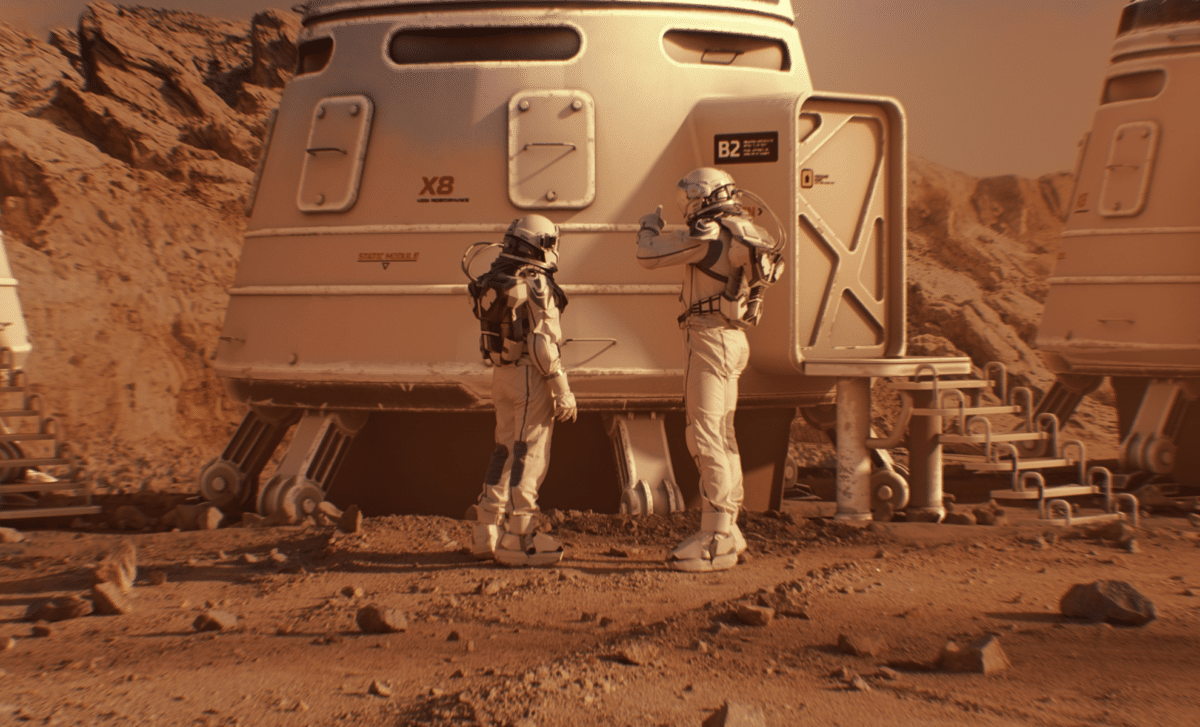
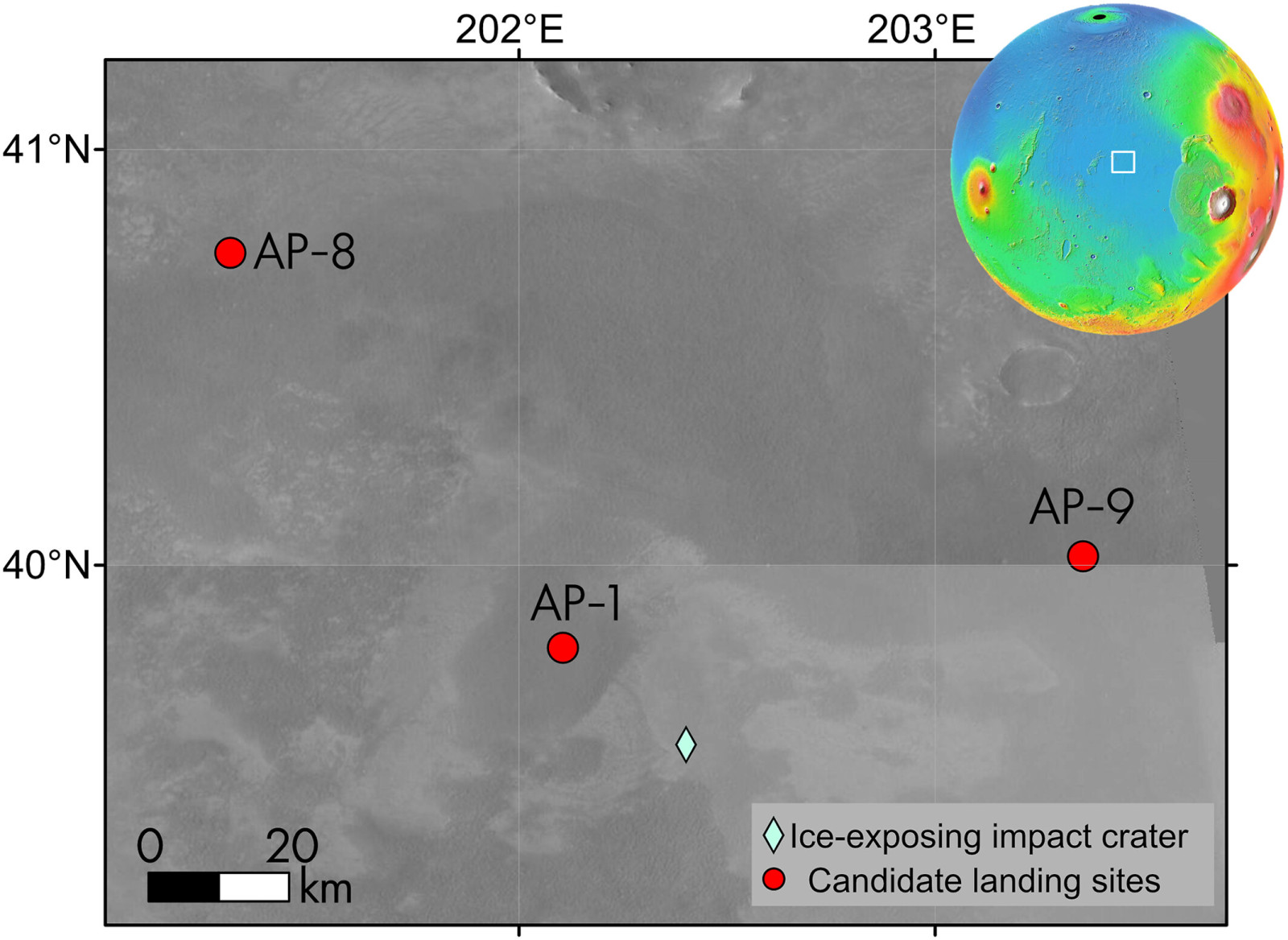
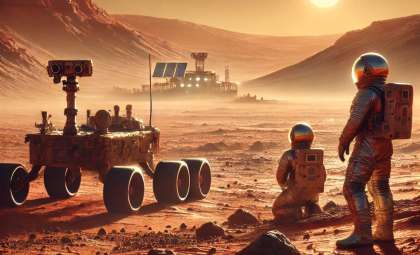
Researchers have pinpointed an optimal location on Mars that holds great promise for establishing the first human base, marking a crucial step toward long-term habitation of the planet. Utilizing detailed images from NASA’s HiRISE camera, the team focused on Amazonis Planitia, a region offering a rare combination of adequate sunlight and accessible subsurface ice. This breakthrough, documented in the Journal of Geophysical Research: Planets, could greatly influence the planning of upcoming crewed Mars expeditions.
Amazonis Planitia: A Prime Candidate for Martian Landings
The targeted site, Amazonis Planitia, lies within Mars’s mid-latitudes, providing what scientists call a “Goldilocks zone”—not too warm or cold and abundant in valuable resources. This area facilitates efficient solar energy absorption while maintaining conditions suitable for preserving underground water ice. These factors make it a particularly viable spot for human exploration and extended stays that require self-sufficiency apart from Earth.
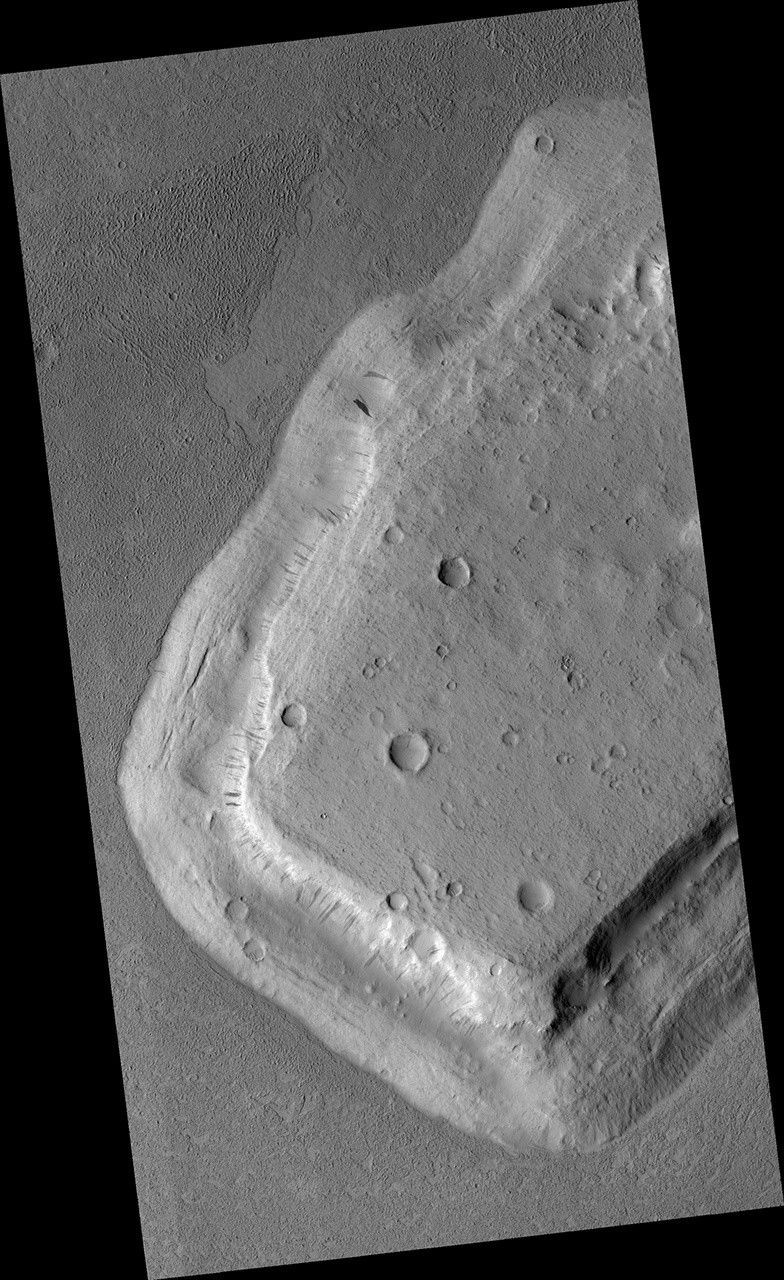
Led by Erica Luzzi and collaborators, the research underscores the crucial role of accessible water ice for life support systems and in-situ resource utilization. Through analysis of data from the High-Resolution Imaging Science Experiment (HiRISE), features suggesting buried ice deposits were identified, potentially enabling astronauts to extract water and oxygen locally.

Giacomo Nodjoumi, a postdoctoral scientist at the Italian Space Agency’s Space Science Data Center and co-author of the study in the Journal of Geophysical Research: Planets, explained: “A lunar resupply mission takes about a week round trip, but for Mars, this duration extends to months. Therefore, long-term missions have to be prepared for independent operation without Earth-based resupplies.” Such constraints emphasize the need to find locations that combine scientific importance with survival feasibility.
The Critical Role of Water Ice in Mars Exploration
Water resources on Mars are not merely a convenience but an essential component for mission success. Although ice deposits on Mars have been known, their accessibility near the surface has remained uncertain—until now. Nodjoumi points out, “Oxygen for breathing and water for consumption are fundamental. These needs make Amazonis Planitia a highly attractive candidate landing zone.”
Access to subsurface water would substantially lower mission costs and elevate astronaut independence. It would facilitate producing hydrogen fuel, oxygen, and support agricultural activities without dependence on supplies from Earth. This vision aligns with NASA’s Artemis-to-Mars strategy and the broader global initiative toward autonomous extraterrestrial habitats.
The team advises prudence, however. Nodjoumi added, “While the data strongly suggest the presence of water ice, definitive confirmation requires direct measurements from the location.” Future robotic missions or initial human expeditions will be essential to validate these findings through sampling and geological studies.
Bridging Orbital Discoveries to Human Exploration
Spotting a suitable human landing site is just the initial phase of a journey spanning decades. Although orbital observations offer compelling evidence, on-site verification of the quality and extent of subsurface ice will be necessary. Robotic scouts, likely paving the way for human presence, must survey terrain stability, collect samples, and assess local resource extraction techniques.
This discovery also shapes mission architecture significantly. Engineers can design habitats, transportation, and energy systems in accordance with Amazonis Planitia’s landscape and resource availability. Confirming a nearby water source transforms establishing a Martian settlement from an abstract goal to a strategically grounded plan.
For scientists and mission designers alike, the location’s flat terrain and low elevation reduce risks related to atmospheric entry and facilitate safer touchdown approaches, further enhancing its suitability for exploration.
Accelerating the Timeline for Manned Mars Exploration
The timelines for human missions to Mars remain flexible, yet this new research provides clear parameters that help organizations like NASA, ESA, and SpaceX focus their efforts. Instead of venturing into uncertainty, future expeditions will head to a site supported by extensive scientific data and survival prospects.
Global partnerships are anticipated to increase, as demonstrated by the involvement of the Italian Space Agency collaborating with American institutions. These multinational efforts may mirror the cooperative spirit of the International Space Station.
With high-resolution imagery, scientific backing, and mapped resources, Amazonis Planitia stands poised to become the location of humanity’s first permanent presence beyond Earth. As exploration technology progresses and the demand for off-world habitats grows, Mars transitions from distant aspiration to tangible destination.
- Categories:
- News






0 comments
Sign in to Comment