

As humanity's ambitions extend beyond Earth, the goal of establishing enduring colonies on Mars is becoming increasingly attainable. A groundbreaking achievement by researchers at Harvard University marks a critical step toward this future. Their team successfully cultivated algae within bioplastic enclosures crafted to simulate the extreme Martian atmosphere. Reported in a Study published in Science Advances, this work highlights bioplastics as a viable material for constructing space habitats using local resources. Featured in Space.com, these advancements contribute to a broader effort aimed at enabling human life to flourish in space without constant Earth-based supply support.
Overcoming the Obstacles of Building Homes on Mars
Creating a stable human presence on Mars faces formidable challenges due to the planet’s severe conditions. Mars’ atmosphere is predominantly carbon dioxide with less than 1% of Earth’s surface pressure, posing major survival challenges. The intense ultraviolet radiation bombarding the surface further complicates habitat design. Standard building materials like steel and concrete are impractical because of their weight and rocket transportation costs. This drives the search for innovative, locally sourced materials that are both economical and efficient for long-term Martian habitation.
Key Discovery: Algae Cultivation Within Bioplastic Environments Under Mars-like Conditions
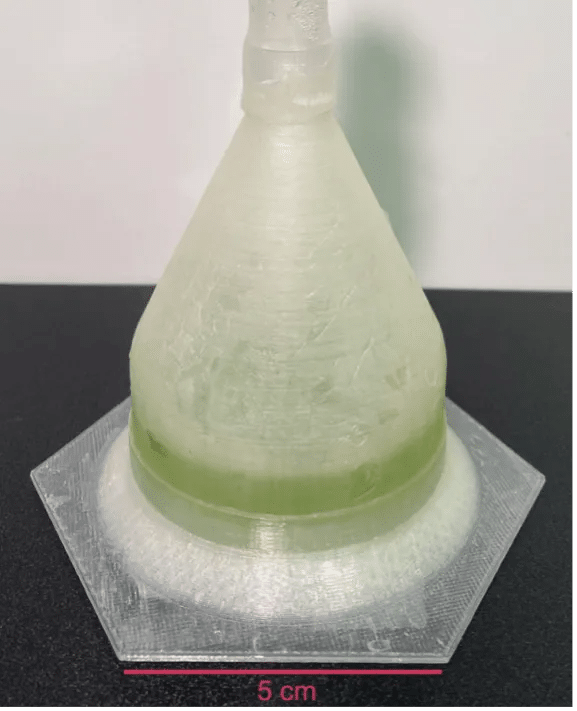
In a landmark study, the Harvard group led by Robin Wordsworth revealed that the green microalga Dunaliella tertiolecta can flourish inside bioplastic chambers tailored to replicate the Martian environment. These 3D-printed enclosures, made from polylactic acid (PLA)—a biodegradable, plant-based plastic—were engineered to simulate Mars’ low atmospheric pressure, high carbon dioxide, and dim sunlight. Remarkably, despite these harsh conditions, the algae maintained photosynthesis, essential for supporting ecosystems.

The controlled environment regulating pressure and light passage through the bioplastic walls demonstrates the potential for nurturing living systems on Mars from biologically derived materials. Wordsworth explained, “If your habitat is composed of bioplastic and cultivates algae inside, the algae could generate more bioplastic.” This suggests the possibility of a sustainable, regenerative habitat system that could grow and replenish itself over time, forming a cornerstone for future Mars structures.
Bioplastics: A Promising Pathway to Autonomous Space Habitats
The successful growth of algae in bioplastic containers under Martian-like conditions underscores the promise of bioplastics as not only a medium to support life but also as construction materials for extraterrestrial settlements. Derived from renewable biological sources, bioplastics are biodegradable and environmentally sustainable. Their light weight and ease of production present a distinct advantage over conventional construction materials that are heavy and costly to transport from Earth.
Developing bioplastic habitats capable of fostering algae cultivation offers a pioneering approach for material generation and habitat maintenance beyond Earth. This biomaterial-based strategy could drastically reduce dependency on Earth resupply missions, making sustained human presence in space more practical. Wordsworth noted, “The idea of habitats made from biomaterials is exciting and vital for sustaining human existence beyond our planet.”
Broader Impact on Future Space Exploration
While this innovation primarily targets Mars exploration, its implications extend to other celestial bodies such as the Moon or long-duration space missions. Establishing closed-loop bioplastic manufacturing and algae cultivation systems on Mars may pave the way for adaptable life-support habitats elsewhere. Wordsworth added, “As these technologies evolve, they’re likely to inspire sustainability breakthroughs on Earth too.” Beyond building space habitats, advancements in bioplastic technology could drive new eco-friendly solutions for our planet’s environmental challenges.
- Categories:
- News












0 comments
Sign in to Comment